Commercial Roof Repair in Clovis, CA
Commercial Roofing Services
A tenant complaint about damp ceiling tile during the first winter rain may point to a small opening on a commercial roof, but the size of the interior mark does not establish the size of the repair. At a Clovis, CA property, we start with the affected room, the timing of the water and safe access above it, then look for the failed detail and the condition supporting that detail. A compatible temporary repair can limit additional entry when conditions permit. The permanent work follows the investigation, so a new patch is not placed over deteriorated material simply because the visible split is narrow.
The boundary of the damaged material
An open lap can be a local defect or the visible end of movement across a broader area. We examine both sides of the opening, the substrate beneath it where investigation is warranted and adjacent details that may be carrying the same stress. A repair needs enough sound material for a reliable connection, which can require cutting back farther than the visible damage. This is particularly relevant to a split or separating roof seam, where closing only the exposed edge can leave a weak connection beside it.
A puncture creates a different question. Its immediate opening may be easy to find, yet wet insulation, damaged cover board or a sharp support beneath the membrane can change the work. We identify those conditions before closing the field and check why the puncture occurred, including repeated service traffic or an unsecured object where evidence supports it. Repairing the covering without removing the source of abrasion leaves the new material exposed to the same mechanism.
The connection to the existing roof
A smooth surface does not identify the material or establish which repair products belong on it. We use the roof records and the assembly investigation to select compatible preparation, patch materials and attachment. Repairs to an EPDM membrane require a suitable bonding process, while a heat-welded thermoplastic repair has different preparation and verification needs. Weathered surfaces may need cleaning and testing before they can accept the new connection, and a sealant applied across an opening is not automatically a permanent membrane repair.
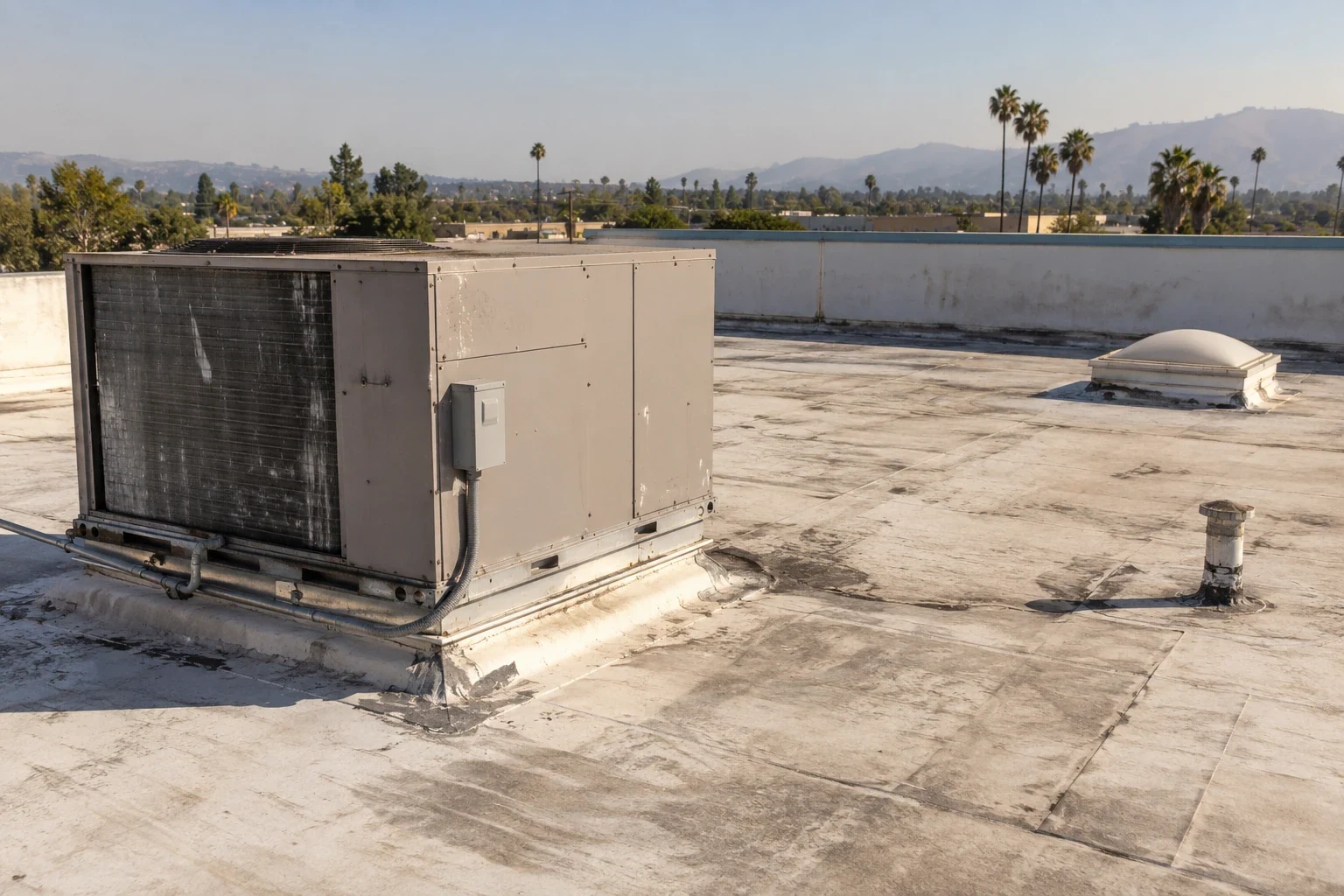
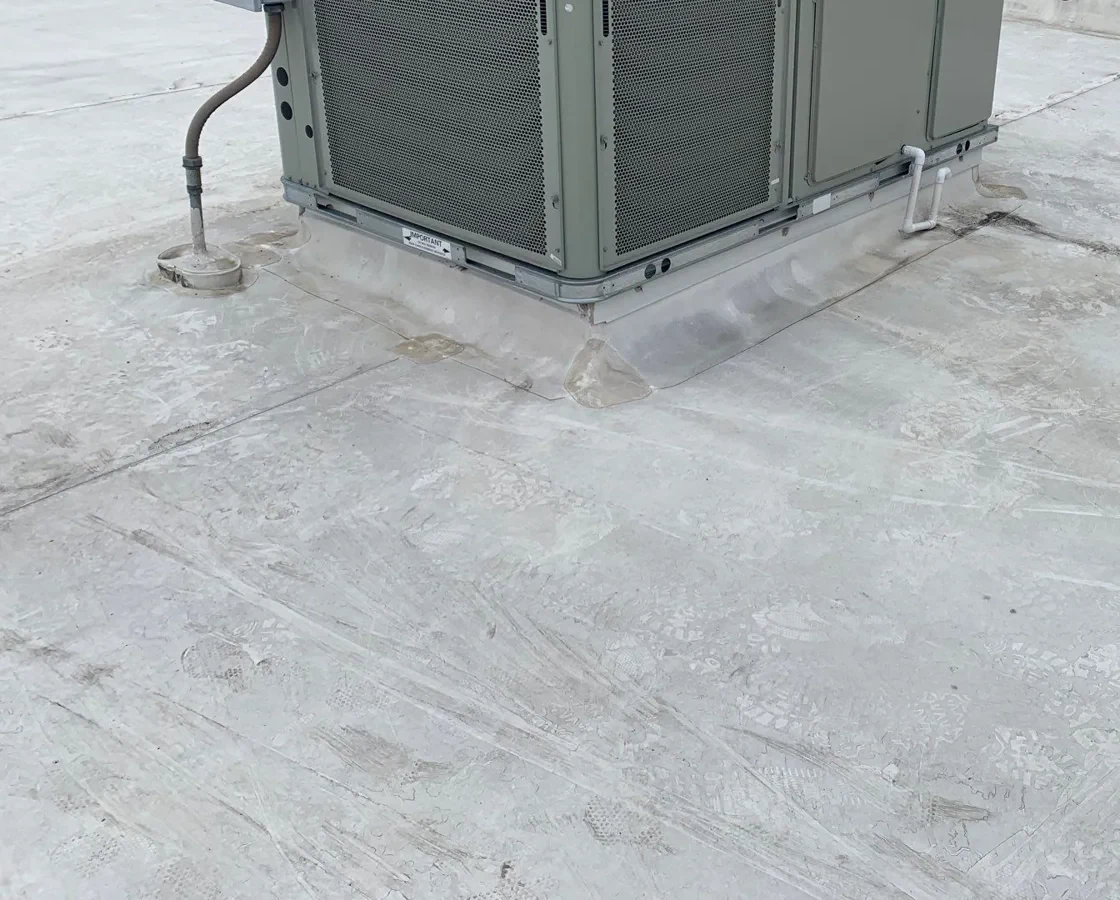
Wall flashings and equipment curbs need continuity between their vertical and horizontal surfaces. We examine termination conditions, movement and available flashing height before selecting a repair. A loose cap or failed joint may allow water behind an otherwise intact-looking membrane, so work restricted to the horizontal field could miss the entry. The proposed scope should name the failed component and the transition being restored, rather than describe all detail problems as general caulking.
The immediate containment and return work
An active leak requires an order of work that recognizes both the roof and the rooms beneath it. We coordinate interior protection with the building contact, inspect safely and determine whether a temporary closure can be installed under the present conditions. Requests for urgent help are received at night, on weekends and during holidays as well as during business hours. Access, storm conditions and the work itself govern the response; a request does not establish that a permanent repair can be finished immediately.
The follow-up visit matters when temporary materials, wet surfaces or an incomplete investigation prevent final work. We describe what the temporary measure addresses and what still requires correction, including removal of unsuitable material where necessary. Tracing roof water entry may continue beyond the visible defect if the interior pattern does not fit it. The owner receives a clear distinction between contained water entry and a completed permanent correction.
The spaces that cannot accept water
Stored goods, finished interiors and active equipment change how a small leak must be handled. Repair work above warehouse storage needs agreement on the affected aisle, product protection and roof access, while an occupied office may need limits on noise and overhead dust. We ask the building contact what is below the work rather than infer the contents from the exterior. That information determines where protection and coordination must happen before materials are removed.
Clovis Community Medical Center on Herndon Avenue provides a local healthcare reference without establishing the roof condition of any nearby building. Work in the Herndon medical district should begin with the actual facility's access and operating requirements. Sensitive rooms may require additional coordination, and rooftop work near air intakes can involve controls beyond repairing a seam. The building's operating team establishes those needs while we assess the roof detail.
The heat and dampness at the repair
Fresno's July 2024 weather summary records a mean temperature of 90.0 F and 26 triple-digit days. That regional heat context supports checking movement at exposed details and planning roof work for the conditions found, but it does not establish the cause of a particular split. We look for attachment weakness, restraint and material deterioration before attributing the opening to temperature. A repair that removes a movement symptom without accommodating the detail can separate again as conditions change.
Central Valley winter tule fog can develop after sunset and thicken before dawn. Roof surfaces therefore need an actual dryness and temperature assessment before bonding or sealing work, rather than an assumption that a rain-free morning is ready for application. We follow the selected material's conditions and allow drying where required. A temporary measure may be appropriate until permanent preparation can proceed, provided it is compatible with the roof and can be incorporated or removed correctly.
The repair decision and its limits
Repeated patching at the same location calls for a review of the failure mechanism, not simply a larger patch. We compare the new findings with the repair history and describe whether the proposed correction resolves a local defect or leaves a broader assembly problem for separate work. An assessment of the surrounding roof helps establish that boundary. Moisture extending through retained layers or a deteriorated deck can turn a surface repair into a removal and reconstruction task.
The work record should identify the location, conditions found, materials used and any unresolved access or assembly questions. Roof condition reporting for repair decisions makes that distinction usable when the owner schedules maintenance or considers more extensive work. We also discuss the relevant warranty documents before repair where they exist, because obligations and repair procedures come from those actual terms. A finished patch should have both a sound connection and a recorded reason for the work.
Commercial Roofing Questions
Can a narrow seam opening need a much wider repair?
Sound material around the opening provides the connection the repair needs. Deterioration or weak attachment beside the split may require a wider area of work. We examine the adjoining surface before setting the repair boundary.
Should a curb leak be sealed from the inside?
Interior sealing can leave the entry path active above the ceiling. We investigate the roof transition, curb joints and related components, then correct the entry where the evidence places it. Interior restoration follows control of the water rather than replacing it.
Why might a temporary patch need removal later?
Compatibility and preparation requirements can make removal necessary. Temporary work is selected to limit the immediate loss, while the permanent repair may need a clean substrate, different material or access to wet layers beneath it.
Does a repaired leak prove nearby insulation is dry?
A stopped drip gives no direct measurement of retained insulation. Suspected concealed moisture needs its own assessment, including sampling when appropriate. We separate the success of the closure from the condition of materials that were not opened.
Can repair work proceed during fog without rainfall?
The surface condition governs application. Fog-related dampness or temperatures outside the product requirements can prevent a dependable bond. We examine the work area and choose a suitable sequence rather than treat the absence of rain as clearance.
Describe the failed area and the room below
Call with the address, the first sign of trouble and any earlier repair at that location. We will assess the protection needed now and identify the preparation and materials required for a lasting correction.
Related Pages
Commercial Roof Seam Corrections in Clovis After Entry
Read the full page
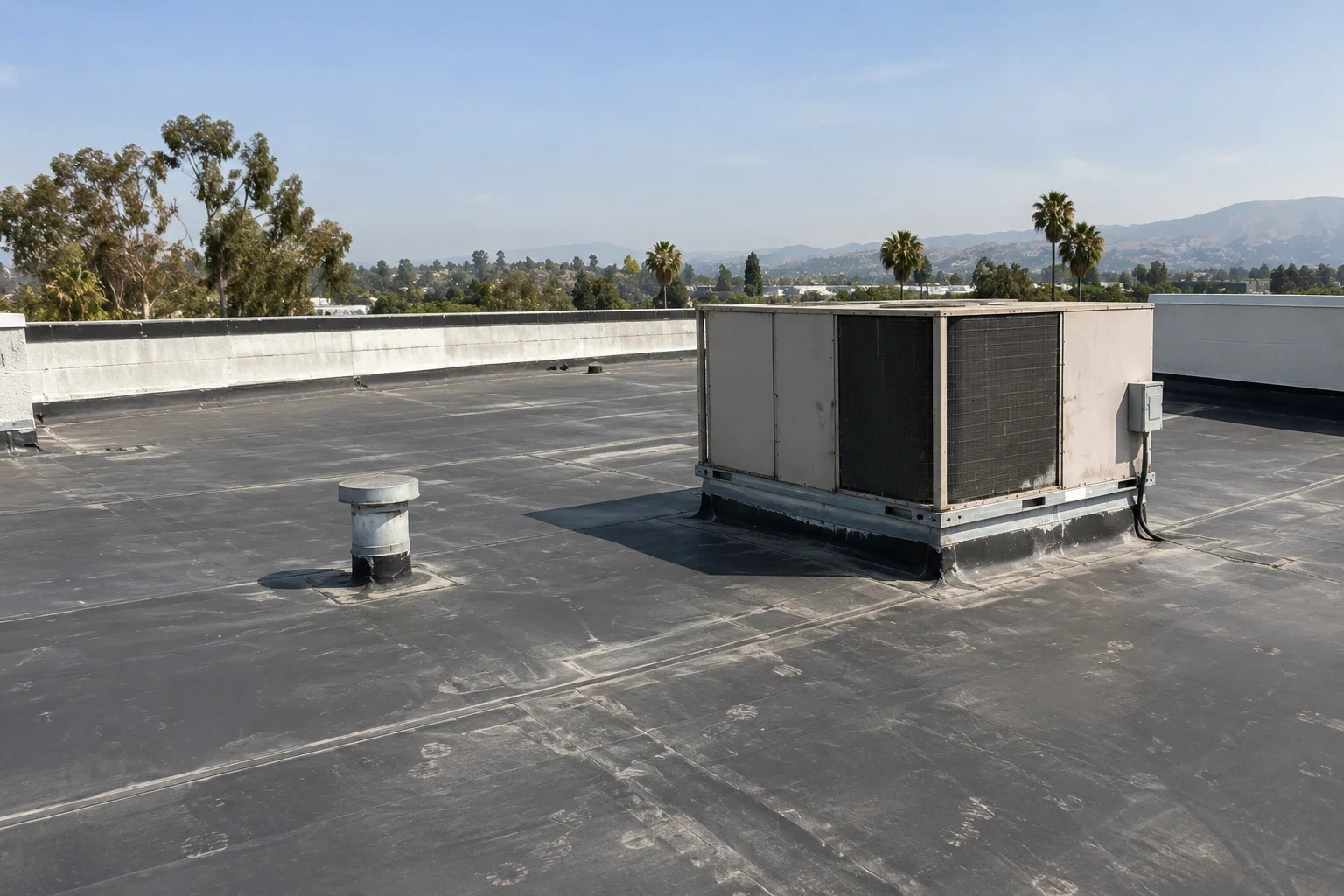
EPDM Roof Repair in Clovis at Adhesive and Flashing Joints
See how we handle it
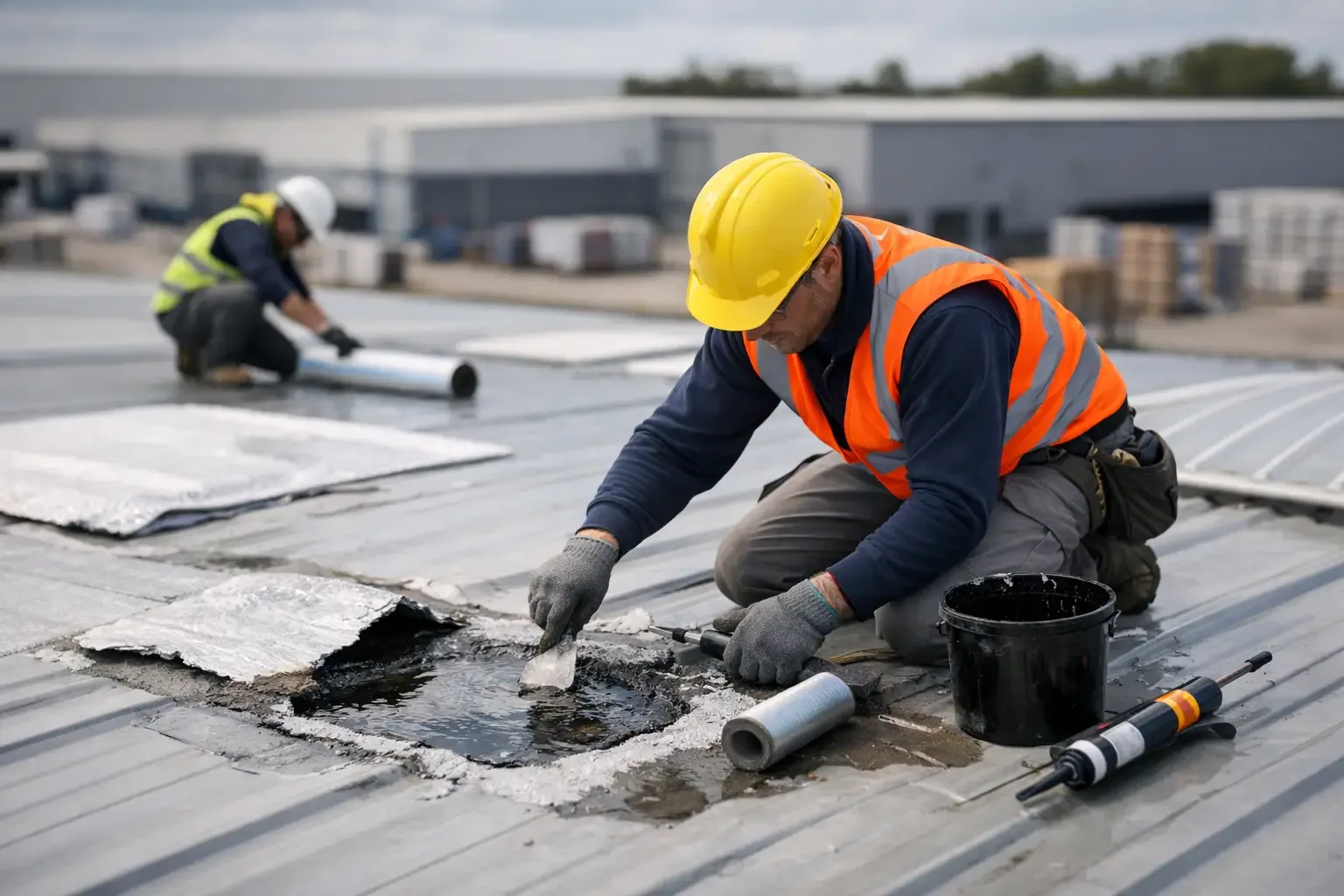
Commercial Roof Leak Repair
Scope, sequence and repair notes
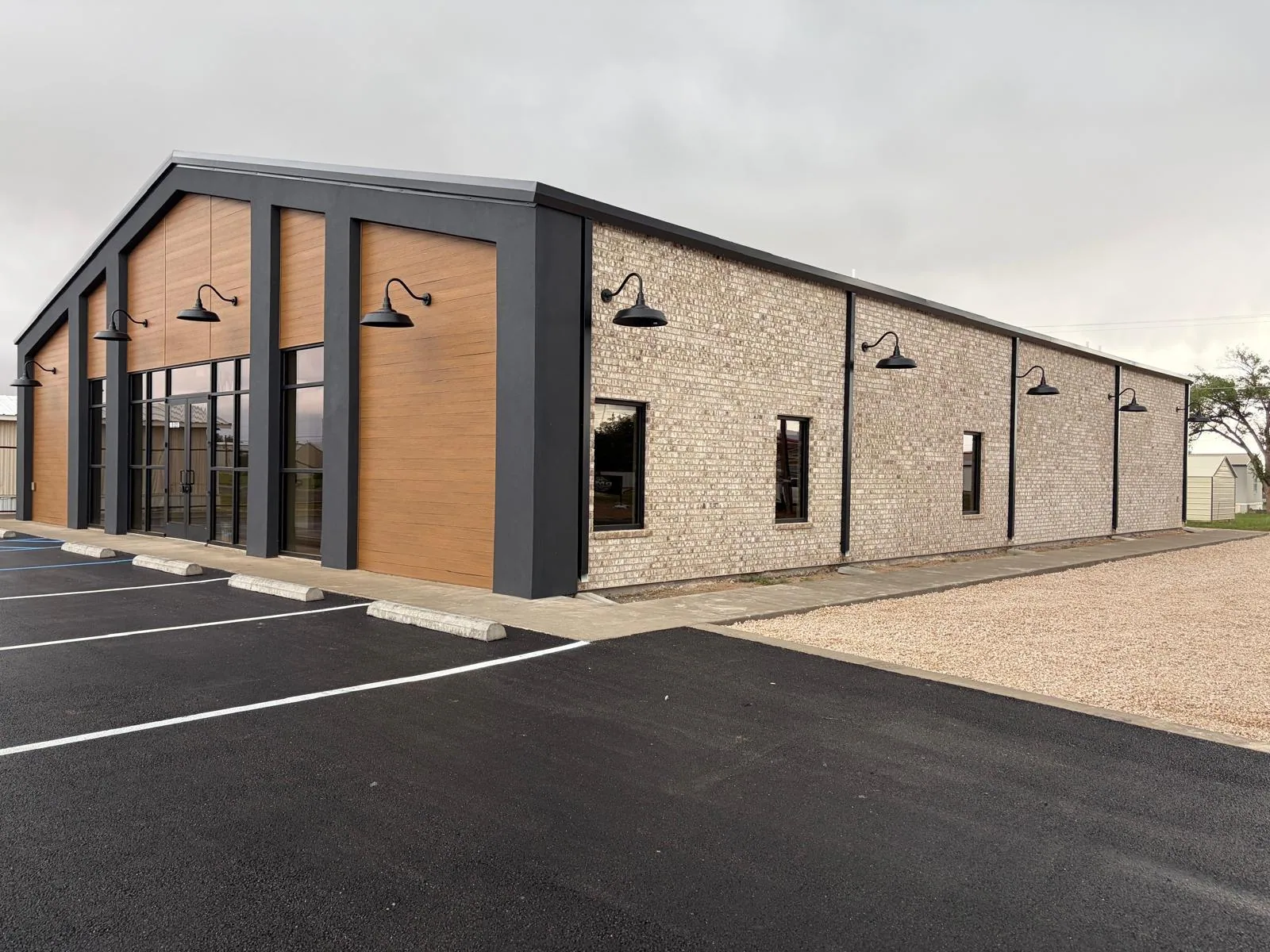
Warehouse Roof Leaks and Repair Sequencing
Read the full page
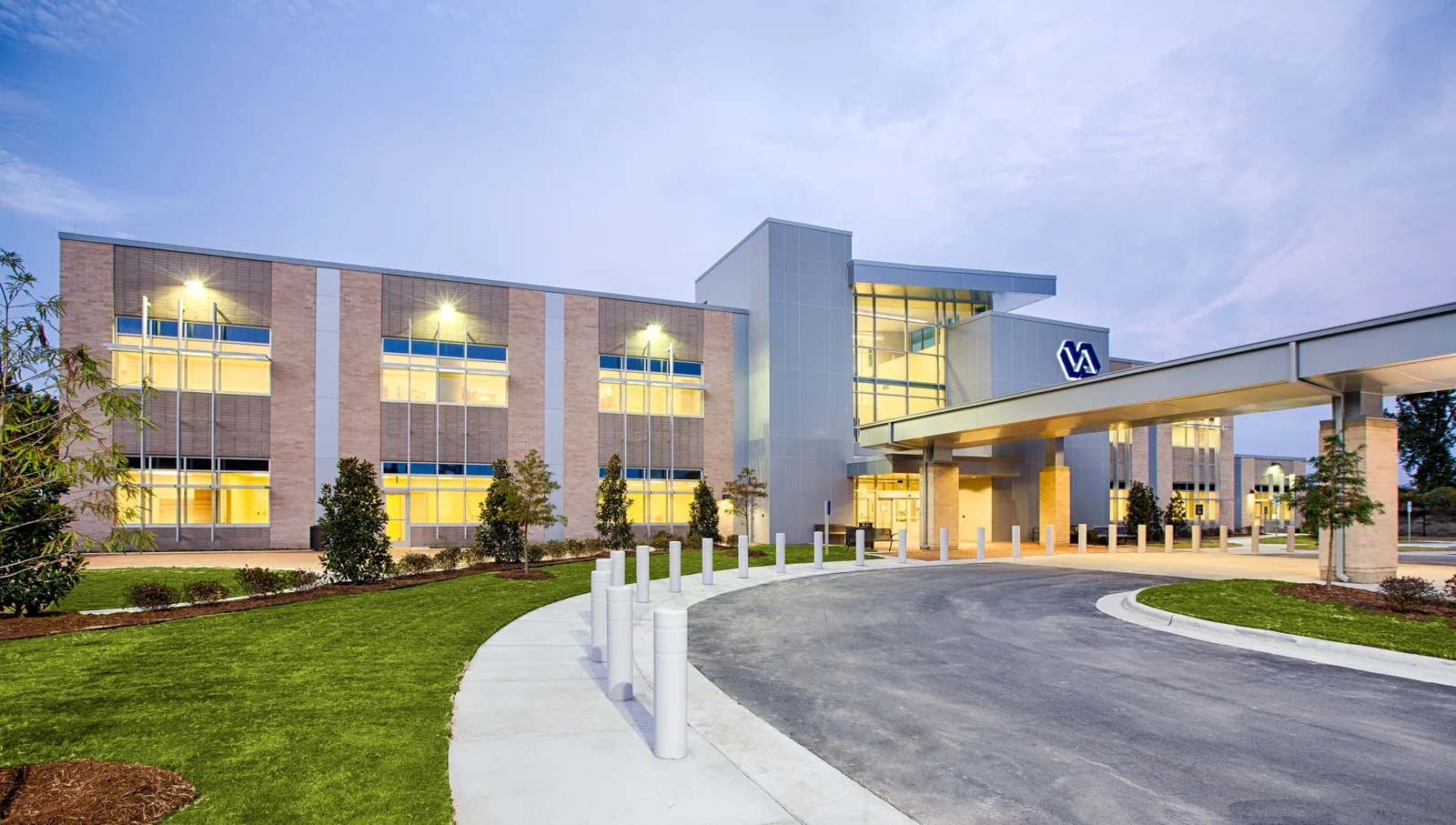
Herndon Medical District
See how we handle it
Commercial Roof Inspection
Scope, sequence and repair notes