
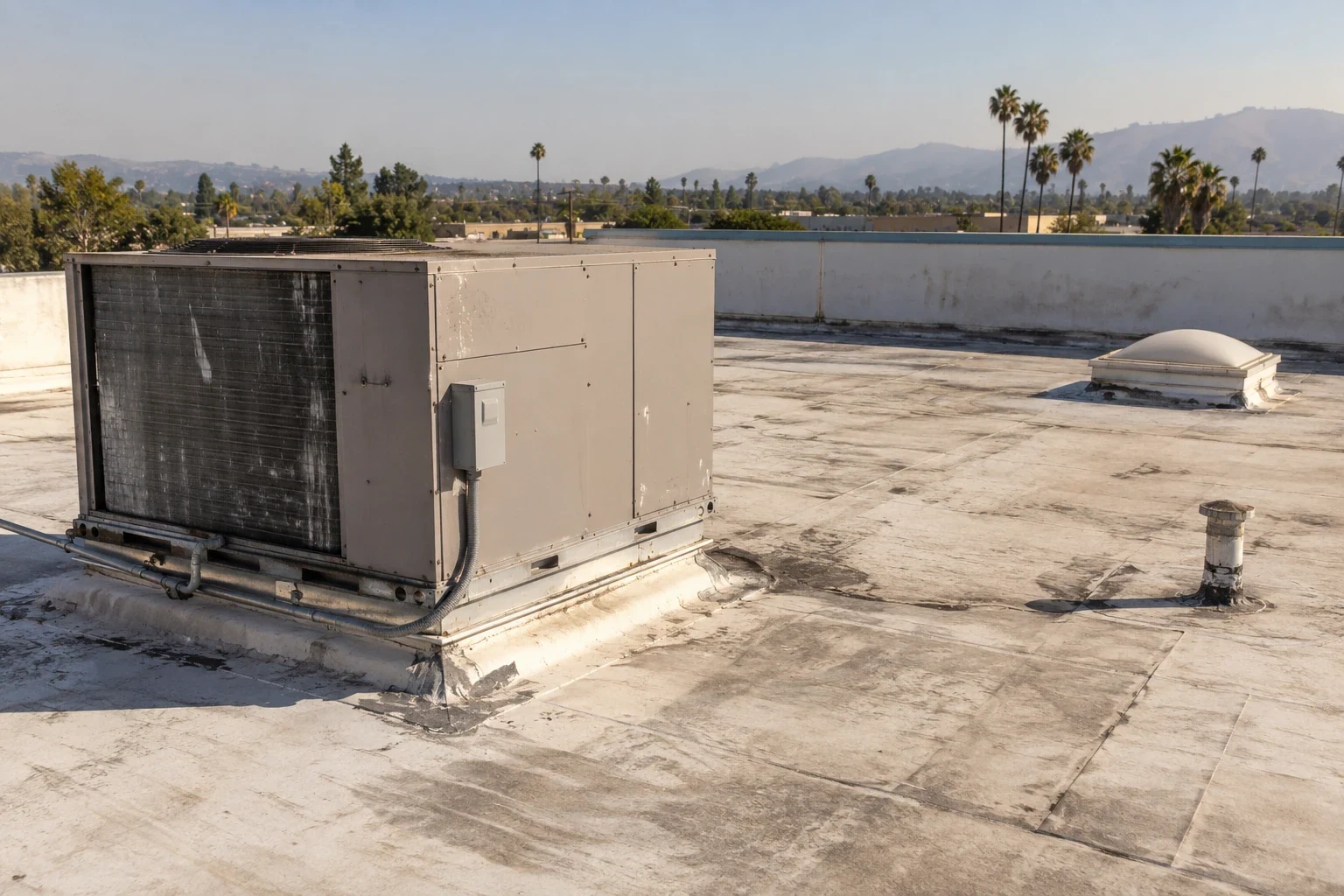
Commercial Roof Inspection in Clovis, CA
Commercial Roofing Services
A new damp ceiling corner after the first winter rain can be enough reason to inspect a roof even when the rest of the building appears unaffected. For an owner in Clovis, CA, the useful question is how that small symptom relates to the assembly above it and what needs attention before the next exposure. We begin with the reported change and safe access, then examine the field, details and drainage that could explain it. Any active opening is assessed for feasible temporary protection, while the inspection establishes which findings support repair and which need additional investigation before a permanent decision.
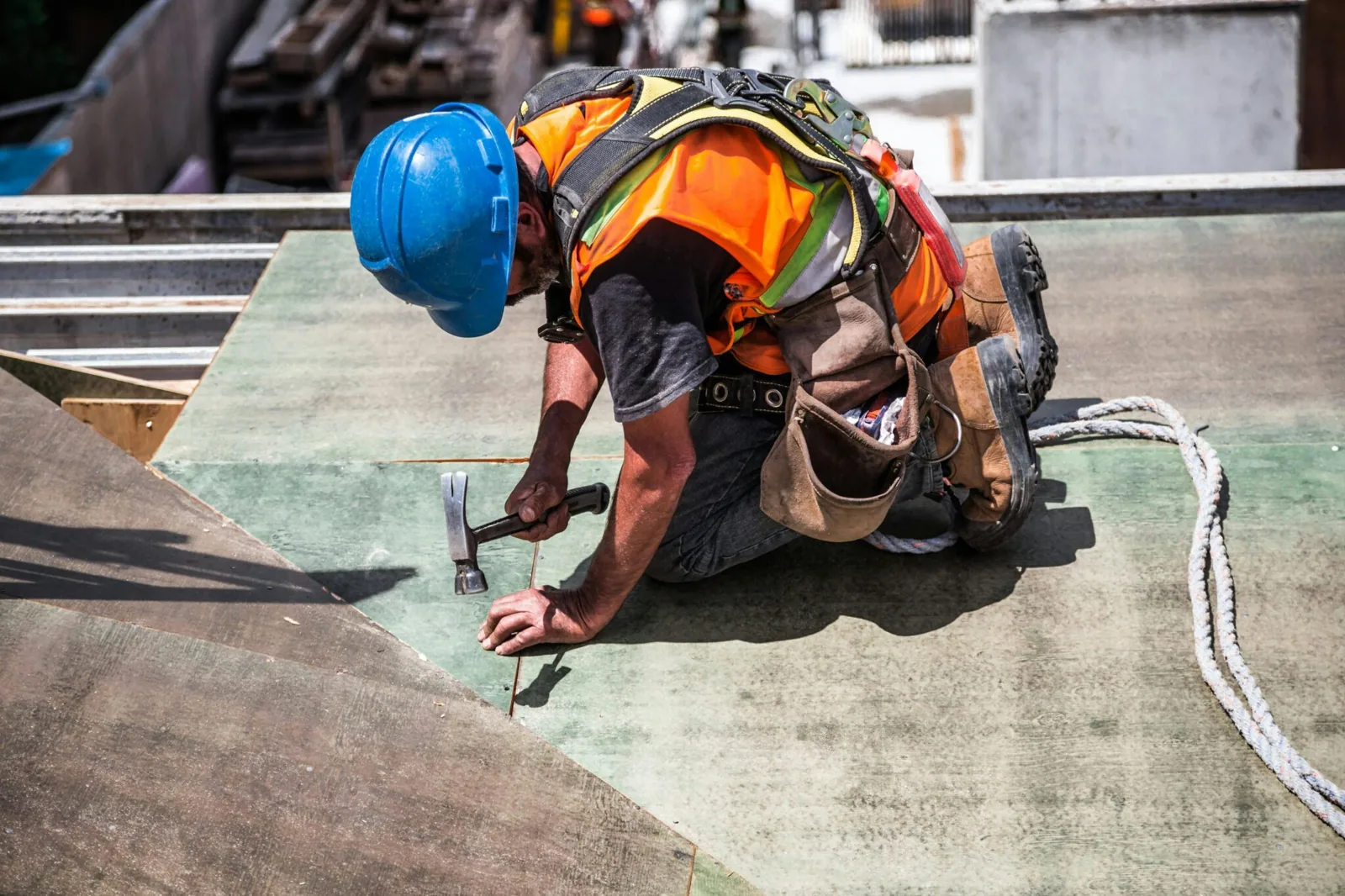
The building history and access limits
A previous repair invoice, roof drawing or warranty document can explain where the assembly changes and which areas deserve closer attention. We compare those records with what is present, because an old drawing may not include later equipment or repairs. The owner's account of interior water, recent rooftop service and drainage behavior also helps set the inspection route. A roof assessment before a property transaction adds the timing and access permissions needed for that decision without changing the need to examine the actual roof.
An inaccessible section, locked equipment enclosure or area with questionable support must be stated as a limitation. We assess safe access before walking the covering and coordinate with the building contact where operations restrict entry. No roof walk can describe concealed layers it did not examine, and a limited visual view should not be presented as a complete condition assessment. We explain what was reached and how any unresolved area can be investigated further.
The field and the service routes
A scuffed route between the hatch and equipment can concentrate wear that differs from the surrounding field. We examine that path alongside seams, repairs and visible membrane damage, checking the condition where movement, repeated traffic or debris could affect waterproofing. Seams are evaluated with methods appropriate to the material and conditions; an aggressive probe on an unsuitable surface can cause damage rather than clarify it. Where a connection is questionable, we document the location and the additional examination or repair it needs.
A drone view of roof surface patterns can complement the walk where aerial context is useful, but it does not replace tactile checks or establish hidden material condition. A dark image area may represent staining or a surface change rather than moisture below. We relate visible patterns to the hands-on findings, preserving that distinction when deciding where to sample or repair. The investigation should become more specific as evidence accumulates, not more certain simply because an image is detailed.
The walls, curbs and outlets
A loose wall termination can admit water behind a membrane that looks intact at its base. We examine the transition from the field up the wall, the termination and the protective components above it, identifying gaps or movement that may interrupt continuity. Curbs, pipes and other penetrations need similar attention to their geometry and connection. Correction of a failed roof flashing follows the identified defect, rather than replacing every nearby sealant joint without establishing its role.
At an outlet, visible debris is only one possible restriction. We examine the roof connection, water path and surrounding elevations, noting whether standing water suggests a slope or drain-level problem. Flow checks are selected and coordinated so they do not create unnecessary exposure inside. A concealed pipe issue may need plumbing investigation. The written findings separate the roofing detail from drainage concerns beyond the assembly, giving the owner a practical route to resolve each condition.
The questions beneath the surface
Blisters, soft areas and recurrent leakage can warrant investigation of the retained layers, but surface appearance alone cannot establish the moisture extent. We discuss authorized openings or sampling when they are needed and restore investigation openings appropriately. Thermal moisture screening with confirmation may help target that work when the roof and conditions support useful results. The owner receives the basis for further testing and the limitations of any method used, rather than an image being treated as a direct measurement of every layer.
Records may identify a roof age or construction, while missing records leave questions that cannot be resolved by appearance alone. We state the assembly information established and distinguish it from estimates or unexamined areas. Remaining performance also depends on the condition and future maintenance, so a visual visit cannot promise an exact replacement date. We discuss the repairs indicated now and the factors that could change the larger decision after further investigation.
The heat record and winter dampness
Fresno's July 2024 summary records 26 triple-digit days and a mean temperature of 90.0 F. That nearby regional history supports paying attention to exposed movement details and planning inspection access for actual hot-weather conditions in Clovis. It does not supply a diagnosis for an individual blister or seam. We examine the defect, its support and its restraint before connecting it to a possible mechanism, keeping the weather context separate from the roof findings.
Central Valley tule fog can form after sunset and reach its greatest thickness before dawn. A winter visit therefore includes a check of visibility and surface dampness, with timing adjusted where those conditions affect access or an investigation method. Clovis Community Medical Center on Herndon Avenue is a local healthcare setting where scheduling also requires discussion of operating needs. For inspection above hospital functions, the particular facility establishes access and controls while the roof examination establishes construction and condition.
The findings and next authorization
A report is useful when a building contact can locate the defect and understand its consequence. We record the findings with photographs and roof references, explain the likely mechanism where the evidence supports it and separate immediate repair from monitoring or further investigation. Written roof findings with identified limitations should preserve areas that were not accessible and tests that were not performed. That prevents a budget decision from relying on a certainty the visit did not provide.
In Clovis commercial building inspections, the follow-up can include local detail repairs, drainage work or a broader assembly assessment depending on what was found. The owner can authorize urgent correction while separately deciding on moisture sampling or replacement planning. We explain the effect of leaving a defect untreated and the conditions to watch for, without turning every inspection into a replacement recommendation. The record becomes the reference for checking the repair and comparing future condition.
Commercial Roofing Questions
Can a visual inspection identify wet insulation everywhere?
Concealed material requires evidence beyond surface appearance. A visual visit can identify reasons for sampling or moisture screening, while appropriate confirmation establishes layer condition at investigated locations. We state the limits of the visit and any further work needed.
What does an inaccessible roof section mean for the report?
That section remains a stated limitation rather than an assumed sound area. We describe the missing access, its effect on the conclusions and the means needed for a follow-up. The owner can then judge the report against the coverage actually obtained.
Can the report distinguish a repair from a replacement decision?
The condition and extent of the defects provide that distinction. Local damage over suitable supporting layers may support repair; broader assembly deterioration can warrant replacement investigation. We connect each recommendation to the findings instead of presenting all defects as equal.
Should recent mechanical work be mentioned before the visit?
Service routes and work locations can help focus the examination. Provide the timing and areas accessed if known, without assuming that a technician caused the problem. We examine those locations together with other plausible water-entry details.
Will the inspection establish our remaining warranty coverage?
The actual warranty and supporting records control coverage. Roof observations can identify conditions that need attention, but they do not substitute for the terms of the document. We review the available paperwork and distinguish inspection findings from coverage questions.
Describe the change that prompted the inspection
Give us the address, affected space and any roof or repair records you have. We will arrange safe access, explain the inspection coverage and identify the next action supported by the findings.
Related Pages
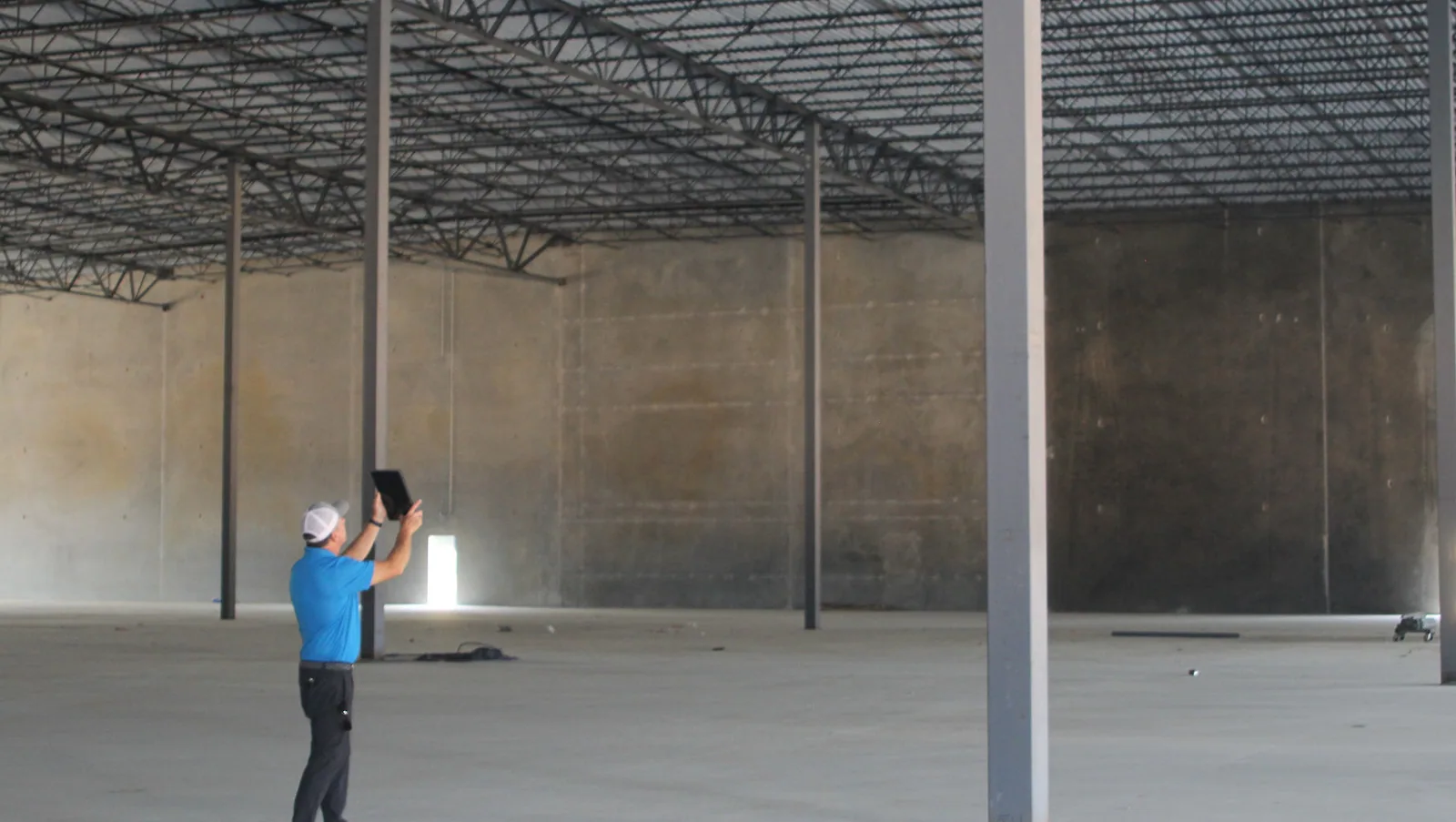
Roof Condition Assessment Before Purchase
Read the full page
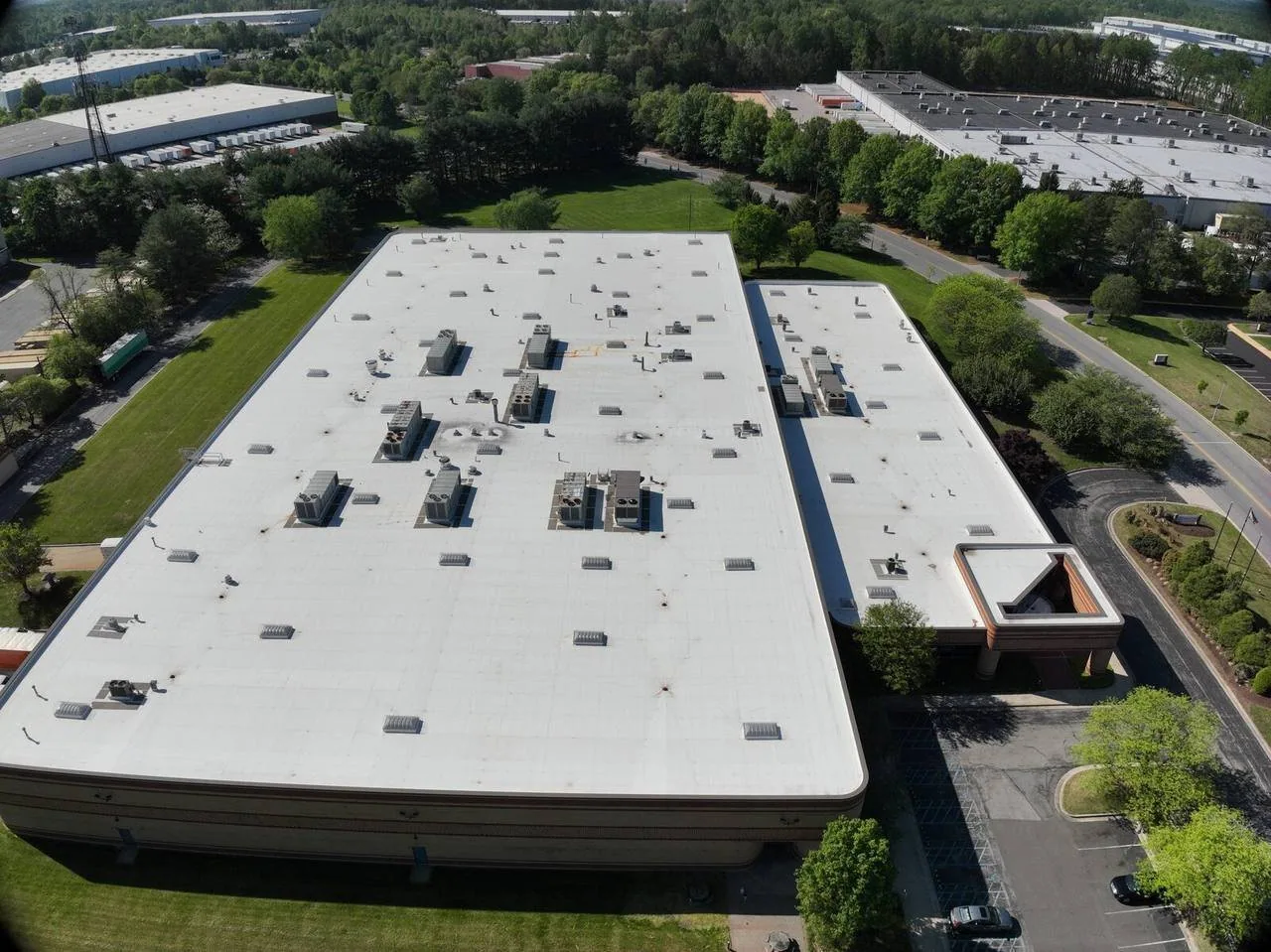
Drone Roof Inspection
See how we handle it
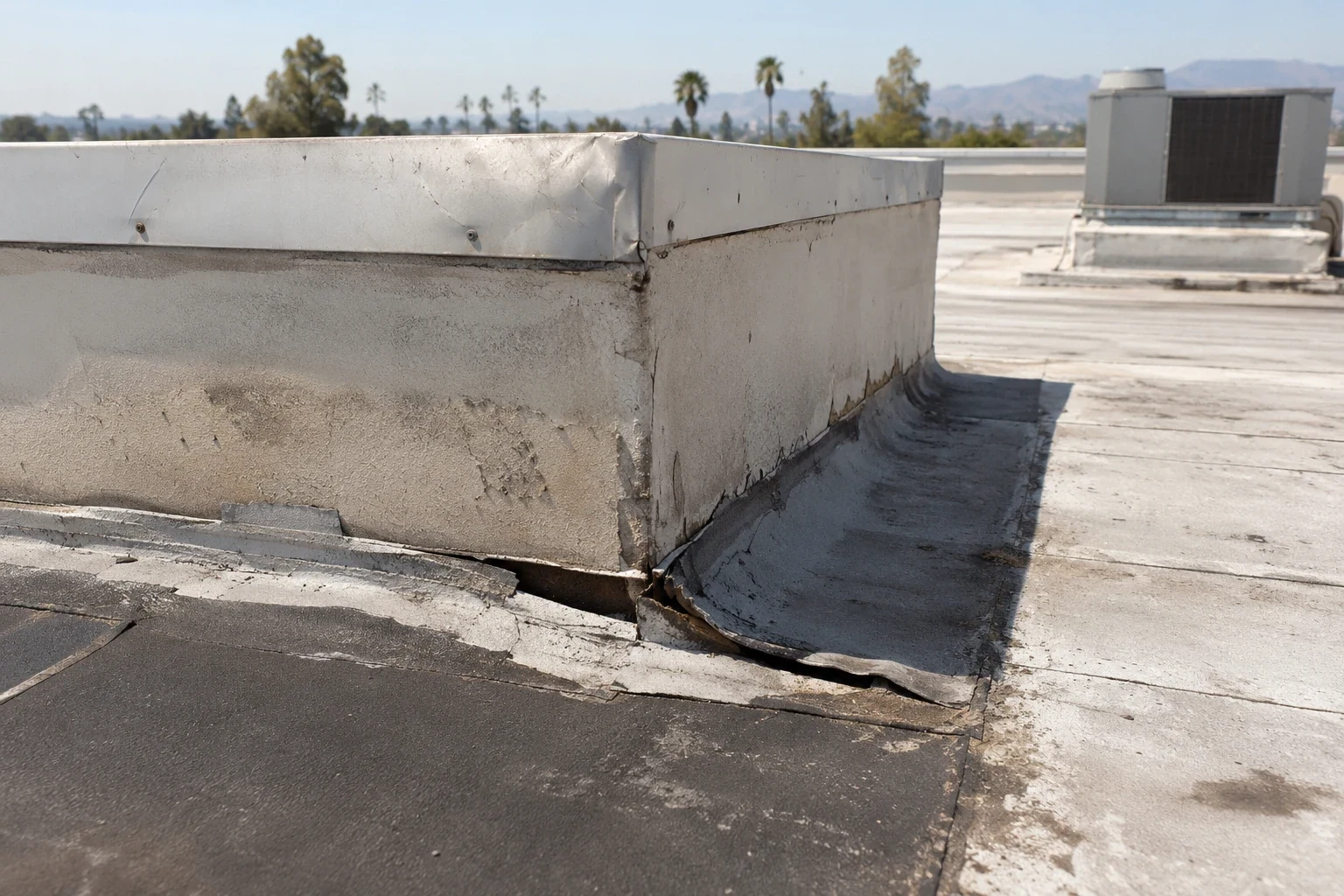
Flashing Failure Investigation in Clovis at Roof Transitions
Scope, sequence and repair notes
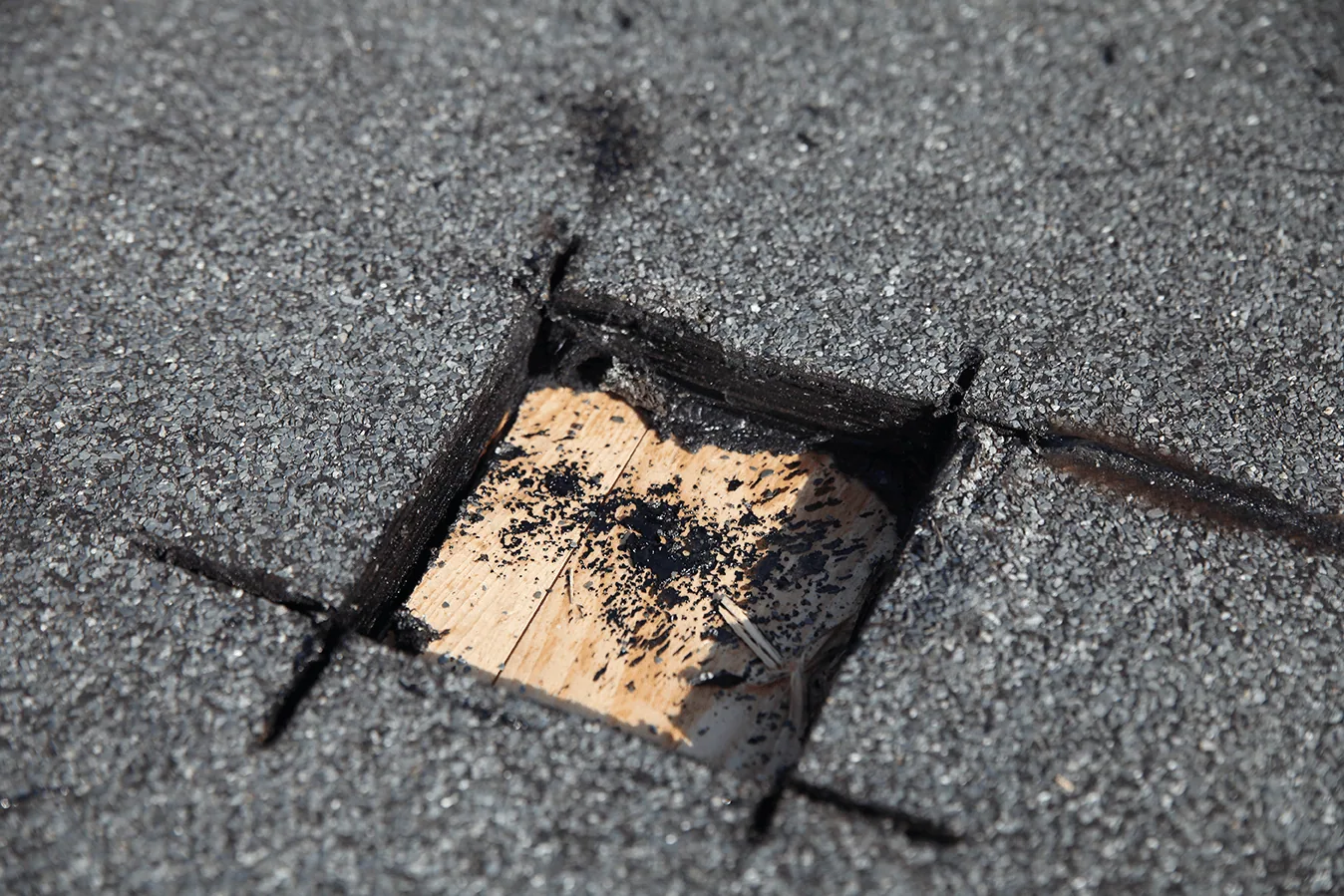
Infrared Roof Moisture Survey
Read the full page
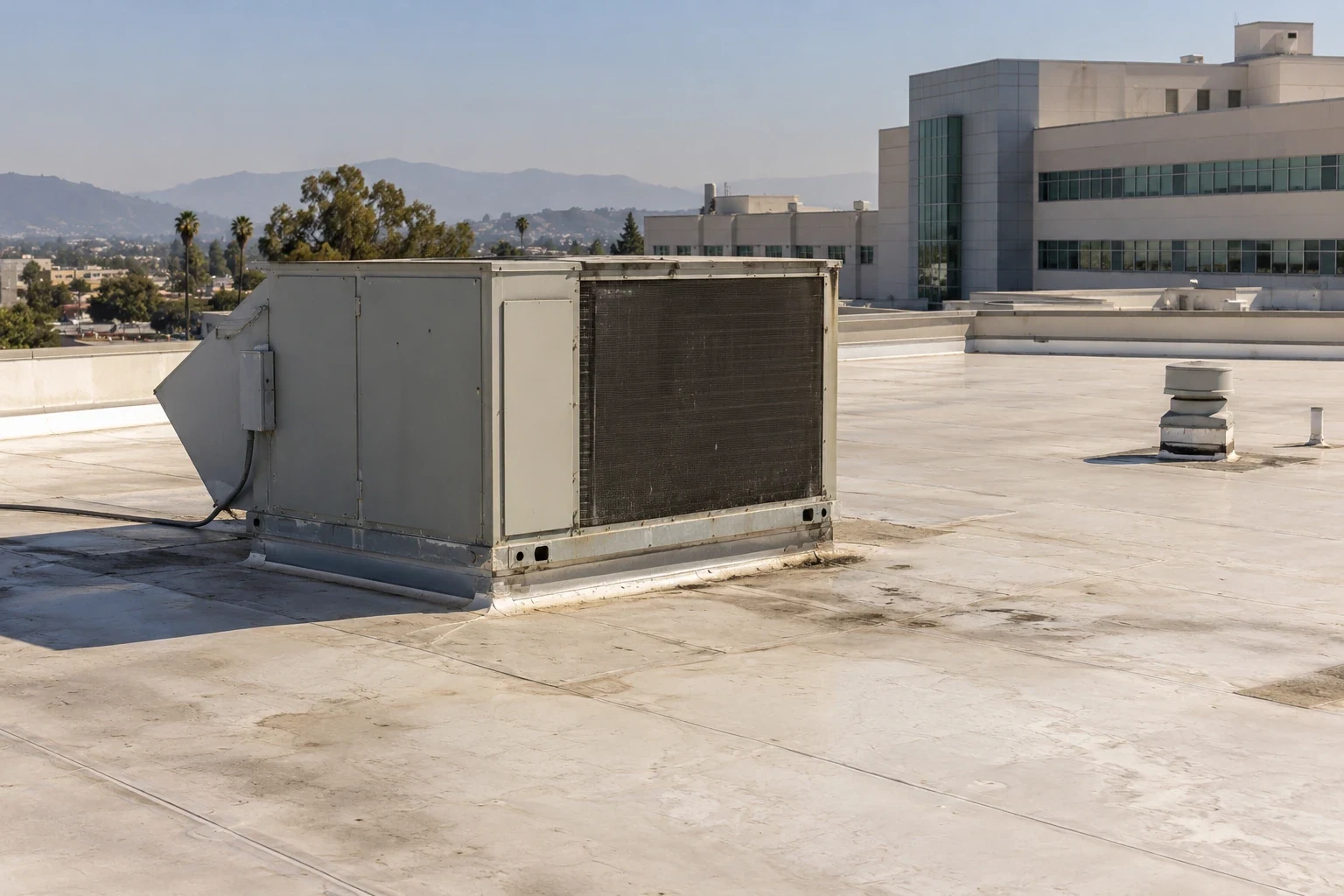
Hospital Roof Corrections Through Operator-Controlled Work
See how we handle it
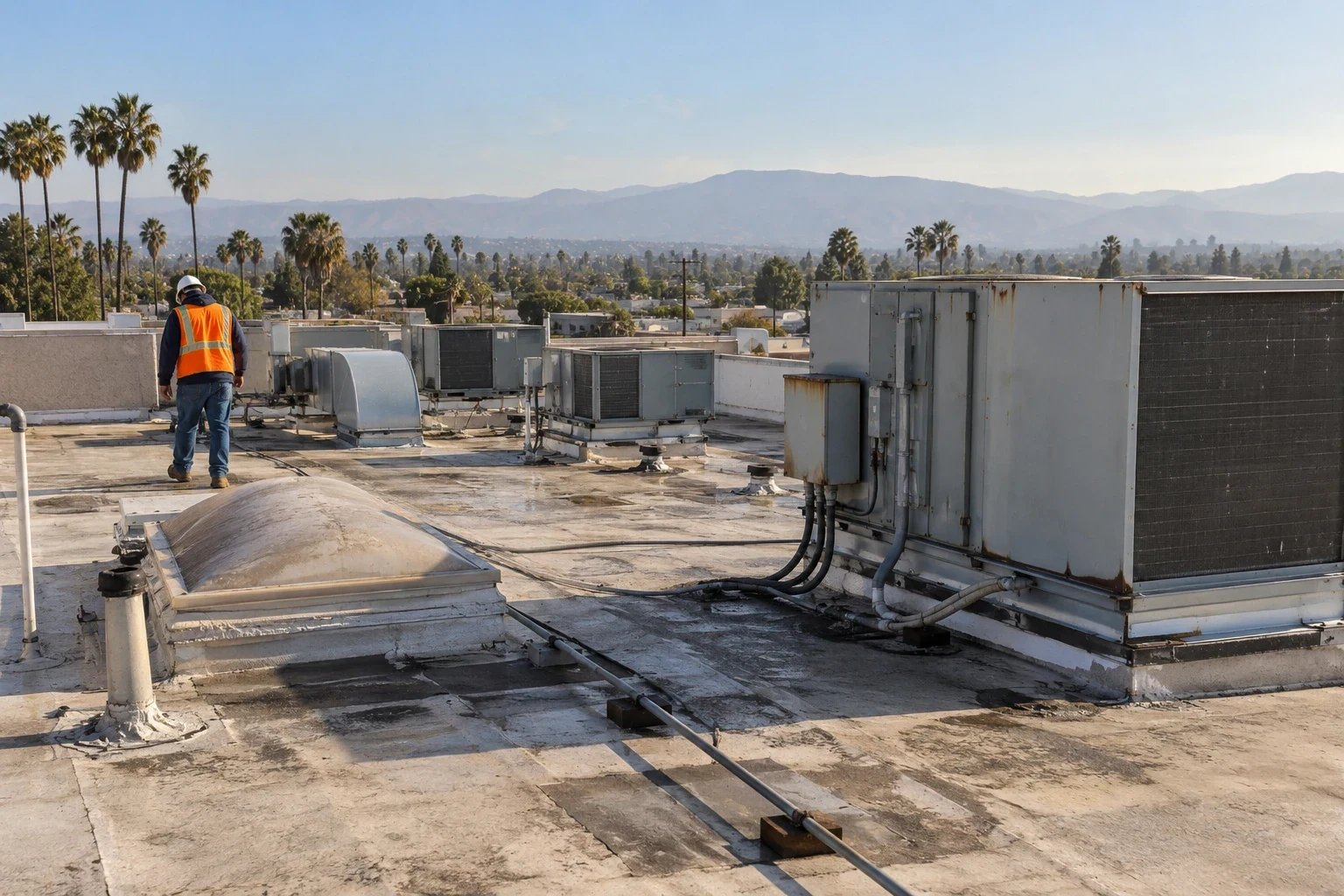
Roof Condition Records and Repair Planning
Scope, sequence and repair notes