Commercial Roofing on the Shaw Avenue Corridor, CA
Service Areas
Shaw Avenue commercial roofing starts with the building’s condition, not the name of a nearby retail destination. Owners along this Clovis-Fresno route may need repairs planned around customer entrances, deliveries and occupied office space. We locate the reported water entry, inspect connected roof details and explain whether the observed condition supports a focused repair or further testing. The Shaw Avenue corridor includes commercial activity and planned development at key intersections, so staging and work hours need to match the property. A phased plan keeps customer movement in view while defining exactly which roof sections the crew will address.
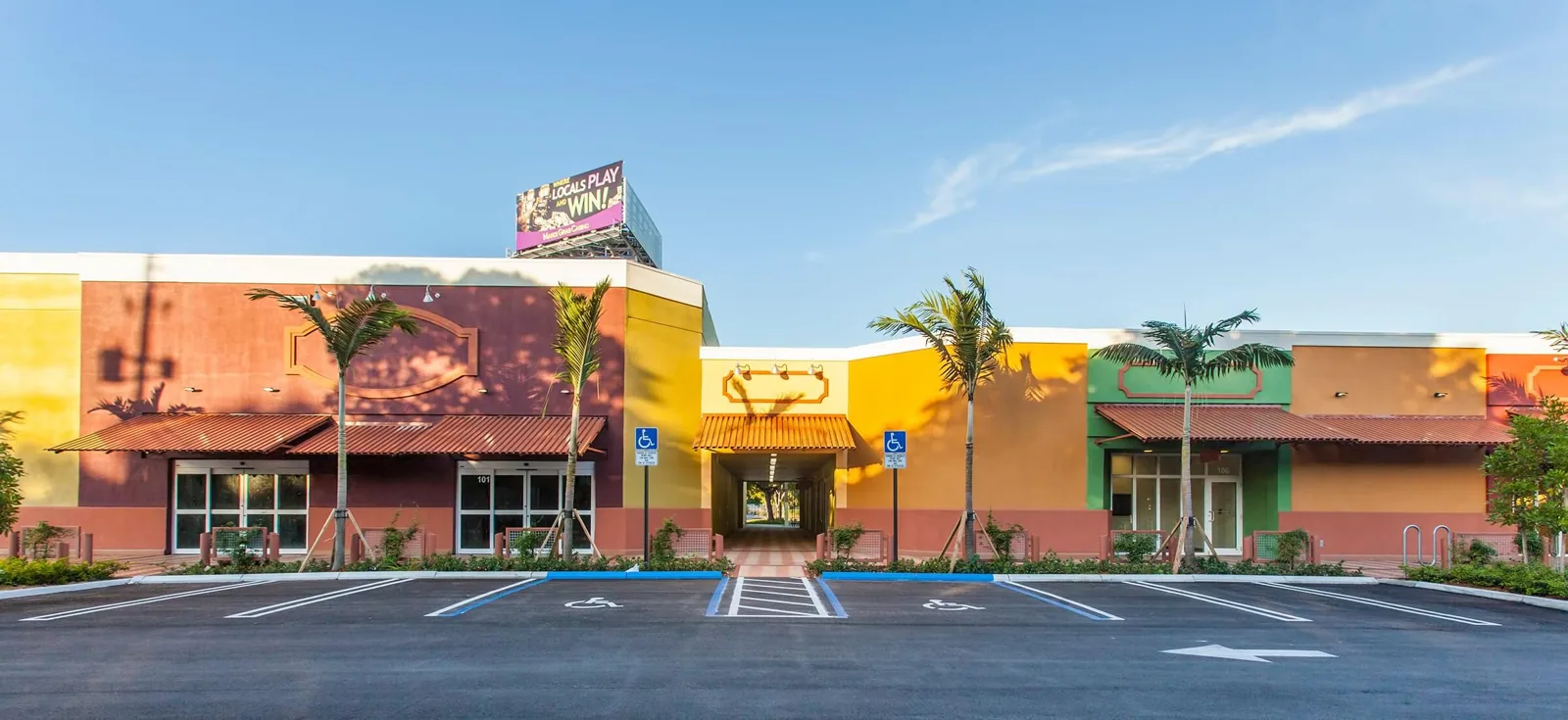
Retail and office sites along a busy arterial can need work that protects customer circulation as well as the roof. The building manager should identify service entrances, delivery periods and any storefront area directly below the repair zone. We use that information to plan lift placement, temporary barriers and material movement. On the roof, the crew verifies the actual assembly and checks whether water has affected adjoining sections before setting a repair boundary. A larger shopping complex may have multiple owners and separate maintenance contacts; each roof scope stays tied to the specific building and approval holder. This keeps coordination practical while avoiding assumptions based on the nearby retail use.
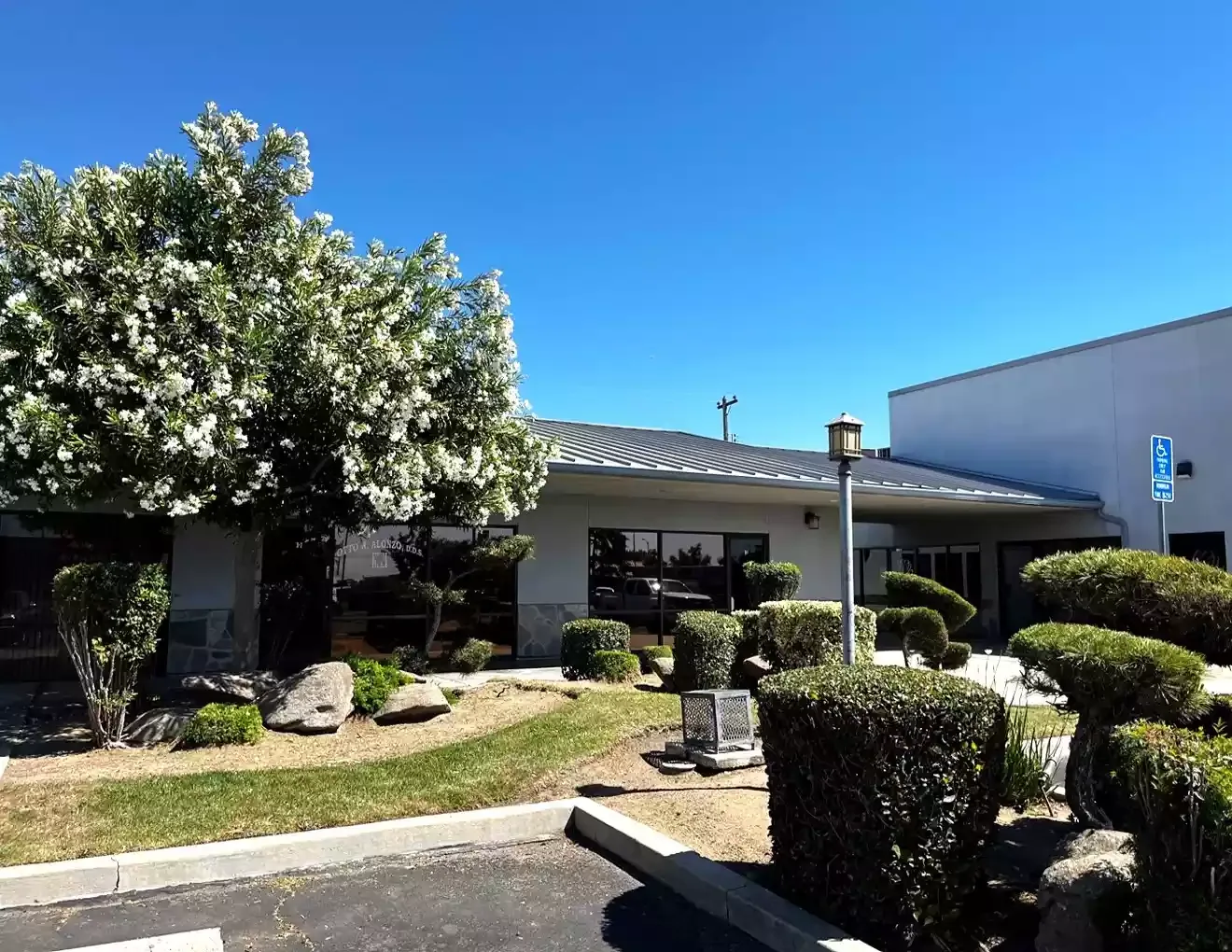
The tenant area beneath the leak
Water reaching stock, a counter or a ceiling grid needs a defined interior response before the roof investigation broadens. We ask the building contact to locate the wet area and describe what can be moved or isolated, then inspect the rooftop connections that might feed it. Rainfall timing, nearby equipment and any recent service work help identify the route. Roofing for shared retail buildings also requires a clear owner contact because the affected tenant may not control rooftop access or authorize construction.
A temporary closure is useful when it limits water entry while the surrounding condition remains under investigation. We explain where it is placed and what permanent work still needs approval. Calls concerning active roof trouble are received at night and during weekends or holidays as well as during business hours. Access, surface condition and immediate hazards establish the response sequence, with interior protection coordinated through the people who control the space rather than assumed from the retail address.
Equipment water and membrane damage
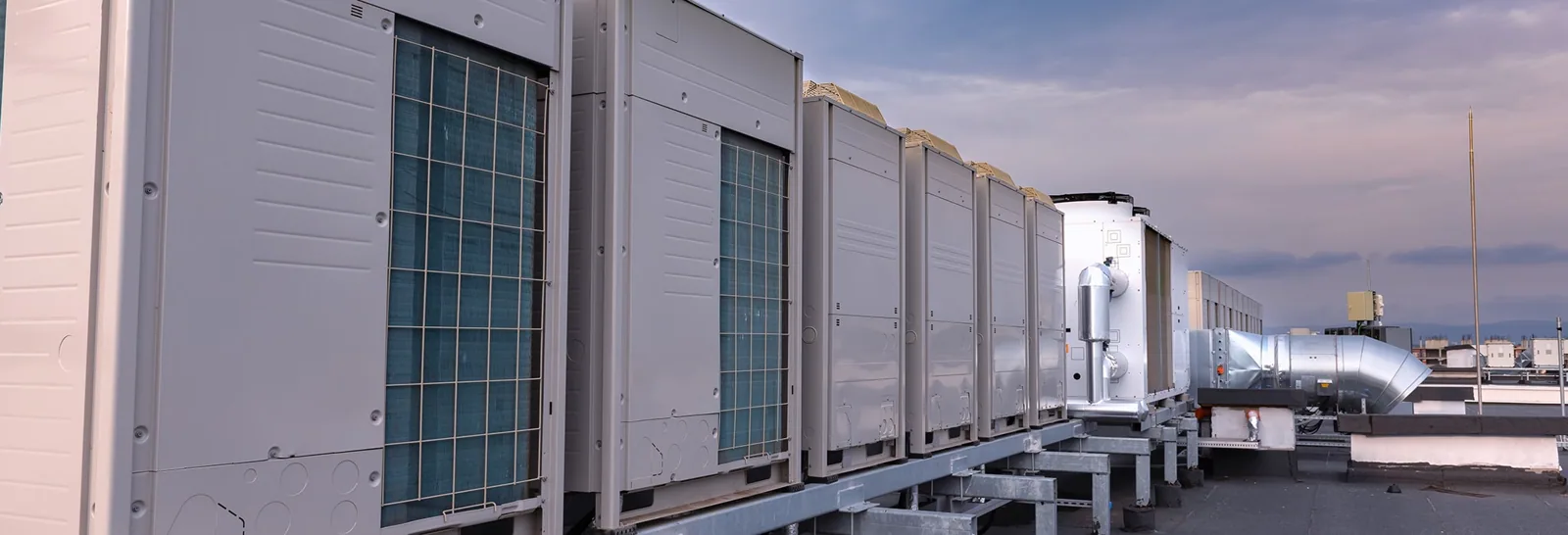
A rooftop unit can produce a water complaint through its curb flashing, a condensate route or a service opening left inadequately closed. We examine those possibilities separately, because a patch at the nearest seam may leave the actual discharge or penetration problem unresolved. The repair proposal identifies the waterproofing defect and any equipment task that must occur first. Equipment curb corrections need a workable connection to the existing membrane and support, including coordination when the unit has to be lifted or isolated.
Traffic near serviceable equipment can also create punctures or wear at paths used repeatedly. We examine the path and the damage, then explain protective measures appropriate to the system after the membrane is repaired. A walking surface must not conceal wet layers or prevent future inspection of a critical connection. Its position should follow the actual service route, so the maintenance contact can reach the equipment without creating a new weak area at the edge of the protection.
The outlet and retained rainwater
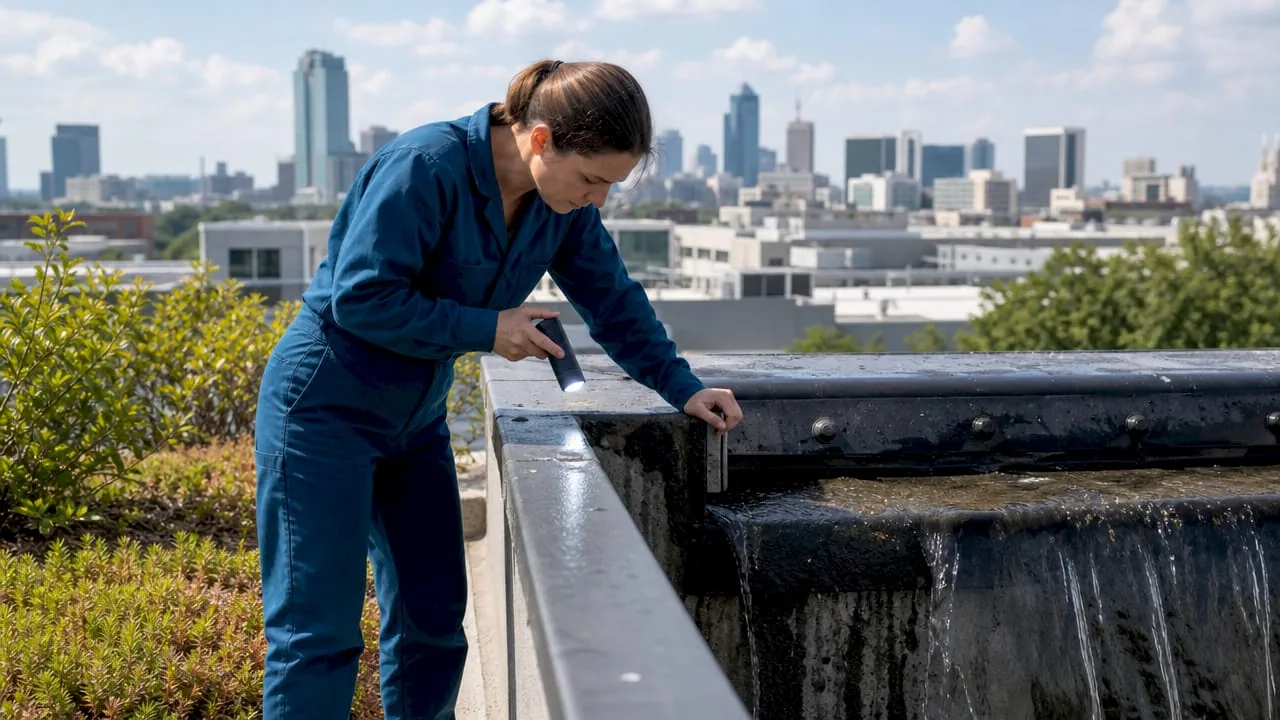
Water that remains near a drain after rainfall can indicate debris, a restricted outlet or a roof elevation problem. We inspect the accessible drainage route and the membrane connection at the opening before selecting work. Debris removal may restore flow, while a depressed area needs a different correction and may influence a replacement design. Work at drains and scuppers should explain which condition is being addressed, because an outlet patch alone does not change how water reaches it.
The owner also needs to know what remains outside the roof work boundary. A discharge problem farther into building piping may need another trade, and that finding should be identified rather than buried in a broad roofing allowance. We coordinate accessible checks and document the connection that is repaired. Where roof levels or added layers have altered drainage, we evaluate those conditions alongside moisture and attachment before suggesting a coating that would preserve the existing geometry.
Hot-month inspection and restoration limits
Fresno experienced 26 triple-digit days in July 2024, with a monthly mean of 90.0 F. For a Shaw Avenue property, that regional record helps explain why thermally moving details deserve attention during an inspection, but it does not establish damage at the assigned property. We look at the actual condition of membrane laps, curb connections and perimeter transitions. A stiff repair over a moving interface may need rebuilding rather than another layer of surface sealant.
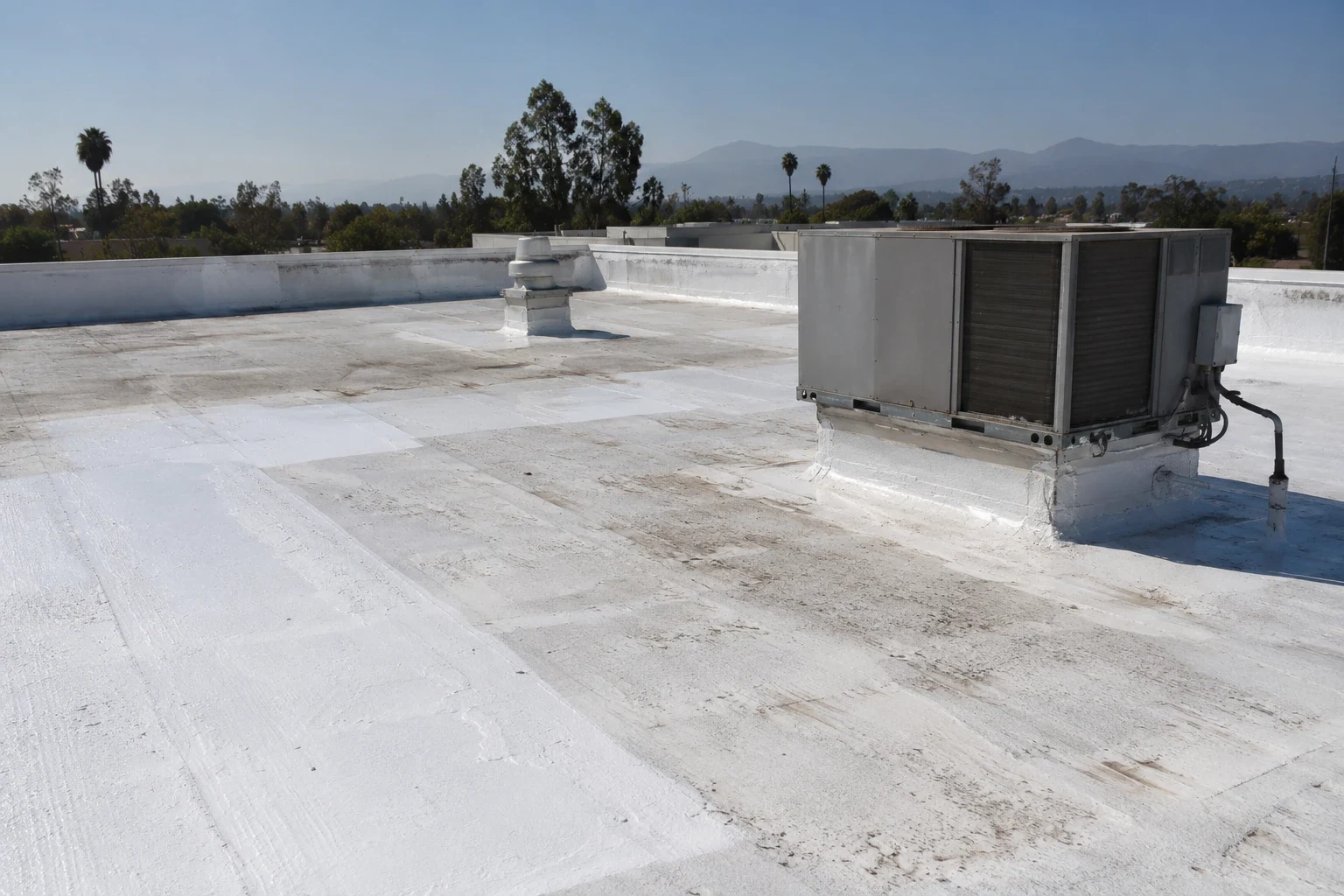
A restoration proposal requires a dry and suitable substrate, a compatible product and repairs completed before the field application. We check those prerequisites and explain any material that must be removed. Restoration of an eligible assembly can be compared with replacement when the owner has clear findings about retained moisture and attachment. The comparison should describe which weaknesses each option resolves, including drainage or edge conditions that a field coating would leave unchanged.
Business access and damp-season work
Tule fog forms after sunset in the Central Valley, becomes thickest before dawn and can thin as the day warms. A damp roof near Shaw Avenue needs condition checks before adhesives or coatings are used; a dry interior and an open business do not establish a suitable application surface. We review the product requirements at the actual work area and adjust the task order if cleaning can proceed before application. That separation helps the building contact understand why preparation and permanent closure may require different visits.
For an owner also arranging work in Old Town Clovis or elsewhere in Fresno, each roof plan should reflect its entry routes and tenant obligations. We establish material staging, occupied paths and the sequence for any removal above active space. Noise or equipment isolation should be discussed before the affected tenant commits to a business schedule. At completion, the condition record explains the repaired area and any remaining concerns, so a local repair is not mistaken for rehabilitation of the entire building.
Commercial Roofing Questions
Can the tenant arrange a repair without the property contact?
Permission to access and alter the roof is essential. A tenant can describe the interior problem, but the owner or designated manager must establish construction authority and access. We use both perspectives to locate the affected room and agree on the work boundary before proceeding.
Does clearing a drain finish a ponding-water complaint?
Flow after clearing needs observation. Debris may explain the backup, while a low area or raised outlet can leave water behind even with an open drain. We inspect that distinction and describe any additional geometry or membrane work instead of treating cleaning as a complete correction.
Can one business stay open beneath a neighboring roof section?
The daily work zone and interior separation matter. We review removal exposure, debris routes and equipment needs with the building contact, then identify where operations can continue and where interruption may be needed. A shared address alone does not establish a safe construction boundary.
Should roof access paths be included in a repair proposal?
Repeated equipment servicing makes the traffic route relevant to the repair. We examine damaged areas and discuss suitable protection after moisture and membrane defects are addressed. The proposed path should preserve drainage and access to details that still require inspection.
A Shaw Avenue roof problem
Describe the affected tenant space, the water timing and the property contact responsible for roof access. We will review containment, investigation and the permanent work boundary for that building.
Related Pages
Shopping Center Roof Repairs Across Lease Boundaries
Read the full page
Rooftop Equipment Curbs and Supports
See how we handle it
Roof Drains and Scuppers
Scope, sequence and repair notes
Roof Coating Restoration
Read the full page
Old Town Clovis
See how we handle it
Fresno
Scope, sequence and repair notes