
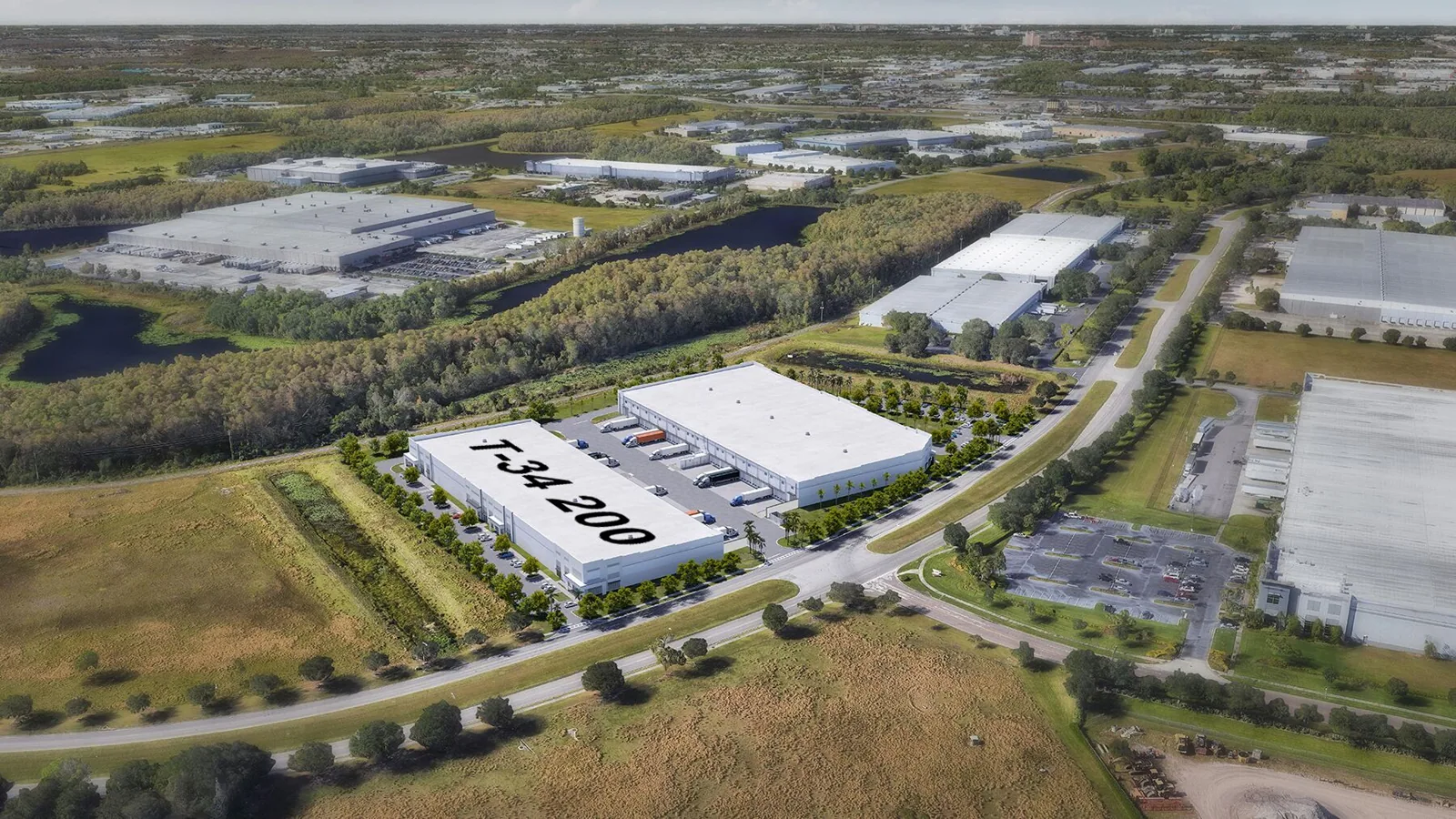
Roofing for Manufacturers in Clovis, CA
Industries We Serve
A drip reaches the edge of a production line during the first winter storm, and the plant manager has to protect equipment without assuming that the roof can be opened over a working shift. For a manufacturer in Clovis, CA, the immediate task is to contain the exposure and identify the roof detail feeding it, while the permanent repair must account for extraction equipment, power, process piping and material movement. We establish the affected production area and roof access, then examine the membrane and penetrations associated with that area. A temporary repair may allow further investigation to proceed under controlled conditions. The eventual removal boundary depends on wet materials and substrate condition, with shutdowns arranged by the plant for the systems that actually need to be disconnected.
Process penetrations and moving supports
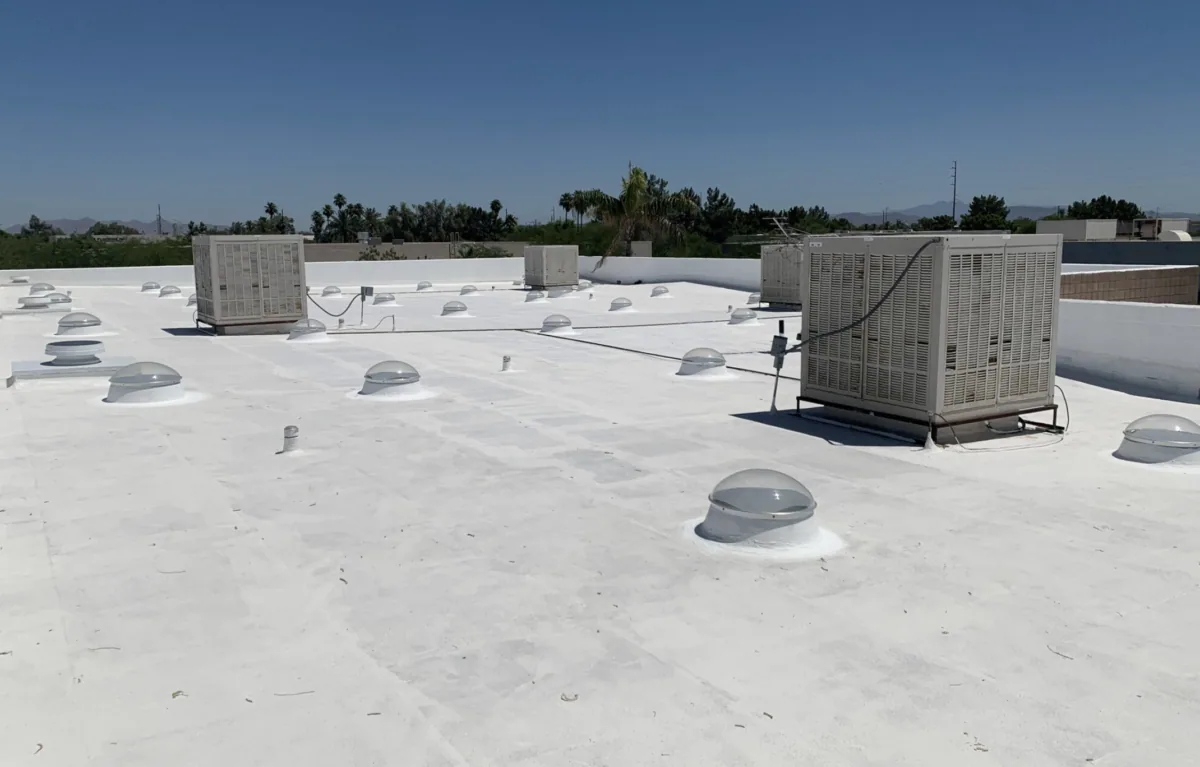
A pipe sleeve can remain intact while nearby insulation compresses under an equipment support, leaving the flashing stretched and water collecting at its base. We examine the supporting arrangement as well as the sealant, because replacing a bead does not correct movement or insufficient flashing clearance. Penetration flashing repairs should permit the roof material to turn up and terminate on a stable surface. Process trades identify which pipes carry hot material, which can be isolated and which require continuous operation. We coordinate the roofing detail with those constraints before dismantling anything. Where supports rest directly on the roof, load distribution and protective separation need review; the permanent correction may involve a support change rather than a larger patch across the same stressed area.
Production protection and material routes
Dust from insulation removal can reach a loading opening below the roof edge if the material route is poorly located. We discuss product exposure, receiving schedules and ventilation with the plant representative, then agree the boundaries for debris handling and new material storage. Roofing over manufacturing space needs protection appropriate to the actual process, including separation from products that cannot tolerate contamination. The crew route should remain clear of forklifts, overhead movement and emergency exits. Hot work, solvents or strong odors require their own review before methods are chosen. A plant can sometimes maintain production under a protected area while work occurs elsewhere, but that decision follows the process conditions and site controls rather than a general promise that production will never be interrupted.
Local industrial planning and regional heat
The Clovis Research and Technology Park area includes planned manufacturing, assembly, research and business-service development near State Route 168. A plant roof serving those uses may have equipment, ventilation and process schedules that require different trade coordination than an office or support building. Define the affected production area and the authority who can approve a roof opening before work is set. Fresno’s summer heat history also makes actual surface and application conditions important during exposed repairs.
Wet insulation and operating costs
A damp insulation layer can remain concealed beneath a patched membrane, and the plant may continue operating while that material loses useful thermal performance. We investigate moisture distribution and assess whether the affected area can be removed within a limited repair. An infrared roof moisture survey can help identify areas for confirmation under suitable conditions, but the image alone does not establish every wet layer or the repair quantity. Testing and roof observations complete that decision. Plants with temperature-sensitive products may need the coordination used for logistics and distribution operations, although storage requirements are not the same as a manufacturing process. We connect the proposed roof work to the actual exposure below it and explain what the investigation can establish before removal begins.
Shutdown work and permanent interfaces
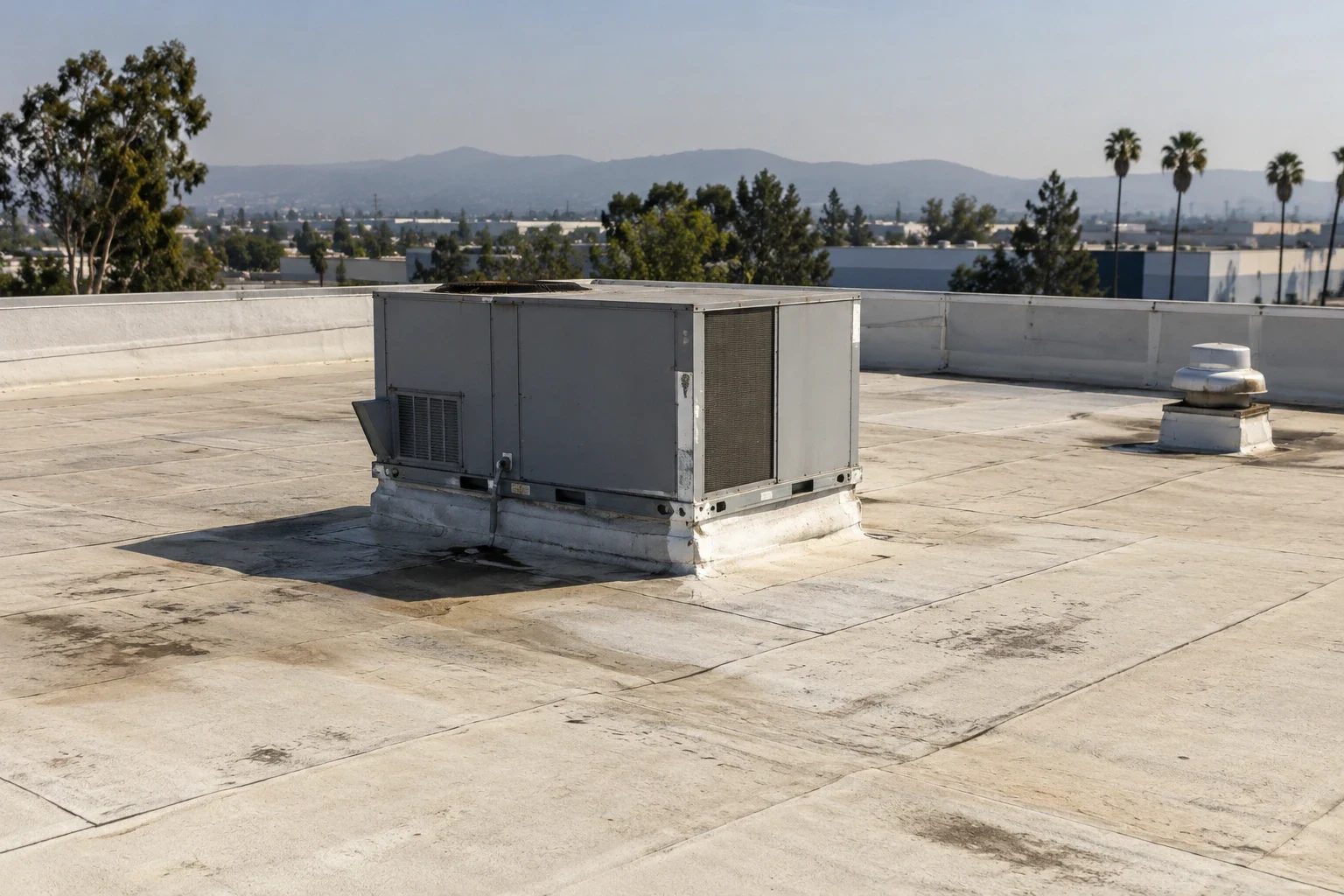
A duct connection that cannot be disconnected during production can determine the order of permanent repair. We agree the shutdown duration with the responsible trade, prepare the roof opening and replacement materials, then coordinate removal, support correction and flashing installation within the authorized interval. The equipment needs its own reinstatement check after roofing work; a watertight curb does not establish that a process exhaust is operating correctly. Rooftop curb and support repairs must also preserve drainage and maintenance access. Where a larger construction project is underway, general contractor coordination establishes which trade closes each interface. That arrangement avoids leaving the roof crew responsible for a disconnected service or the process trade responsible for an unfinished weather barrier.
Repair endurance between production changes
New equipment can cut through a roof that was recently repaired, so the plant needs a route for reviewing penetrations before installation. We discuss the proposed position, flashing clearance and structural support with the responsible parties, then identify roofing work that needs to occur before equipment is set. A maintenance program for the plant roof can check repaired details, drainage and walking routes after service visits. Emergency assistance remains available throughout the week and outside daytime hours, with access and conditions confirmed when an incident occurs. For a planned replacement, we describe daily closure and the protection needed over each production area. The permanent result should support future maintenance without forcing technicians to step across vulnerable seams simply to reach a filter or control panel.
Manufacturers managing roofs across multiple plants can standardize inspection fields while preserving each facility’s unique process risks and assembly history. Track membrane type, repair location, production adjacency and unresolved equipment discharge by site, then flag conditions that require engineering or trade review. Compare recurring defects across the plant group only after confirming the details are alike. A common report format improves capital planning, but the repair recommendation and operating window should still reflect the individual plant and its approved shutdown schedule.
Manufacturing facilities in Clovis may be served by different roof assemblies across production, research and support buildings. Tie a multi-site assessment to each plant’s area, current process use and documented repair history, and flag open questions about equipment supports or deck condition before capital work is priced. That gives facilities and procurement teams a comparable record without treating every building as a duplicate of the last project.
Commercial Roofing Questions
Can a production line stay running below the repair?
Keeping the line running requires protection appropriate to the actual process exposure. We assess dust, falling debris, water and ventilation concerns with the plant representative. Some repairs permit a protected operating area, while others require a pause or relocation. The work boundary should be agreed before removal reveals more material than the first inspection showed.
Will sealant around a process pipe stop recurring leaks?
Sealant cannot correct movement or unsuitable flashing geometry by itself. A pipe that moves relative to the roof may need a detail that accommodates that movement, and compressed insulation may need repair. We examine those causes before treating the visible gap as the entire defect.
What has to be ready for a short equipment shutdown?
A short shutdown requires available trades, prepared materials and an approved repair boundary. We identify the disconnect and reinstatement responsibilities, prepare suitable roofing materials and agree what happens if concealed damage is found. A shutdown schedule should include time for the equipment trade to restore and check its system.
Does an infrared image prove how much insulation to replace?
Confirmation through roof investigation sets the removal quantity. Thermal differences can have causes other than moisture, and survey conditions affect interpretation. We use the image to guide checks, then relate confirmed wet material to the assembly and the repair boundary.
How can new machinery avoid damaging the renewed roof?
Early coordination provides room to solve the interface. We review planned supports, penetrations and service access before installation, rather than attempting to seal a crowded opening afterward. The permanent detail must allow future maintenance without repeated cutting or concentrated loads on the roof surface.
Water entry near a production process
Tell us where water is reaching the plant, what equipment must remain running and who controls rooftop access. We will establish the immediate protection requirements and discuss the shutdown work needed for a lasting repair.
Related Pages
Skylight and Penetration Flashing
Read the full page
Manufacturing Roof Repairs With a Defined Work Release
See how we handle it
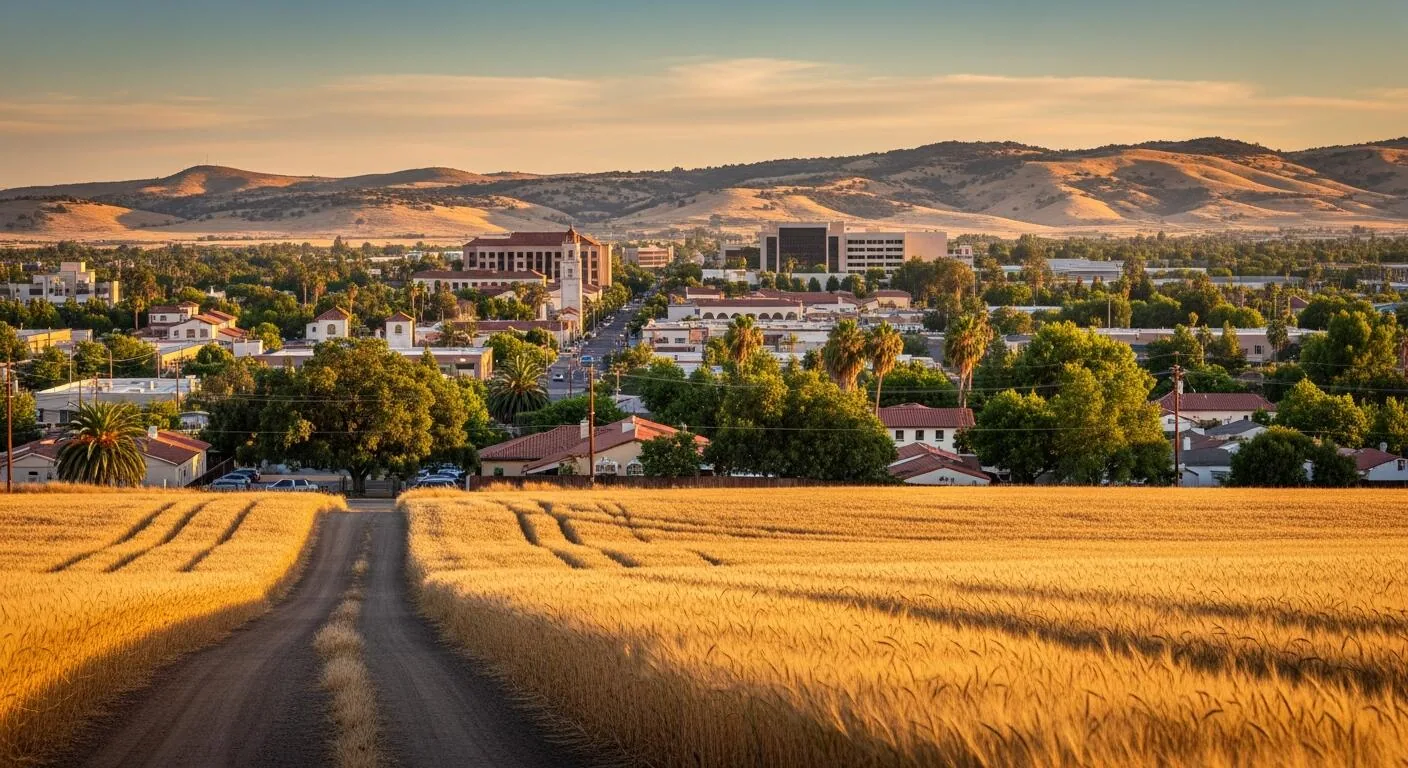
Clovis Research and Technology Park
Scope, sequence and repair notes
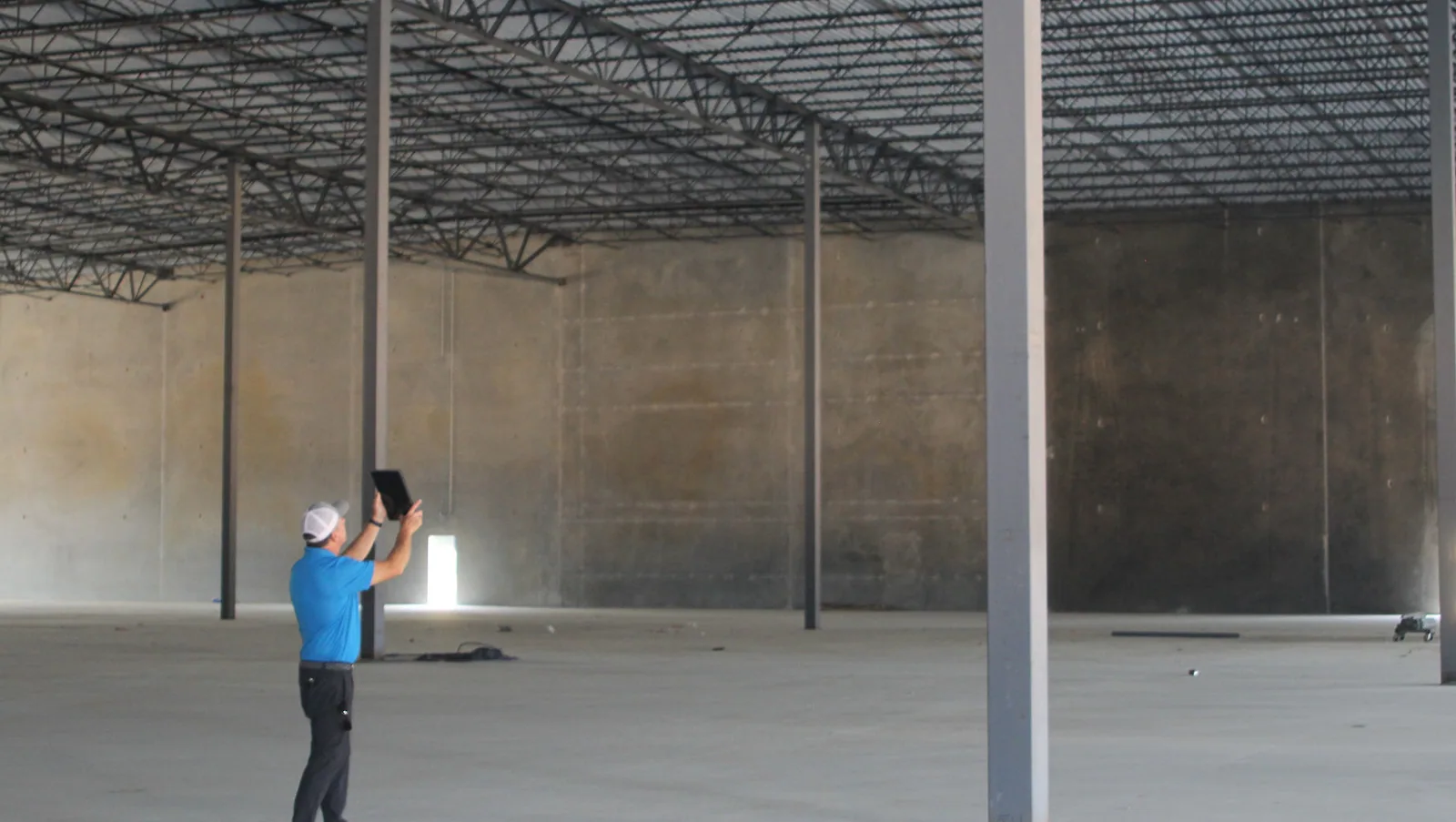
Infrared Roof Moisture Survey
Read the full page
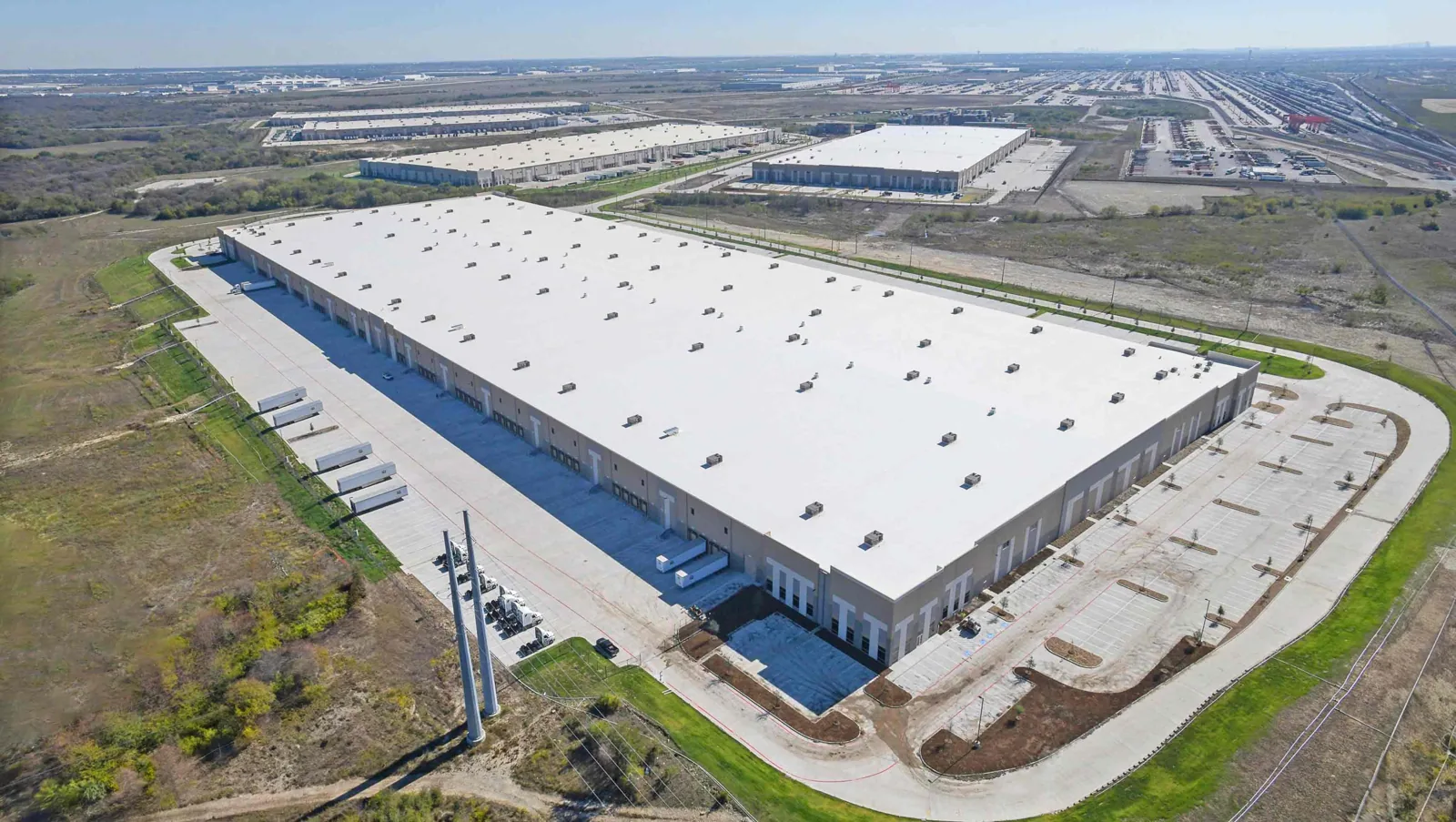
Logistics and 3PL Roofing
See how we handle it
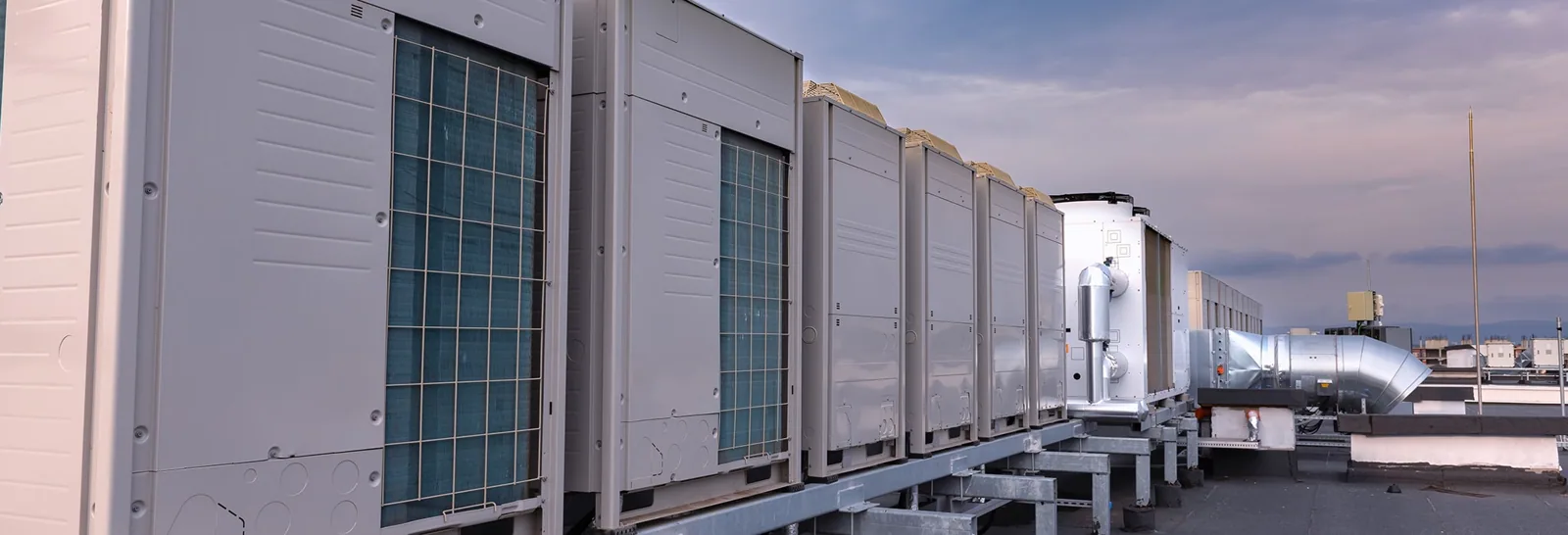
Rooftop Equipment Curbs and Supports
Scope, sequence and repair notes