
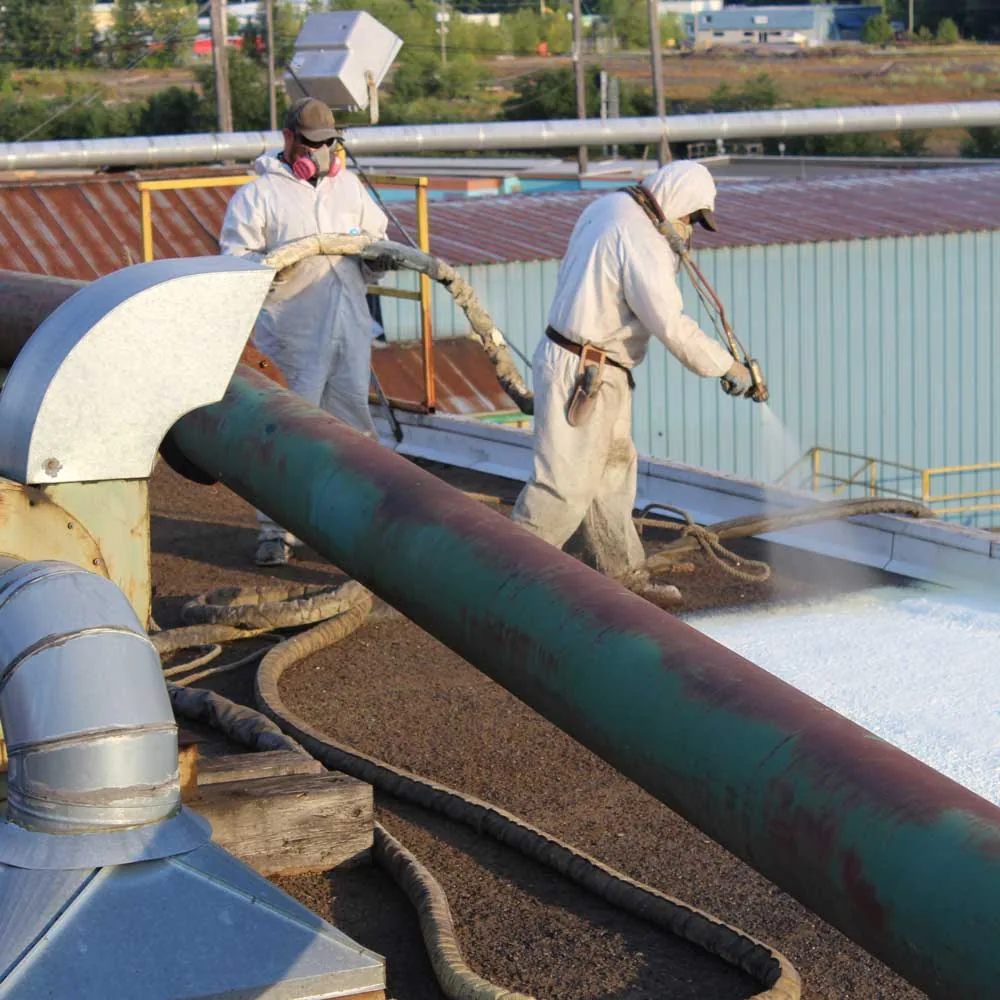
Spray Foam Roof Corrections in Clovis at the Protective Finish
Roof Systems
An owner noticing exposed foam or a damaged roof finish during a Valley heat period needs to know whether the concern is limited to protection or extends into the assembly beneath it. We inspect and repair spray-polyurethane-foam commercial roofing in Clovis, CA, separating the protective coating from the foam it covers. Visible damage directs examination, but it cannot alone establish moisture extent or the condition of supporting construction. The first assessment determines whether water entry requires immediate protection and what investigation the permanent correction needs.
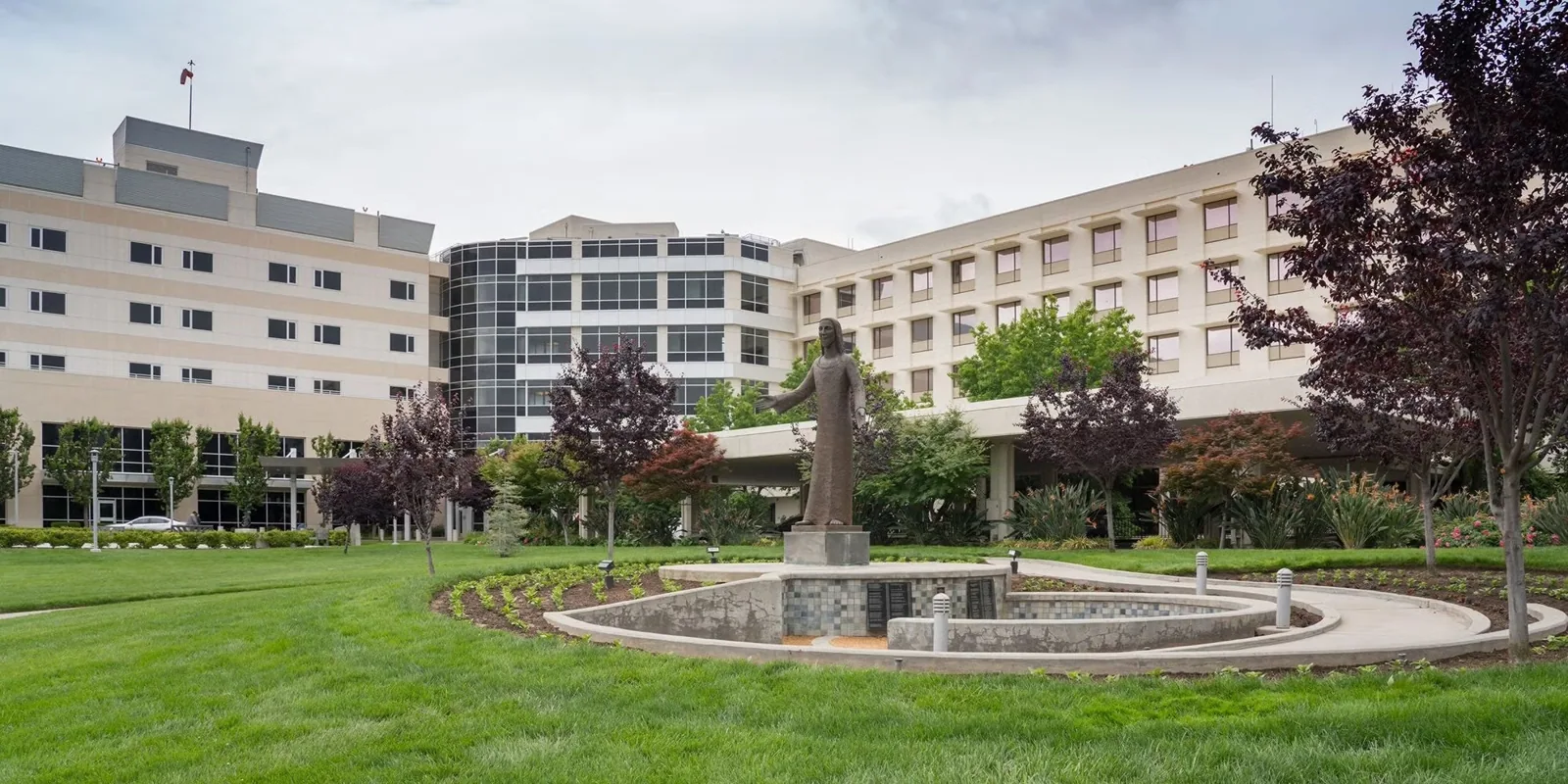
Fresno's July 2024 regional heat record supplies context for reviewing a roof's exposed finish without proving the cause of a damaged area. Central Valley fog can affect surface preparation and application suitability, which must be assessed on the property. Clovis Community Medical Center on Herndon Avenue gives the market a real healthcare identity, while the owner's building establishes its own roofing and operating requirements. Our examination of coating and foam condition connects the correction to those actual findings before restoration or reconstruction is priced.
The coating and the foam beneath it
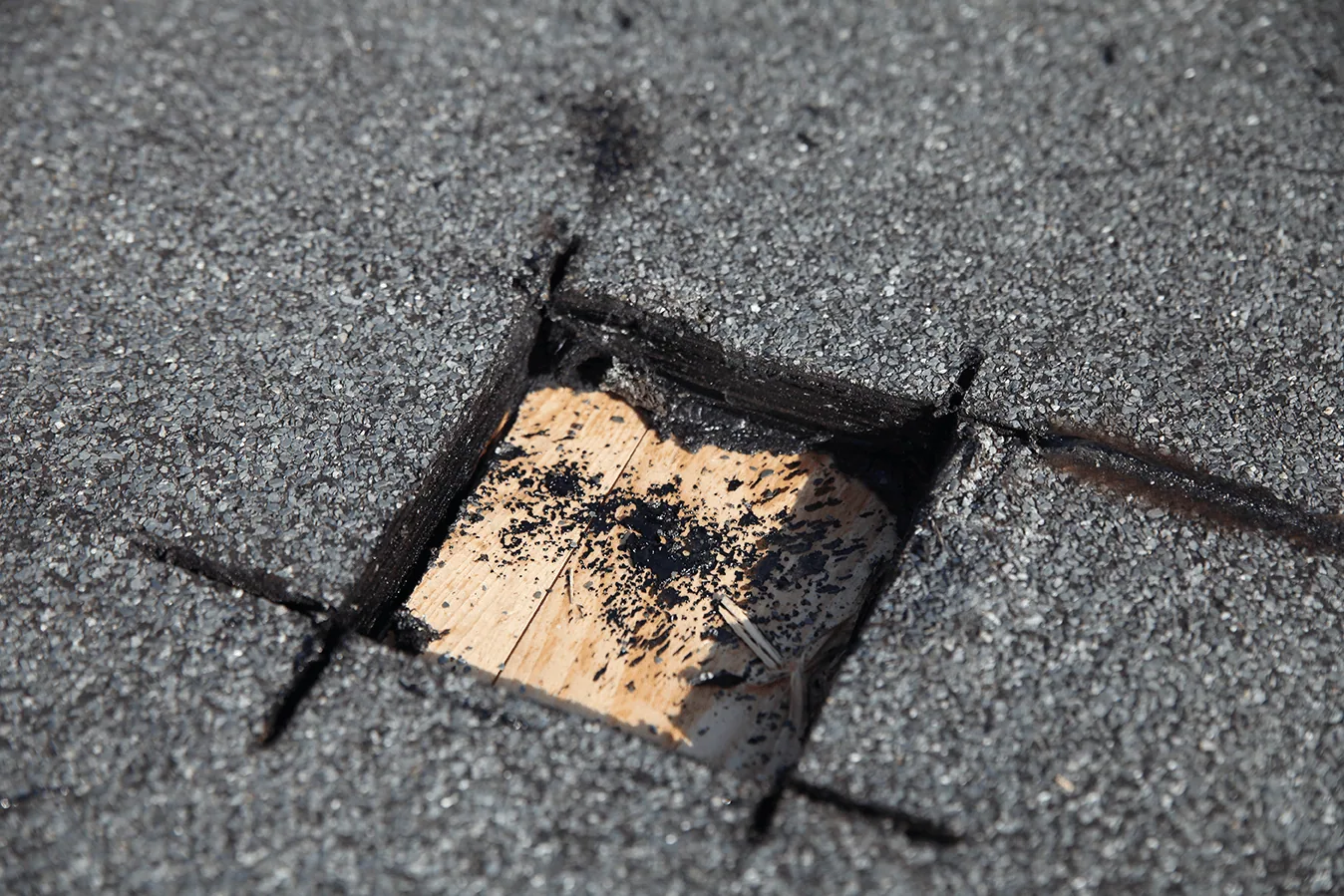
Spray foam roofing needs an appropriate protective finish, and damage to that finish can expose the foam to conditions it is intended to resist. We inspect the actual area for coating loss, physical damage and the condition of exposed foam, then determine what sound construction can support the repair. A coating touch-up may be appropriate for one area while another needs removal and reconstruction of damaged material. Their scopes should not be merged into an unexplained surface allowance.
The repair must use compatible materials and suitable preparation under the selected system requirements. Old coatings and prior patches can influence adhesion and the available method. Foam application itself needs controlled substrate and environmental conditions, and the specified density or assembly requirements cannot be settled from appearance. Correction of physical roofing injury also requires attention to the construction surrounding the damage. The owner should see whether the task restores the protective layer, replaces affected foam or investigates the substrate, with each boundary supported by the examination instead of assuming every discolored area has the same depth of damage.
The urgent water concern and temporary disposition
A reported drip under foam roofing needs the interior location and safe-access assessment recorded before a field correction is selected. Sensitive contents and electrical proximity change the facility's protective actions, which remain with responsible qualified personnel. Roofing response is available beyond ordinary hours, including weekends and holidays, while safe conditions and compatible preparation determine what work can proceed. A surface that cannot receive the permanent system may require another temporary disposition.
Temporary protection should identify the intended water path and the follow-up needed rather than being presented as a completed restoration. Its placement must not create an outlet obstruction or leave unsuitable material beneath the later repair. Owners with properties along Herndon Avenue's medical district provide their actual access authority and operating restrictions. Institutional proximity does not settle construction permission. The first visit should mark the suspected roof area and preserve the assembly questions for appropriate verification. That record helps the owner understand why stopping an immediate drip, where feasible, and rebuilding damaged foam can be separate tasks performed under different conditions.
The moisture and substrate boundary
Moisture findings can change the correction because new protective coating does not restore compromised foam or concealed support. We examine accessible conditions and determine what verification is appropriate before assigning removal. Investigation openings need authorization and a restoration method. Map each finding to its location so a limited result is not extended across the whole roof without evidence.
A moisture survey with field confirmation may direct testing under suitable conditions, but thermal patterns alone do not establish every wet component or the reconstruction quantity. Confirmed affected areas need a removal boundary ending at construction able to support the specified repair. Include foam replacement, preparation and protective finish as separate requirements where applicable. The owner also needs the approval procedure for concealed findings discovered during work. This gives the permanent correction a defined substrate rather than relying on a new coating to hide unresolved moisture, soft material or a supporting condition that the initial surface visit could not establish.
The application zone and drainage arrangement
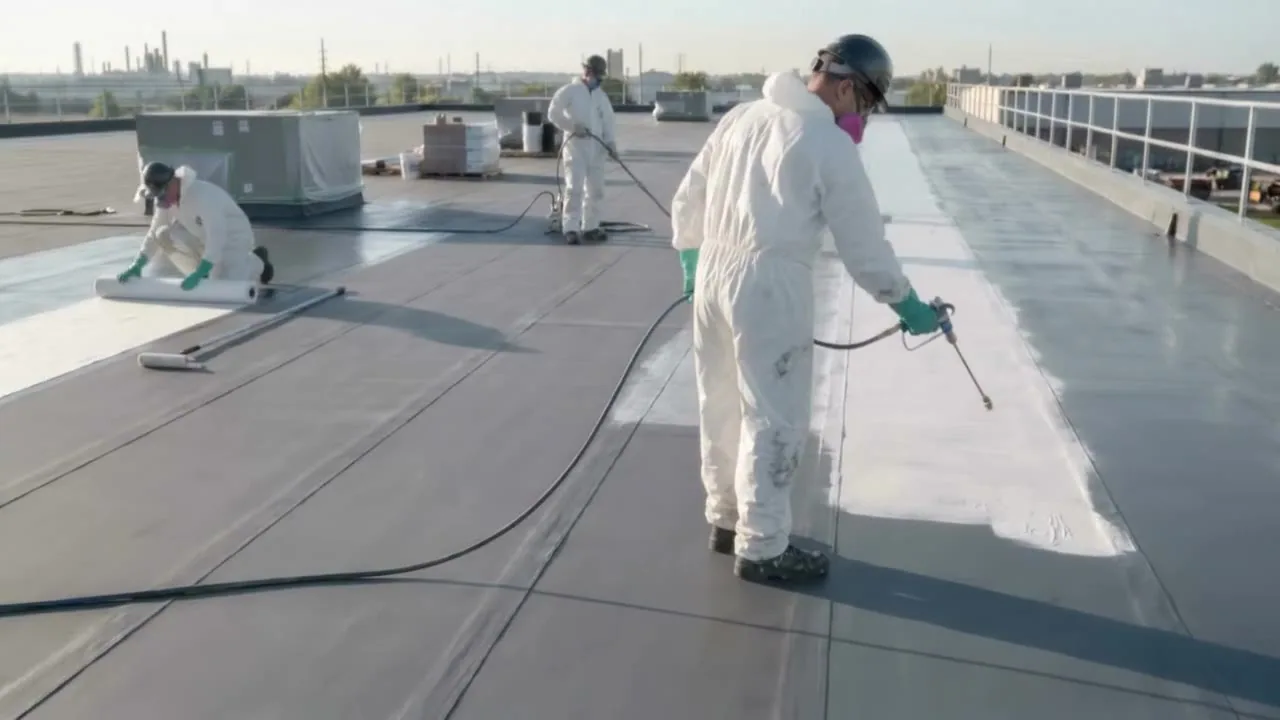
Spray application requires control of the working area and nearby property appropriate to the method, including overspray precautions where relevant. The operator supplies access and occupied-space restrictions, and the installation plan identifies suitable protection and postponement conditions. An acceptable substrate alone does not settle the surrounding exposure. Describe the method and controls before materials arrive so the owner can evaluate the complete task.
Drainage still requires examination, including outlets, overflow arrangements and the geometry of repaired areas. A foam correction cannot be shaped solely to remove a visible puddle without considering the designed water route and assembly requirements. Protective choices involving silicone coating or an acrylic finish need their own compatibility and application review. Compare them against actual conditions, not a blanket promise about all ponding or all summer exposure. Include cleaning, local reconstruction, finish requirements and acceptance checks. The owner can then see why a coating renewal and a damaged-foam replacement are different orders of work even when the completed surface looks similar.
The finished protection and maintenance response
The actual temperature, dryness and application conditions decide whether the selected repair can proceed. Valley heat and fog provide seasonal context but do not establish those conditions on every workday. We review the working area and system requirements before release, communicating any revised sequence and temporary protection needed during interruption. A date reservation cannot replace preparation or environmental controls.
After the repair, retain photographs and material information with the mapped location and completed quantities. Maintenance should examine the protective finish and accessible transitions, identifying physical damage or alteration that needs attention before it develops into a larger assembly concern. Future equipment visits require appropriate routes and details where new openings are introduced. Keep actual warranty and alteration requirements with the roof file. A continuing leak complaint should be evaluated using the record and other possible paths, with interior restoration or equipment tasks assigned separately. The owner's handoff should establish what protective work was completed and which concealed limitations remain, rather than treating a uniform finish as proof of the condition beneath it.
Foam roof service starts by distinguishing damage to the protective coating from a defect in the foam beneath it. Exposed or friable foam may need careful preparation before a new coating can bond, while trapped moisture or a soft substrate may call for removal instead of another surface layer. Inspect drains, parapets and equipment supports where water can remain against the system. The proposal should state the preparation limits, expected coating coverage and how thickness will be checked. Keep repairs around active equipment separate from any mechanical work needed to stop discharge onto the roof.
Commercial Roofing Questions
Does exposed foam always need full replacement?
Actual material condition and repair requirements establish the extent. Separate protective-finish loss from damaged foam and concealed substrate concerns.
Can coating restore moisture-damaged foam?
Confirmed assembly condition controls reconstruction. A new finish cannot replace removal or repair of compromised components.
Are silicone and acrylic finishes interchangeable?
Compatibility and application requirements govern the choice. Review the actual substrate, drainage and existing protective material.
What limits spray work near occupied areas?
The approved application controls and surrounding exposure establish the working zone. Include protection and postponement requirements in the plan.
Should a low spot be filled during every repair?
Drainage geometry and the reviewed assembly establish that change. A visible puddle alone does not establish the required correction.
Describe the finish damage and the space below
Tell us the location, prior coating records and any water entry. We will assess immediate protection and separate coating, foam and substrate tasks for the permanent repair.
Related Pages
Commercial Roof Inspection
Read the full page
Membrane Puncture Investigation in Clovis Before Patching
See how we handle it
Herndon Medical District
Scope, sequence and repair notes
Infrared Roof Moisture Survey
Read the full page
Silicone Roof Restoration in Clovis After a Surface Concern
See how we handle it
Acrylic Roof Coating Decisions in Clovis Before Application
Scope, sequence and repair notes