Cool Roof Installation in Clovis, CA
Commercial Roofing Services
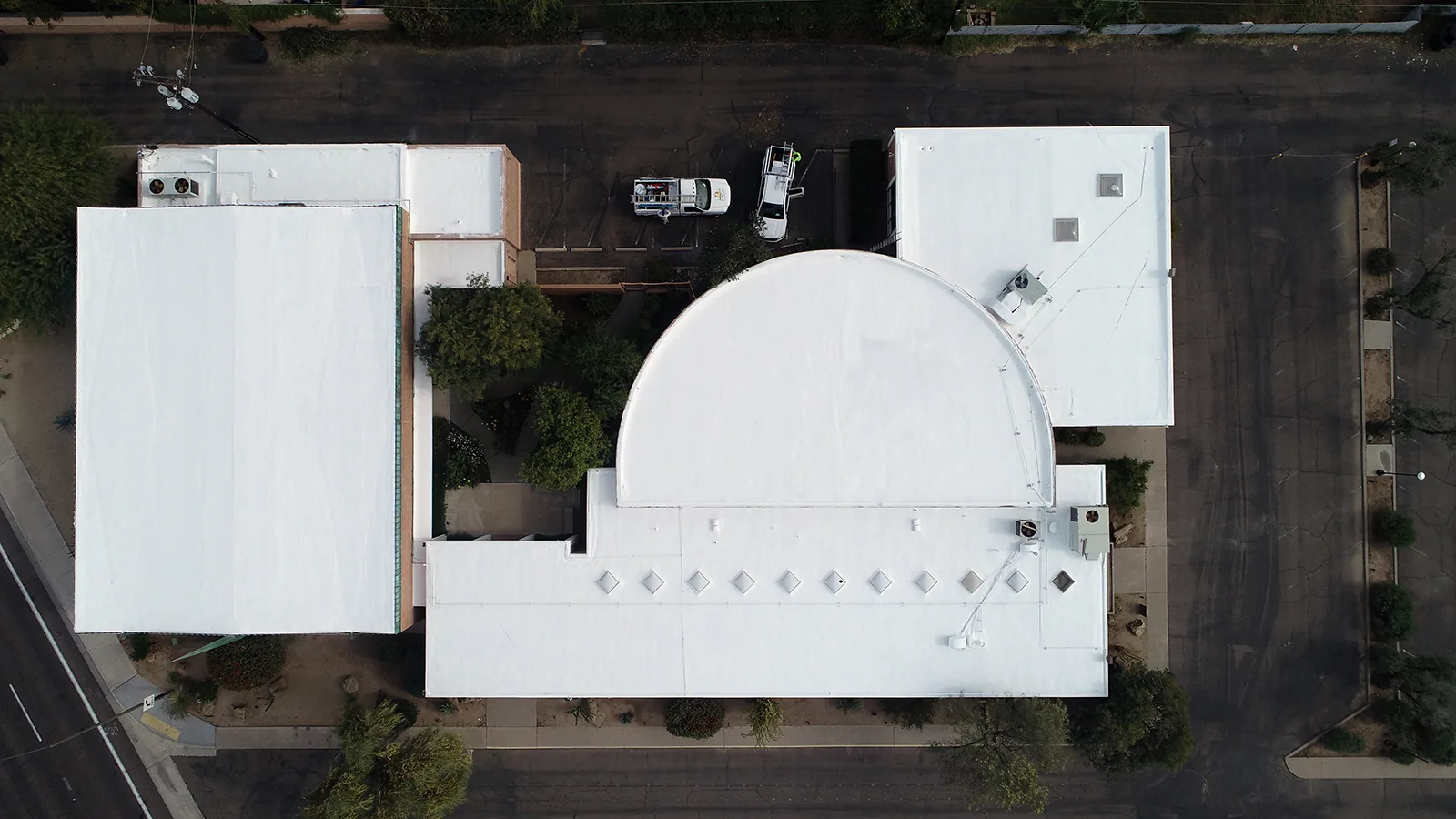
An upper-floor office that stays warm after the cooling system has been checked can prompt a discussion about the roof surface, especially during a long hot spell. For an owner in Clovis, CA, cool roofing begins with a roof investigation rather than a color selection, because reflected sunlight is only one part of the building response. We inspect the covering, moisture condition, drainage and insulation, and distinguish a temperature complaint from an active roof failure that needs immediate attention. A temporary patch can control a local opening while the permanent assembly is evaluated; coating the field before that investigation may leave damaged materials underneath. The commercial roof inspection establishes what can remain and what requires correction before a reflective finish becomes part of the project.
Reflective surface and roof condition
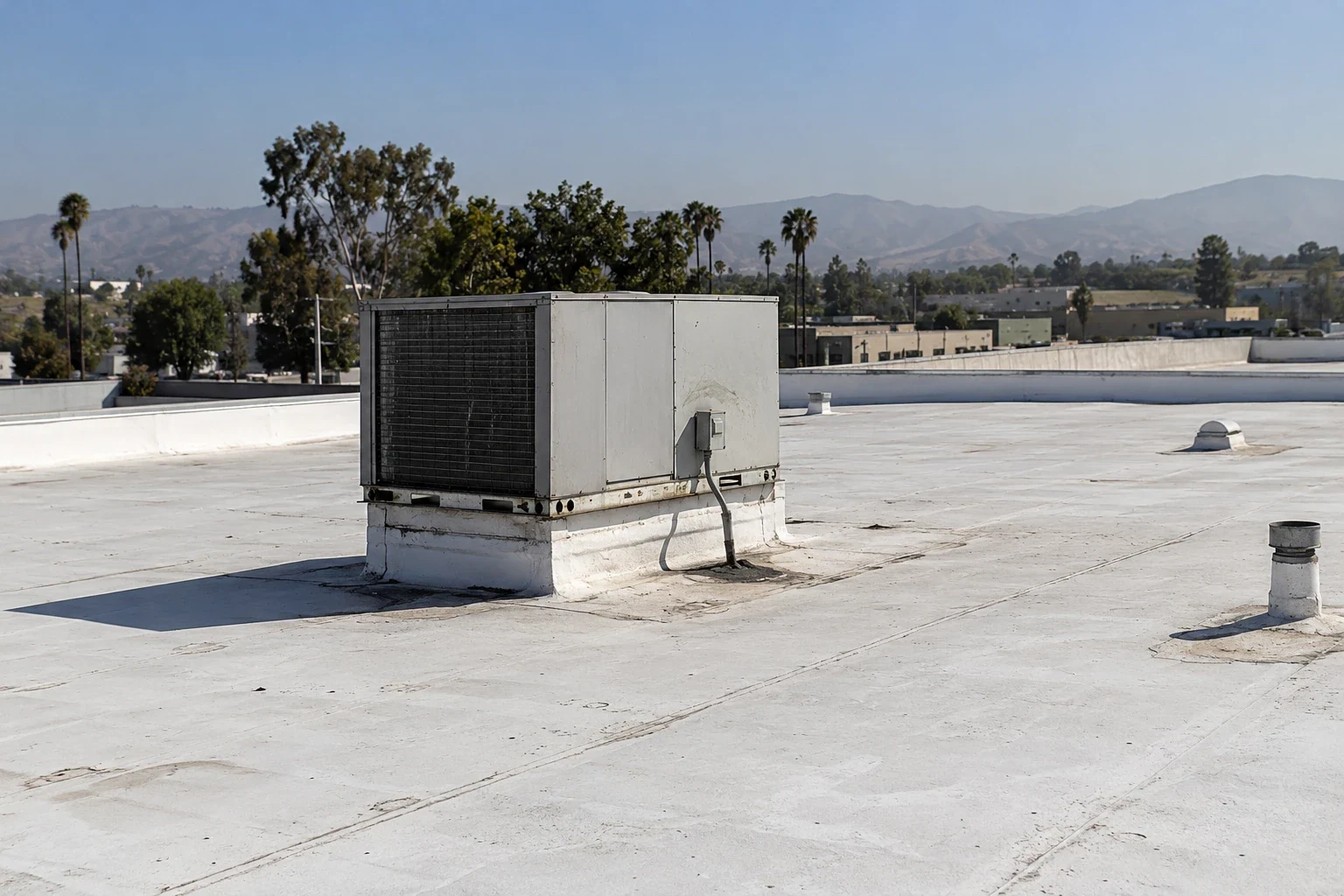
A pale surface can still contain wet insulation, weak seams or an open flashing detail. We check those conditions separately, since reflectance does not establish whether the existing roof is suitable for restoration. A coating candidate needs a sound, compatible substrate and preparation that addresses contamination, adhesion and deteriorated details. A replacement candidate may need removal of moisture-damaged material and improvements to the assembly below the exposed surface. The roof covering selected for the project must meet its applicable requirements, including those established through the design and permitting process. Roof coating restoration can be considered where the roof supports it, but the owner should see the repair boundaries and preparation work before comparing that option with a new covering.
Valley heat and the building response
Fresno experienced 26 triple-digit days in July 2024, and that regional record gives a concrete reason to evaluate solar exposure when planning roof work. It does not establish the temperature of a Clovis roof or predict a utility saving for the building. We look at the actual assembly and coordinate with the building operator when comfort or cooling demand is part of the concern. Roof reflectance, insulation, air leakage, equipment condition and interior use can affect different parts of the problem. For a property near Clovis Community Medical Center on Herndon Avenue, a heat complaint calls for roof measurements and coordination with the building operator before choosing a reflective surface. That coordination also establishes which rooms need protection during roof work. Work on medical office roofs also requires coordination with occupied rooms and controlled interior conditions.
Drainage beneath the new finish
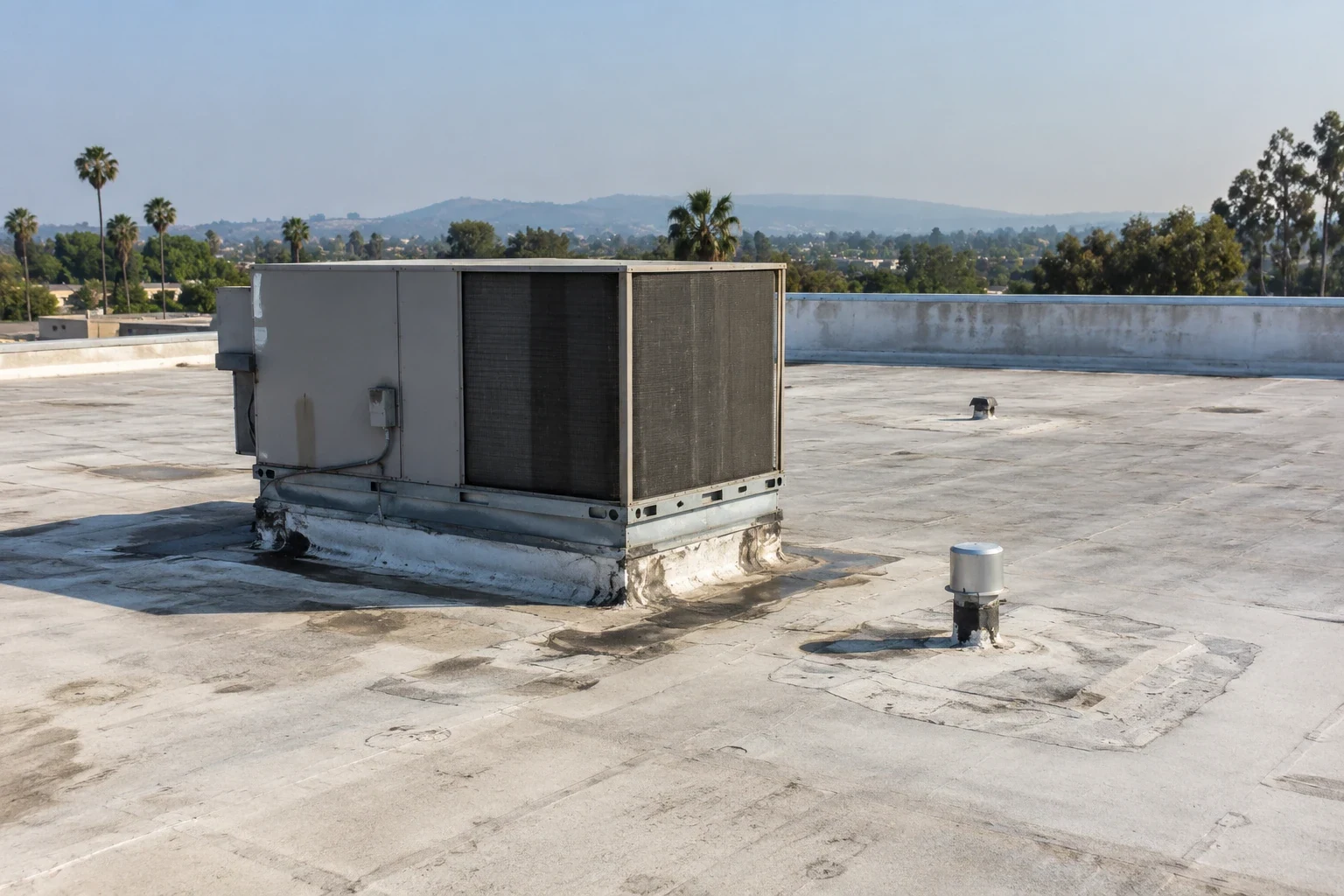
A persistent puddle beside a drain should be addressed before a reflective coating or new membrane is installed. We determine whether debris, a damaged drain connection, depressed substrate or roof geometry is contributing, then explain the practical correction and any design review required. Water left standing can complicate preparation, expose details repeatedly and limit the materials appropriate for that location. A surface treatment does not create slope in the assembly beneath it. When a replacement allows drainage improvements, the proposed work should show how those changes connect to existing outlets and edges. The selection of a TPO roof assembly, or another compatible covering, follows those requirements rather than treating a reflective membrane as an answer to every ponding area.
Dry substrate and installation timing
A film of moisture on the roof can delay adhesion or coating application even when the building owner sees no rain. Winter tule fog in the Central Valley can form overnight and thin with daytime warmth, so surface dryness must be assessed at the work area. We check the product requirements and actual conditions before proceeding, including any relevant substrate moisture and curing limits. The sequence may separate preparation, detail repair and field application rather than forcing them into one uninterrupted operation. For an occupied building in Fresno or Clovis, weather-related timing should be discussed alongside access and interior protection. A sound finish requires suitable application conditions, while a temporary repair continues to have its own limitations until the permanent work is completed.
Assembly choice and owner costs
A comparison that only names the surface material leaves the owner without the information needed to choose. We describe the removal required, insulation condition, flashing work, drainage corrections and access constraints, then identify the reflective covering proposed for each viable approach. Existing material compatibility can limit restoration, while moisture damage can enlarge a replacement scope after investigation. Design and code requirements are established for the specific project rather than inferred from a general roof description. Roof capital planning helps place the work beside upcoming equipment changes and other building needs, so a reflective roof is not installed just before its field must be reopened. The completed project should include care instructions for the installed material and a clear account of the conditions addressed.
Surface care after completion
Dirt accumulation and repair materials can change the appearance of a reflective surface over time, while foot traffic can damage the covering independently of its color. We discuss maintenance compatible with the installed system, including how equipment technicians should protect service routes and report damage. Cleaning methods need to follow the material requirements rather than use aggressive pressure or chemicals chosen only to restore brightness. A later dark patch deserves a roof condition review before it is painted over, because discoloration can accompany contamination, trapped moisture or an unrelated equipment discharge. The owner should retain the installed material information so future repairs use suitable products and do not compromise the connection to the surrounding field.
A reflective roof installation still depends on a sound, compatible assembly below the visible finish. Before work begins, confirm the existing roof condition, proposed preparation, drainage details and how the selected material will meet curbs and perimeter edges. The product documentation and project specifications govern application and any required testing; color alone does not establish performance. During installation, keep the roof area protected from contamination and avoid closing over unresolved moisture. A closeout record should identify the installed system and any field conditions that differed from the original proposal, giving the owner a usable maintenance reference.
Commercial Roofing Questions
Will a white roof resolve a hot room immediately?
A room temperature complaint needs investigation of the cooling system and building as well as the roof. A reflective roof can affect solar heat at the surface, but equipment faults, air leakage and inadequate insulation may still require separate work. We inspect the roof condition and coordinate the building questions before describing a roof option as part of the remedy.
Can my existing roof receive a reflective coating?
Substrate condition comes before finish selection. We evaluate moisture, adhesion, material compatibility and failed details, then explain whether restoration is a reasonable option. A wet or unstable assembly may need removal or replacement even where a coating would make the exposed surface look uniform.
How do you handle damp mornings during coating work?
Application requirements control the start. We assess the roof surface and conditions against the selected material instructions, delaying or separating operations where needed. Fog in the region is a reason to check actual dryness, not proof that a particular roof is unsuitable throughout the day.
Is a reflective membrane enough without replacing insulation?
Retaining insulation requires an acceptable material condition and compliance with project requirements. Dry serviceable material may be considered differently from wet or damaged boards. We identify the retained layers and required changes so the new surface does not conceal unresolved moisture or an assembly deficiency.
What should a comparison between coating and replacement include?
Repair extent makes the alternatives meaningful. We show preparation, removal, insulation, drainage and flashing work with each proposed approach, including relevant operating constraints. That lets the owner compare the roof work being purchased rather than two finish names that may cover very different construction tasks.
Bring the comfort complaint and roof history
Describe the warm area, any recent leaks and the next planned equipment work. We will inspect the roof and identify the assembly decisions that need resolution before installation.
Related Pages
Commercial Roof Inspection
Read the full page
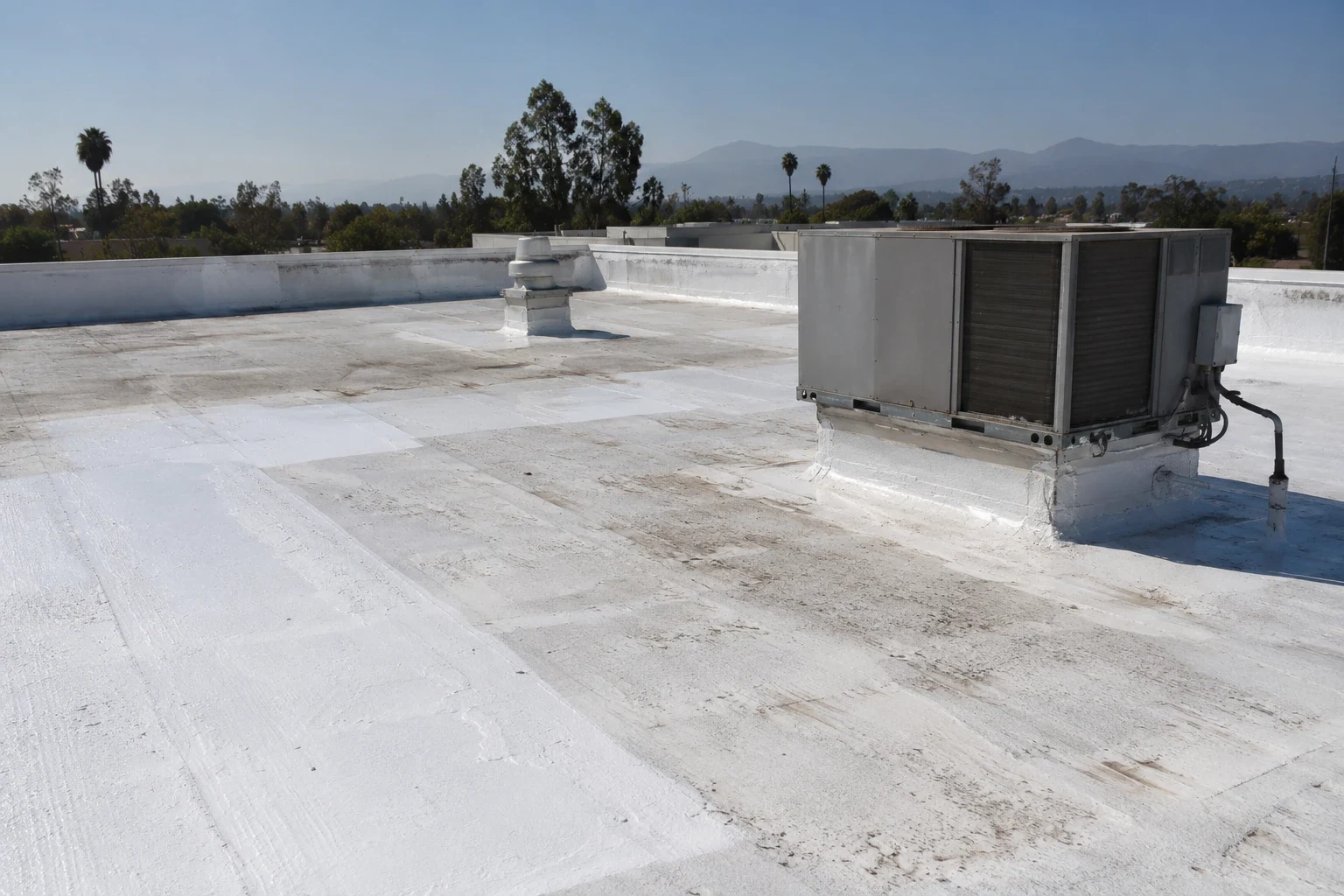
Roof Coating Restoration
See how we handle it
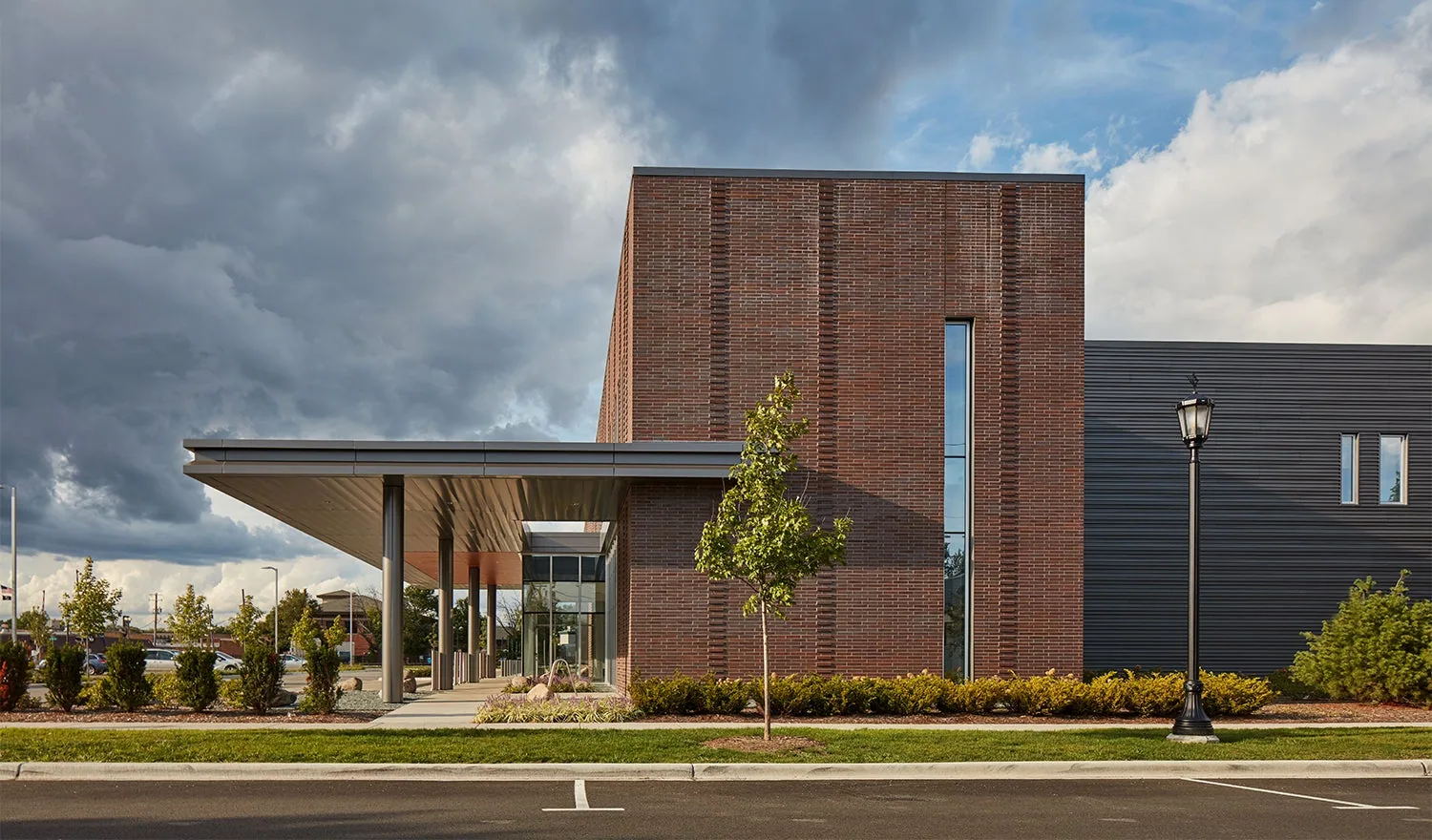
Medical Office Roof Repairs With Room Protection
Scope, sequence and repair notes
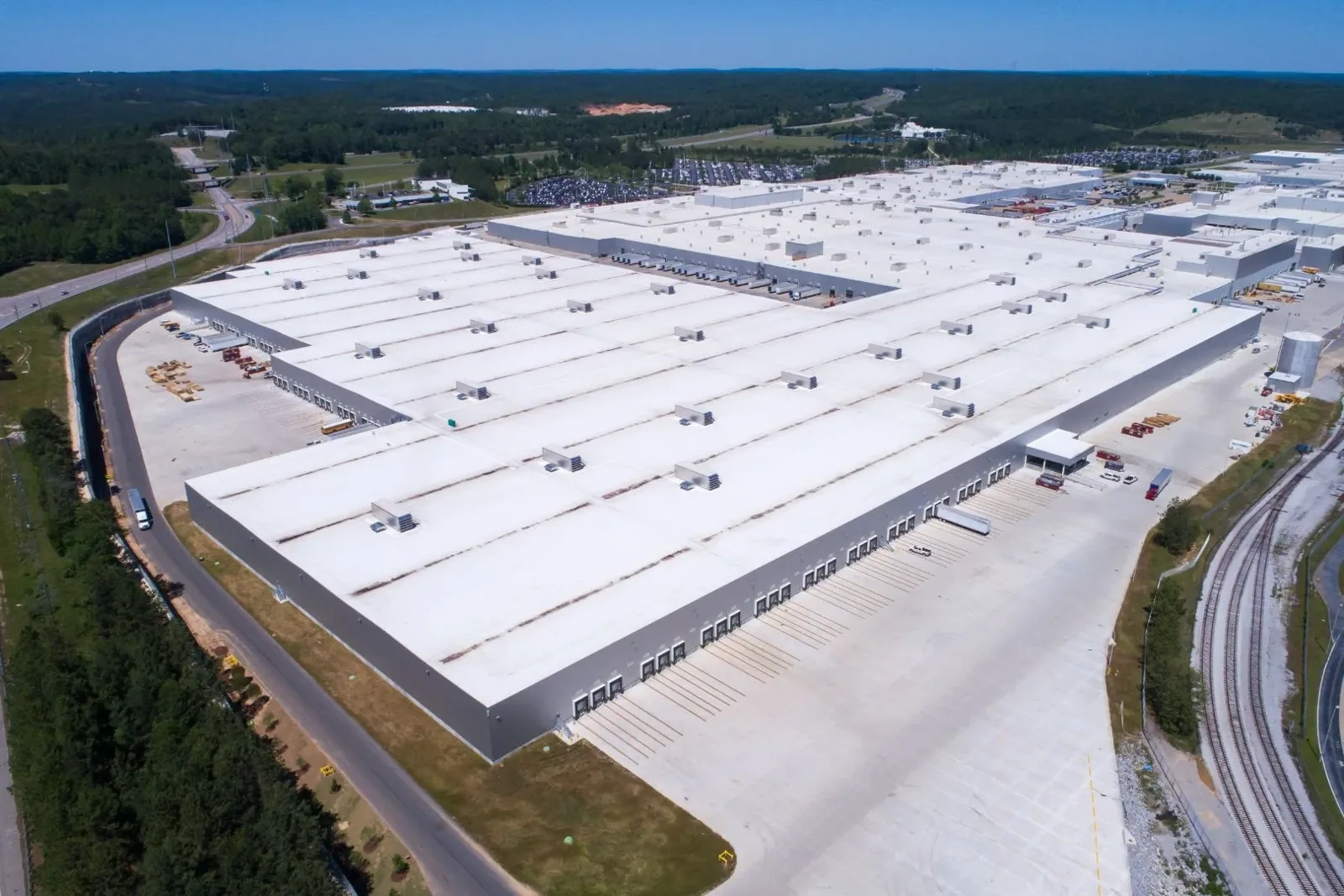
TPO Roof Repair in Clovis After a New Drip
Read the full page
Fresno
See how we handle it
Roof Renewal Decisions and Work Planning
Scope, sequence and repair notes