
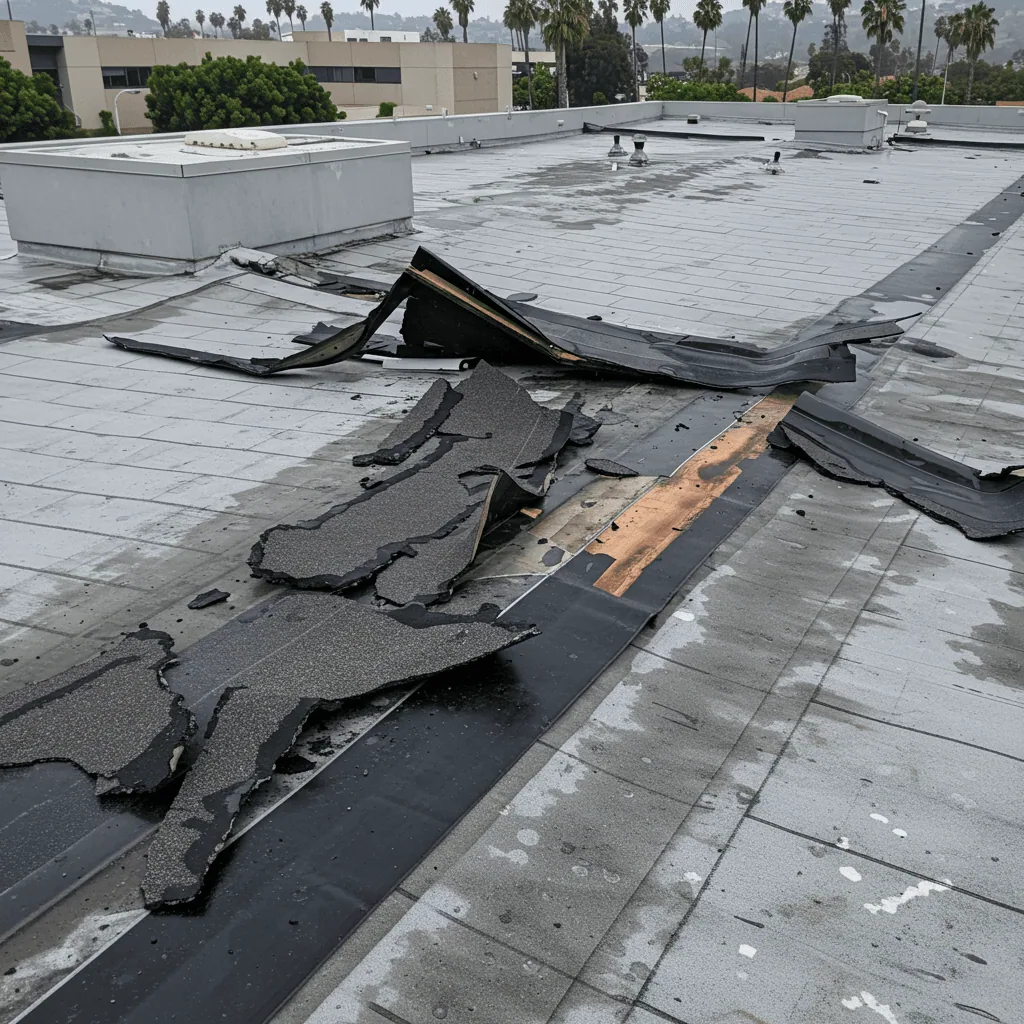
Heat and UV Roof Condition Review in Clovis
Roof Damage Repair
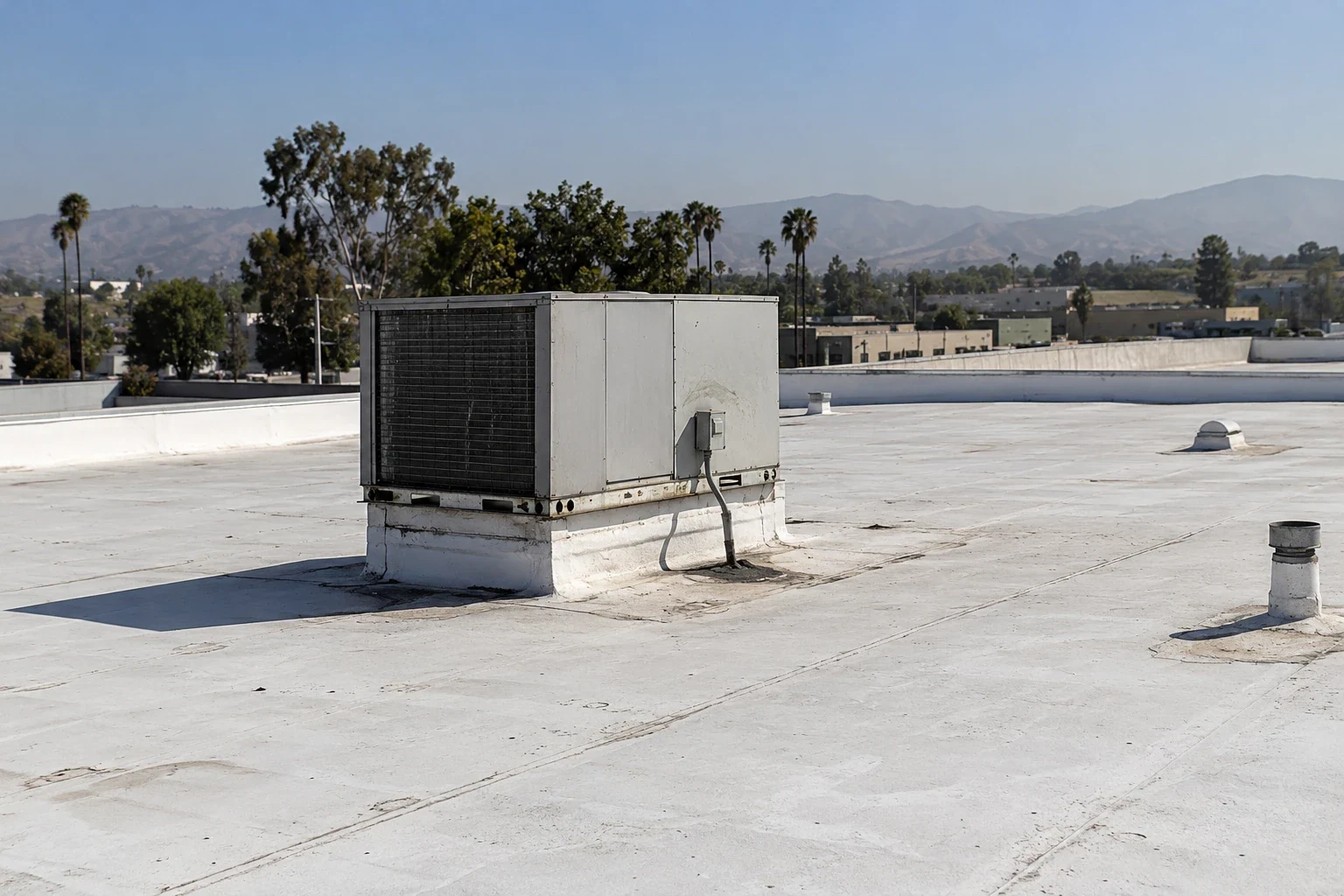
A roof finish that looks worn during a Valley heat period can lead an owner to suspect heat or ultraviolet damage, but the observed material needs examination before that cause or correction is assigned. We review and repair commercial roof heat and UV concerns in Clovis, CA, starting with the actual covering, its protective surface and the reported building problem. Discoloration, a raised area or an interior complaint can direct attention without establishing what failed beneath the exposed material.
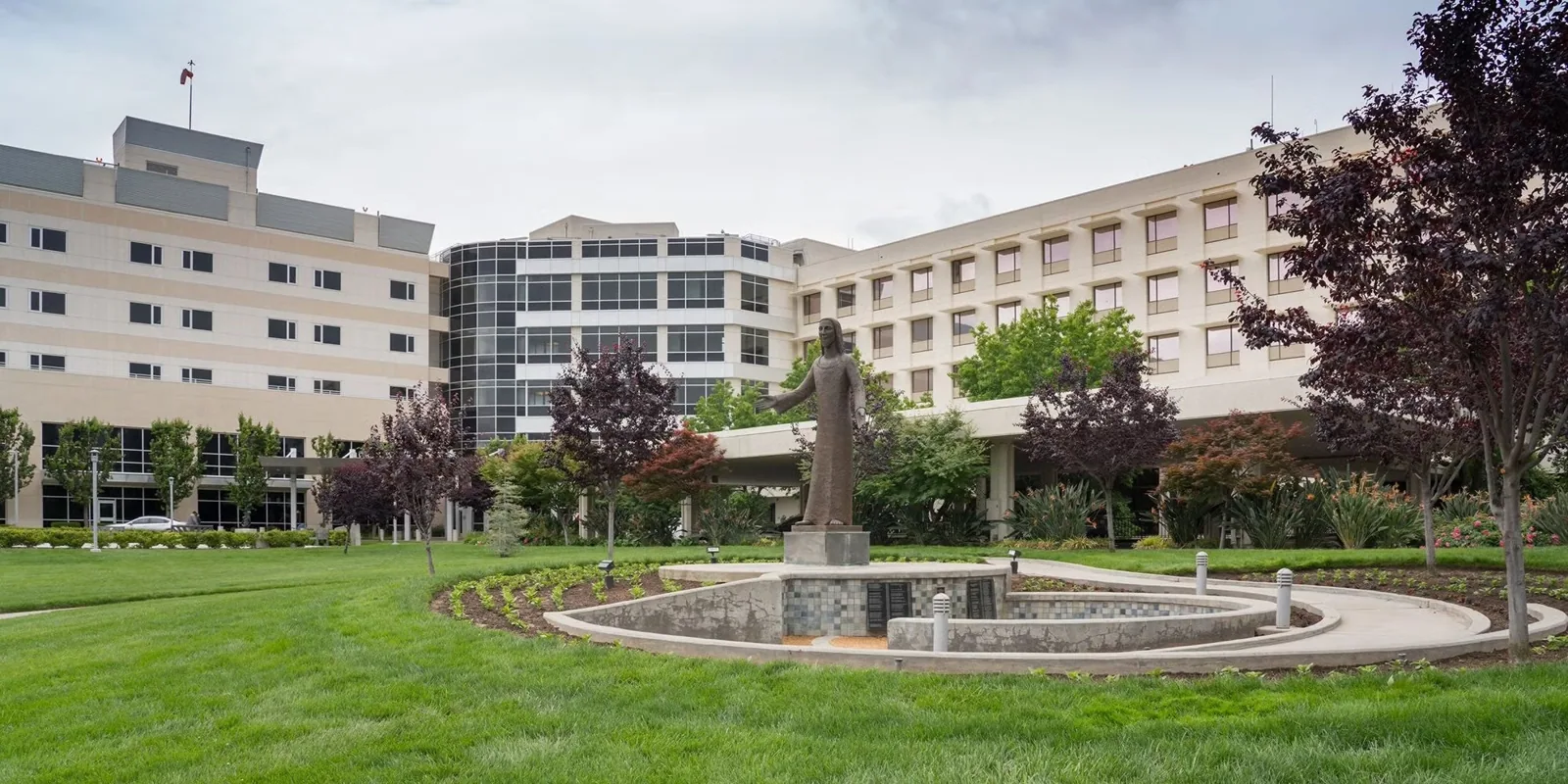
Fresno's July 2024 weather report records exceptional regional heat, giving a factual reason to plan safe work and examine susceptible components. That history does not establish a damaged seam, continuous equipment operation or cooling performance on the owner's property. Central Valley winter tule fog adds a separate preparation question for later application work. On Herndon Avenue, Clovis Community Medical Center provides an acute-care setting where an authorized roofing task needs institution-specific operating direction. Our review of exposed roofing and assembly condition connects the permanent recommendation to the subject property rather than treating regional temperatures as a roof diagnosis.
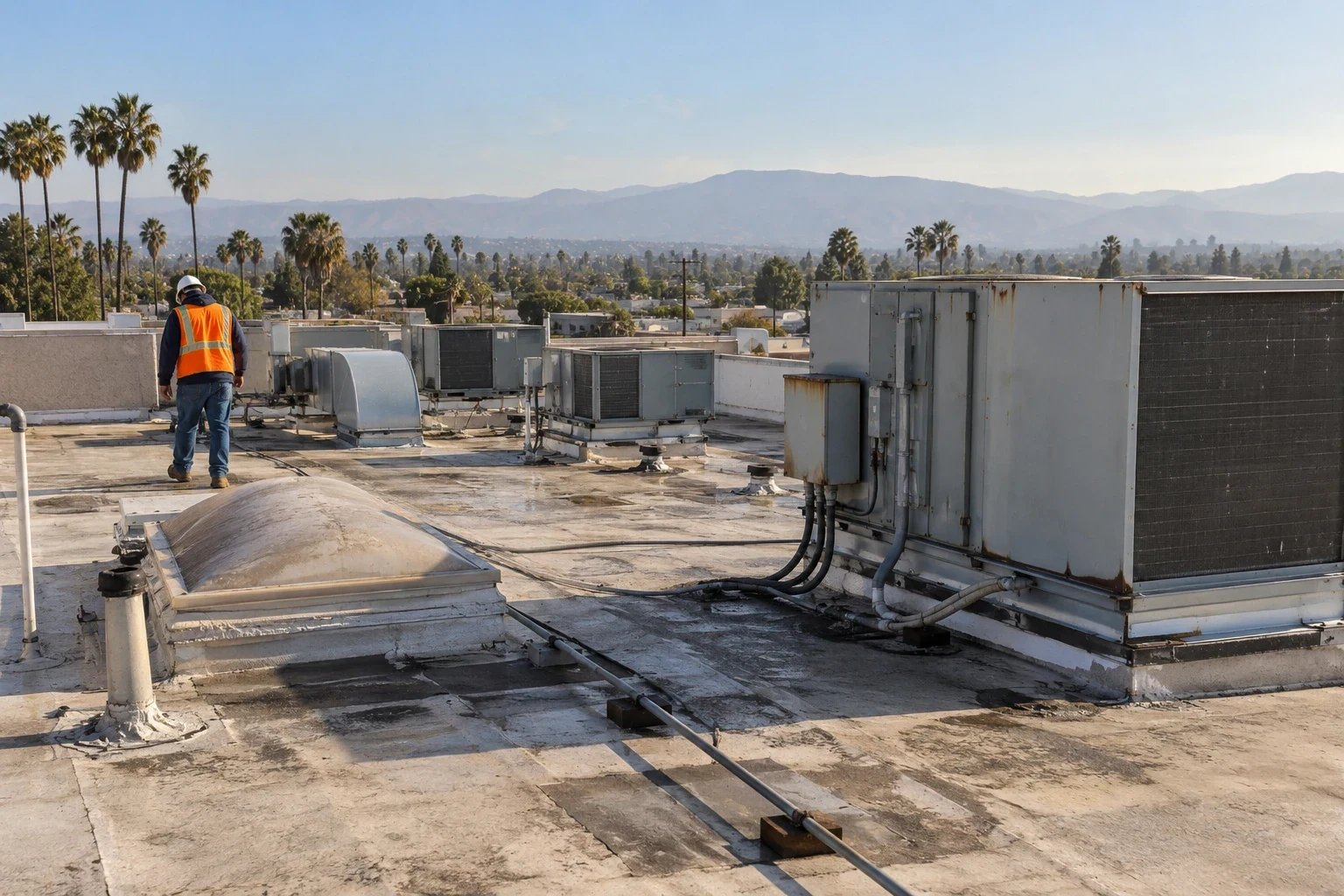
The exposed finish and the material beneath it
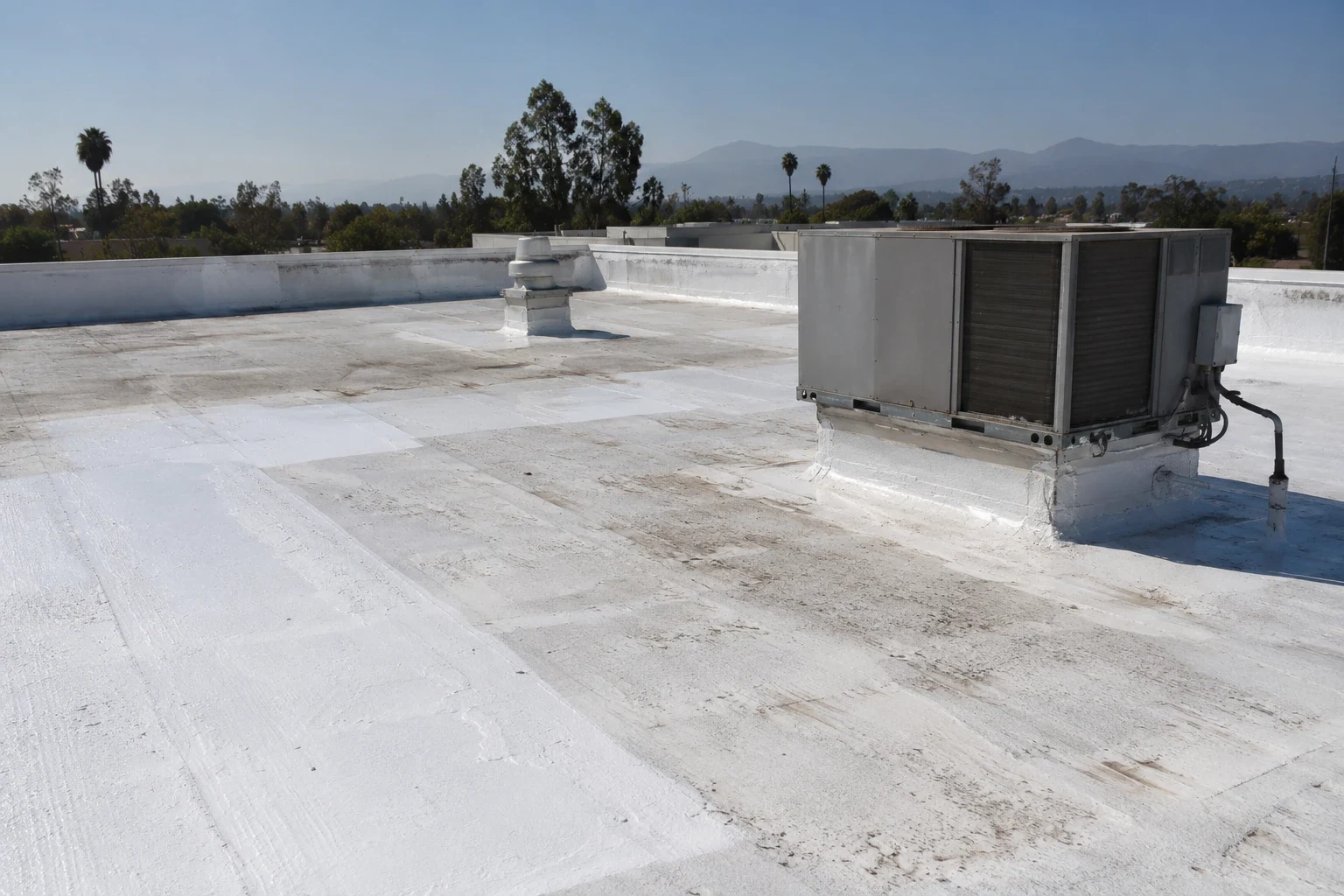
Roof materials and protective finishes respond differently to exposure, so the covering needs identification before the repair method is selected. We examine actual surface changes and the surrounding construction that would receive a correction. Protective surfacing loss, cracking and a damaged transition can require different tasks. A faded appearance alone cannot establish the depth of deterioration or the condition of concealed insulation and support.
A coating proposal requires preparation, adhesion and substrate suitability reviewed under the selected system's requirements. Restoration of a suitable exposed surface remains distinct from reconstruction of damaged components beneath it. Where a finish protects foam or layered construction, determine whether the concern affects only protection or extends into the assembly. The owner's estimate should explain the observed component, preparation and repair boundary, with any further investigation separated from known quantities. This prevents a broad recoating allowance from substituting for an unexamined material problem, while also avoiding a roof-wide removal recommendation based solely on a surface change noticed during hot weather.
The interior complaint and the available response
An owner reporting a warm room or equipment concern should identify the symptoms and the responsible facility or equipment contact. Roofing examination can assess the roof assembly, but those reports do not prove the covering caused a cooling problem. Qualified service personnel establish the equipment diagnosis and any authorized isolation. If water entry is also reported, describe its location and electrical proximity so the appropriate interior protection and specialist review can proceed.
Our urgent roofing response is available outside normal hours, including overnight periods, weekends and holidays, with safe conditions determining the field action. A heat-period call does not establish that a particular application can proceed on the exposed surface. Owners near Herndon Avenue's healthcare facilities provide the actual building contact and operating restrictions. Temporary protection, where justified by an identified roof concern, needs its own compatible method and permanent follow-up. Keep the equipment and roofing findings distinct so the owner does not authorize a covering replacement as an assumed solution to a service problem that the roof investigation has not established.
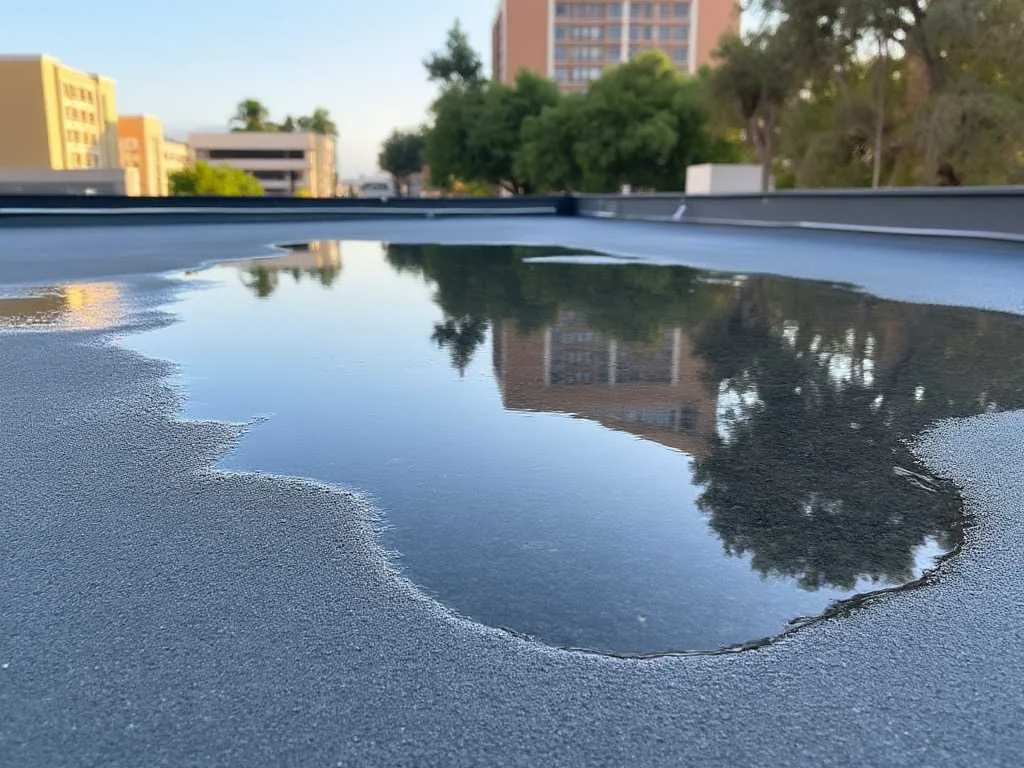
The seam or flashing correction supported by findings
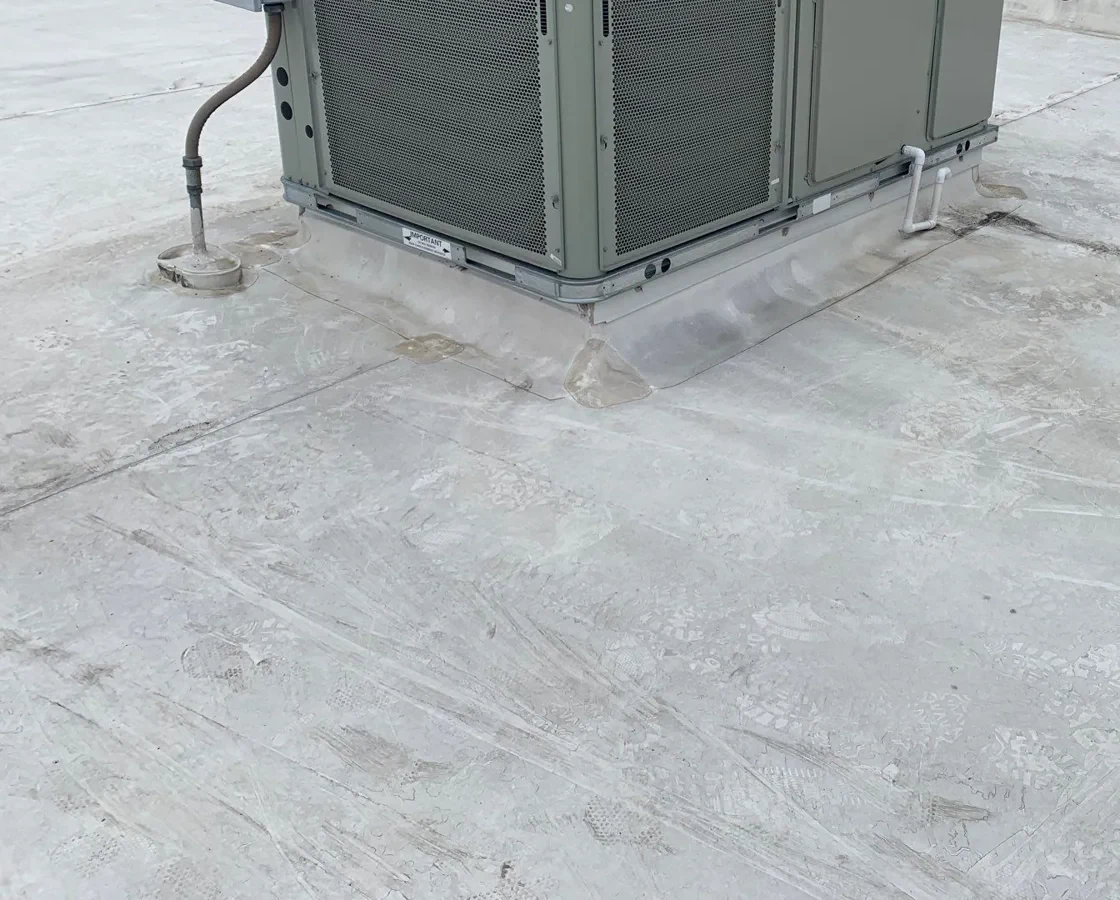
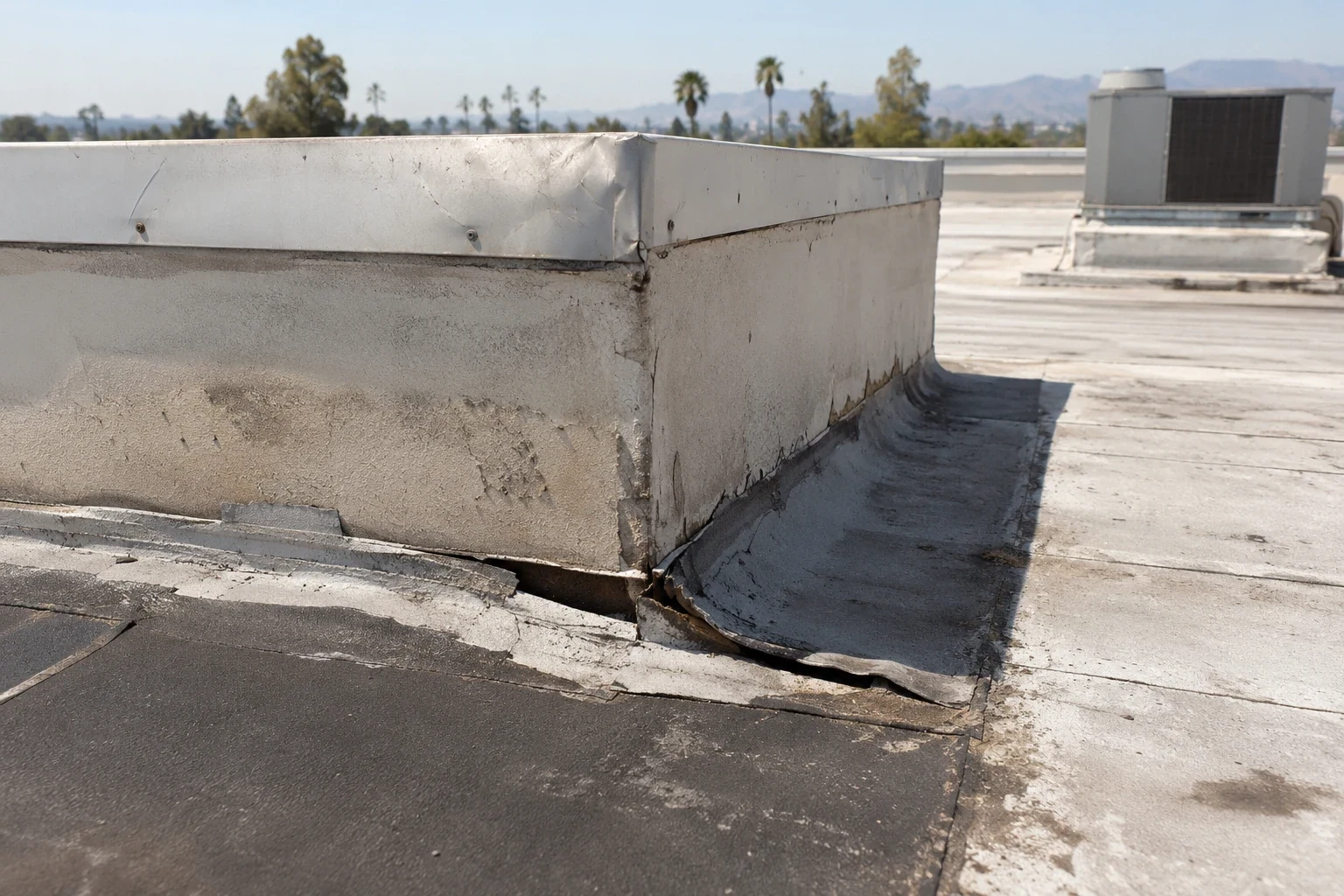
A visible separation at a joint requires material-specific assessment rather than an automatic conclusion that heat opened it. We examine the surrounding covering, identify the joining method and determine whether suitable material remains at the repair boundary. Correction of an established seam defect can involve welding, adhesives or layered reconstruction depending on the system. Regional temperatures cannot select that method or set the repair quantity.
At a wall, curb or perimeter, repair of the flashing connection may also involve attachment and movement requirements. A new finish cannot replace a loose termination or resolve an unexamined upper connection. Where removal exposes concealed deterioration, record the finding and obtain the agreed change approval before it is covered. The owner should see whether the recommendation restores protection, rebuilds a joint or reconstructs a transition, with known quantities and limitations clearly connected to the observed component. A broader renewal needs a broader assembly basis, not a general claim that intense sun has made all retained roofing unsuitable.
The insulation question and complete assembly choice
An interior temperature report can justify reviewing available insulation records and assembly condition without establishing that insulation has failed. Moisture or physical damage may require investigation where the roof findings support it. Authorized openings need suitable restoration and protection for what lies below. Keep each result located on the roof plan so one finding does not become an unsupported conclusion about the whole building.
A proposed reflective roof installation should be evaluated as a complete assembly with drainage, attachment, insulation and detail requirements. Surface color alone does not settle a cooling complaint or concealed moisture. The selected product and applicable requirements determine the specification, without assigning a universal code threshold from the weather record. Include equipment coordination and daily protection where the project needs them. The owner can then compare a supported roof intervention with the separate service tasks established by qualified personnel, rather than pay for a new finish expecting it to resolve every temperature concern inside the building.
The actual application conditions and maintenance record
Heat affects crew safety and material handling, while fog can create moisture on a surface during the later wet season. Assess actual temperature, dryness and preparation under the selected system's requirements before application. A hot regional record does not establish the condition on a particular workday, and a rain-free morning does not establish a dry joining surface. Communicate any changed sequence and maintain only the compatible temporary protection supported by the work plan.
At handoff, document the repaired component and the preparation performed, retaining material information, photographs and actual warranty obligations with the roof file. Maintenance should examine protective surfaces and accessible transitions with the specific assembly in view. Future equipment changes need their own compatible roofing detail and appropriate alteration approval. A later interior temperature or water complaint should be investigated against the completed scope and the responsible equipment findings, without automatically blaming sun exposure or repeating a surface treatment. Roof acceptance, equipment service and interior restoration remain separate tasks. The owner receives a clear permanent correction based on examined condition and an assigned follow-up wherever an unresolved question remains.
Long-term heat and ultraviolet exposure can harden exposed surfaces, open seams or degrade coatings, but the observed defect should drive the repair choice. Compare shaded and exposed areas, check whether the substrate remains firm and inspect penetrations where dissimilar materials meet. A surface coating is not a substitute for replacing wet insulation or restoring a failed attachment. The owner should receive an explanation of what can be repaired locally and what evidence supports a larger scope. Record the application conditions and treated limits so later service can distinguish a new defect from retained aged material.
Commercial Roofing Questions
Does regional heat prove a seam failed from temperature?
The actual joint examination supports the finding. Weather context alone cannot establish the cause or extent of a seam defect.
Will a reflective finish resolve every warm room?
The complete building and equipment findings govern that decision. Roof color does not diagnose cooling performance or service condition.
Is fading proof that the underlying assembly needs removal?
Material condition and investigation define the reconstruction need. Appearance alone does not establish concealed damage.
Can coating replace a loose flashing termination?
Attachment condition controls the correction. Restore the mechanical and weatherproofing detail rather than rely on a new film.
What should be checked before summer application?
Product requirements and actual working conditions establish release. Assess preparation, temperature and safety rather than rely on the calendar.
Describe the visible change and the building concern
Tell us the roof material if known, reported symptoms and equipment service findings. We will examine the roofing condition and define the supported repair and operating sequence.
Related Pages
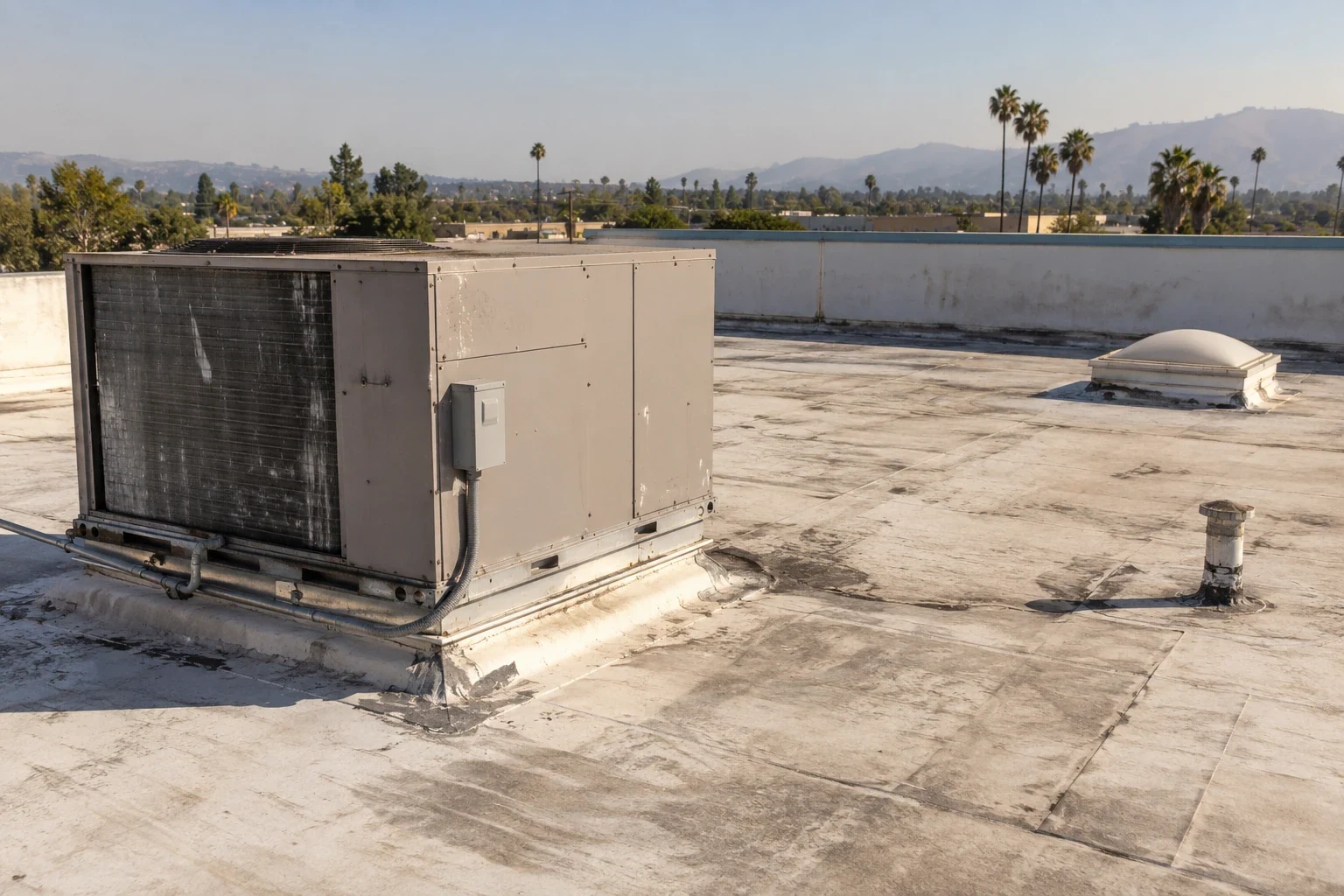
Commercial Roof Inspection
Read the full page
Roof Coating Restoration
See how we handle it
Herndon Medical District
Scope, sequence and repair notes
Commercial Roof Seam Corrections in Clovis After Entry
Read the full page
Flashing Failure Investigation in Clovis at Roof Transitions
See how we handle it
Cool Roof Installation
Scope, sequence and repair notes