
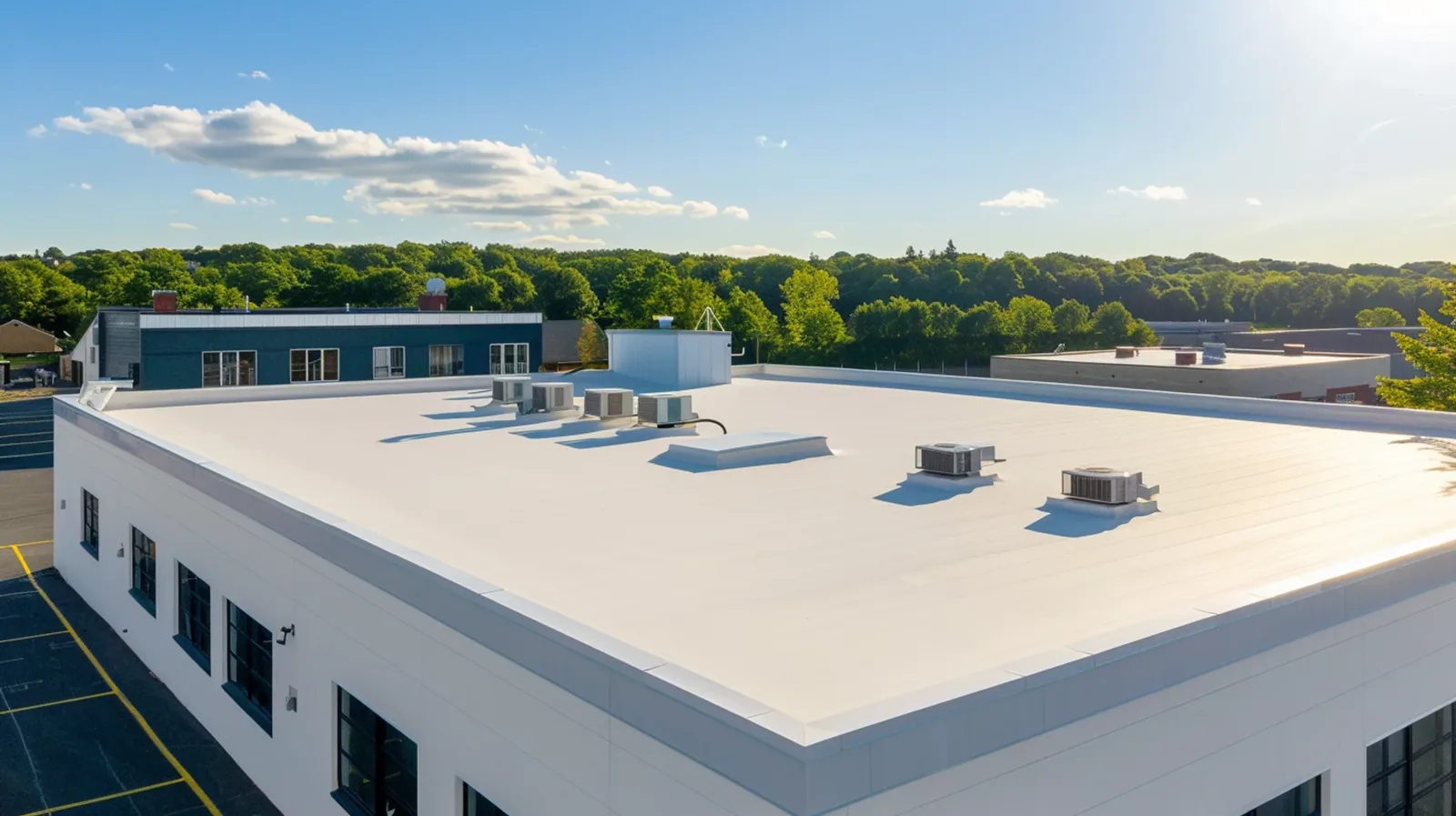
Duro-Last Commercial Roofing in Clovis, CA
Roofing Manufacturers
Water collecting beneath an equipment penetration after the first rain could have a Clovis, CA owner searching the Duro-Last roof records for the detail installed there. A fabricated component may be present, but the surrounding field joints, termination and later equipment changes still need inspection. Duro-Last identifies PVC membranes and custom-fabricated accessories. That information does not show whether the accessory on the subject roof fits the current opening or remains properly joined to the field.
We ask what changed near the penetration and which indoor space is taking water, then arrange safe inspection and urgent protection. Calls can reach our emergency response during the night, weekends and holidays. A feasible temporary closure addresses the observed opening while the permanent investigation establishes material, shape and support. The owner receives an explanation of that distinction before a temporary treatment is mistaken for correction of the whole equipment transition.
The field junction beside the accessory
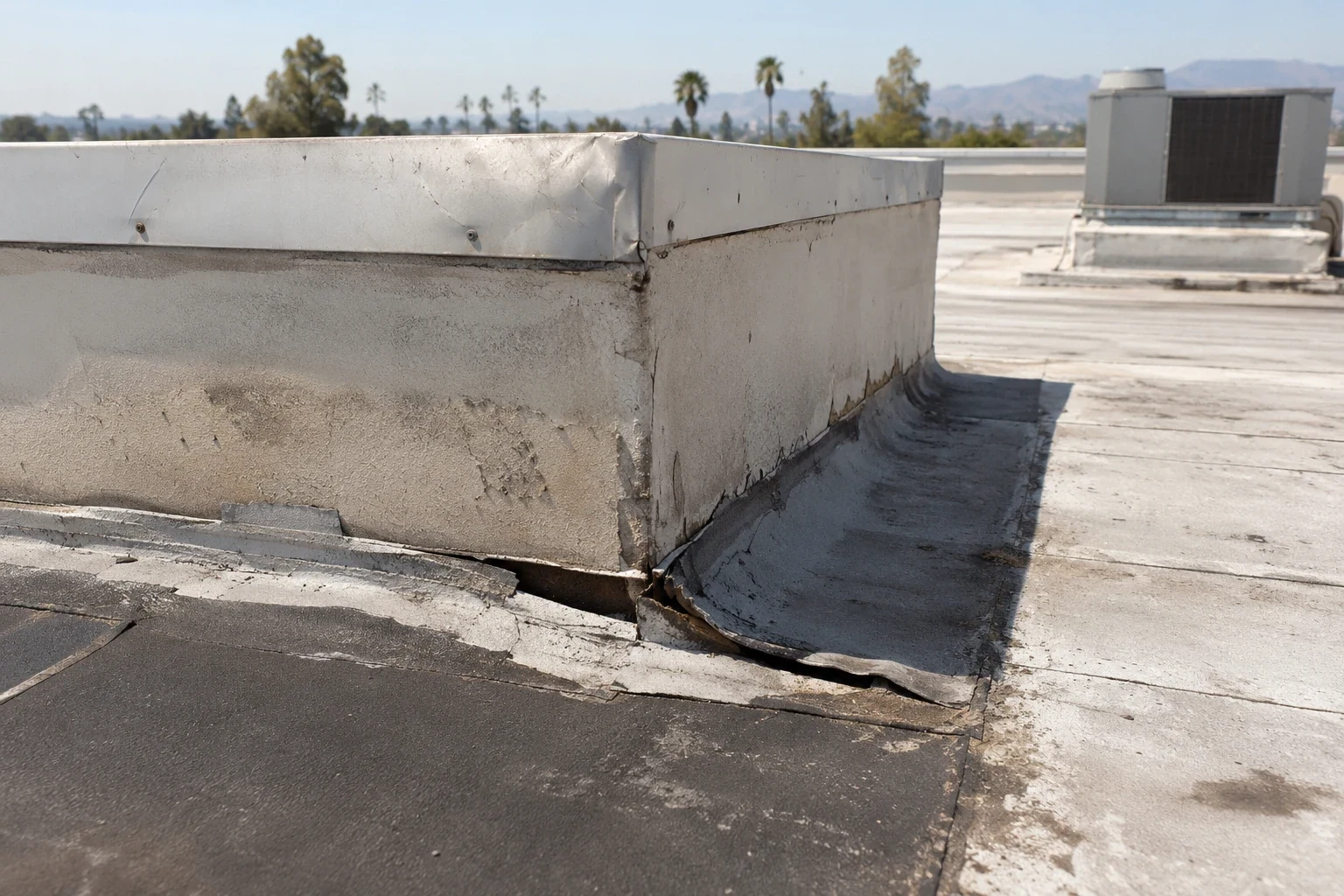
A fabricated component still meets the surrounding roof at a field-installed junction. We examine that junction for openings, damage and earlier patch material, then inspect the component itself for fit and movement. Equipment modifications can change the relationship between a penetration and its flashing without changing the name on the original roof records. A visible leak near that location therefore needs an inspection of both the installed component and the work adjoining it.
For an opening at the flashing transition, the permanent repair must address the actual receiving surfaces and the source of movement. An owner considering Sika Sarnafil PVC systems alongside Duro-Last options should compare assembly details rather than assuming that a common family allows any component to be substituted. The installed material and the proposed junction guide compatibility, while the roof geometry determines what can be reached and prepared.
The initial penetration response
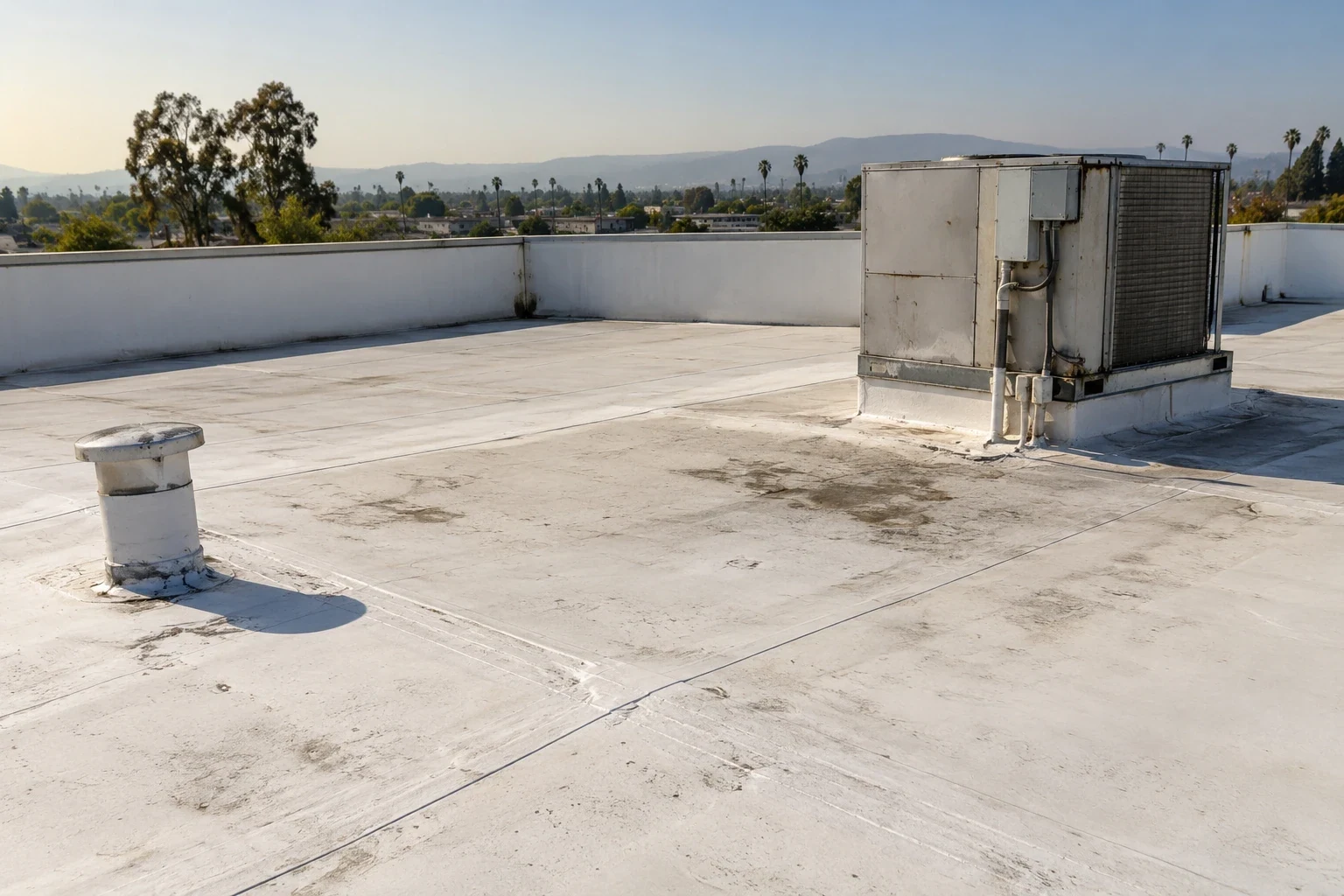
A component that no longer fits its opening can leave water paths hidden behind equipment. We examine what is safely accessible and identify where further exposure or equipment coordination is required. The owner can describe recent alterations and the timing of the leak without dismantling the unit or entering the wet roof. Interior protection proceeds through the building staff while our assessment establishes the roof-facing defect.
During repair of the affected roof area, a temporary treatment may reduce water entry at one accessible joint. We describe its limits, especially if part of the component remains concealed. A broad patch should not obscure the need for equipment movement or a corrected detail. The follow-up visit then exposes and reconstructs the junction as needed, with material identification and support condition established before the permanent repair is treated as a complete solution.
Fit, support and permanent work
A replacement accessory needs to suit the actual penetration geometry and the intended system. We measure and inspect the exposed condition, examine its support and identify where the field membrane remains serviceable. Custom fabrication can address a shape, but it does not repair wet insulation, a damaged substrate or a loose penetrating component. Those conditions belong in the scope alongside the roof-facing transition.
For Versico PVC and other system choices during larger replacement planning, we evaluate the complete assembly rather than treating an accessory as the whole roof decision. The owner needs to know which layers will be removed, how equipment access will be coordinated and where the reconstructed field will meet retained material. A localized correction may be practical when the surrounding roof is sound. If investigation finds broader damage, we explain the expanded boundary and protect the opening while that work is addressed.
Regional exposure and joint readiness
During July 2024, Fresno recorded a 90-degree monthly mean, a regional reminder to examine movement at exposed roof joints. That regional heat context encourages attention to movement and exposed joints, but it does not prove the cause of a leak at a particular fabricated detail. We inspect physical damage, changes in fit and stressed adjoining membrane. An equipment alteration can matter more to a single penetration than regional weather, so the repair history and roof observation remain part of the diagnosis.
Central Valley winter tule fog forms after sunset and may be thickest before dawn. On a Fresno commercial property, the actual joint and receiving surface need assessment before application. Shading behind equipment can affect drying, and preparation may require a different sequence from work in the open field. We discuss a protected stopping point before disassembly so the owner has a usable plan if conditions permit inspection but delay permanent closure of the penetration.
Equipment access and the room below
A leaking equipment transition can place roof work above a sensitive room while requiring access for another trade. The local healthcare reference here is Clovis Community Medical Center, located on Herndon Avenue at number 2755; its identity supplies no roof information about the subject property. We ask the owner which contents require protection, who controls equipment shutdown and how work can be separated from occupied circulation. The repair sequence connects those needs to the roof opening.
A condition report for the equipment transition records the component inspected, the field joint repaired and any concealed area left for further investigation. We distinguish the fabricated component from the surrounding roof layers so the owner understands what has been restored. The final account also identifies equipment changes that must be completed before permanent closure. Future inspection can then revisit that junction with its actual alteration history rather than assuming the original accessory still matches the equipment above it.
For Duro-Last work, establish which membrane and prefabricated or field details are present at the affected roof area before planning a repair. Check the proposed connection against the current system documents and confirm that a prior alteration has not changed the detail. Coordinate penetrations or equipment work with the trade responsible for those components, and do not close over an unresolved attachment or substrate concern. Record the completed membrane work and any item left for manufacturer or designer direction. That record helps future maintenance identify what was changed and where the original assembly remains.
Commercial Roofing Questions
Does custom fabrication eliminate field-joint leaks?
The installed junction is the deciding factor. A shaped component still needs an appropriate connection to the field and the penetration. We inspect those joints and their receiving surfaces rather than assuming fabrication establishes the condition of the completed roof detail.
Could an equipment change affect the original accessory?
Current geometry and movement matter. An alteration can change how the penetration meets its flashing, even if the old component remains in place. We assess the altered condition and coordinate any equipment work needed before rebuilding the roof transition.
Can a new accessory cover wet layers below?
The underlying damage needs its own correction. A replacement component may address fit while leaving insulation moisture or substrate deterioration untouched. We investigate the support and define removal separately from the accessory work so the completed detail meets serviceable material.
Will a PVC patch from another brand fit the repair?
Compatibility governs material selection. A shared membrane family is insufficient to establish a suitable field junction. We identify the installed covering and repair requirements before selecting components, particularly where earlier patches or equipment modifications have changed the receiving area.
Why might another trade need to attend the repair visit?
Access and component support can control the sequence. Equipment may conceal the junction or require adjustment before roofing can be completed. We explain that coordination early so a roof visit does not end with an inaccessible defect still taking water.
Report the penetration and recent equipment changes
Call with the leaking room, the equipment above it and any alteration history. We assess access and urgent protection, then explain the component, field-joint and support work required for the permanent correction.
Related Pages
Flashing Failure Investigation in Clovis at Roof Transitions
Read the full page
Sika Sarnafil Commercial Roofing
See how we handle it
Commercial Roof Repair
Scope, sequence and repair notes
Versico Commercial Roofing
Read the full page
Fresno
See how we handle it
Roof Condition Records and Repair Planning
Scope, sequence and repair notes