
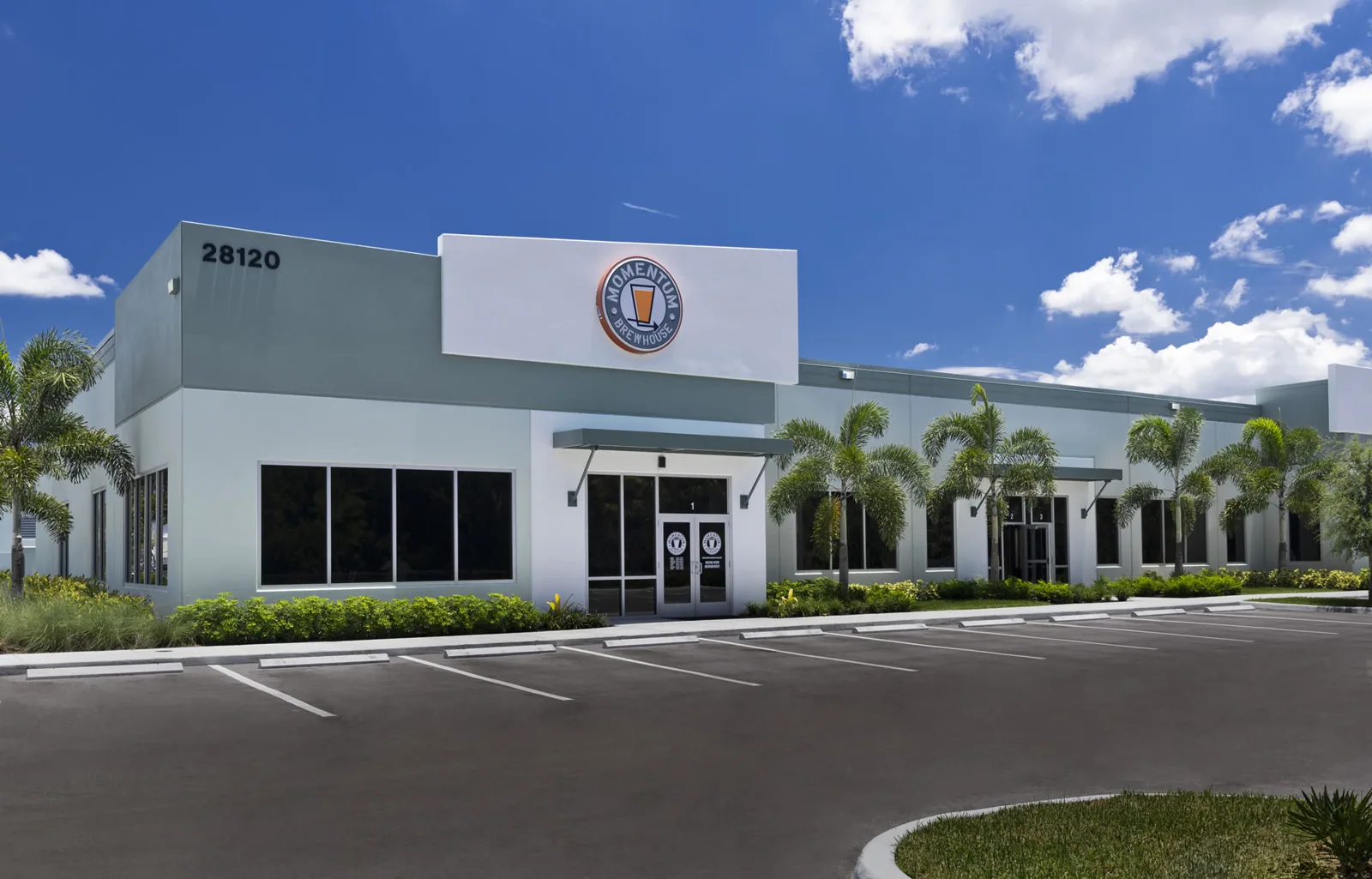
Flex Industrial Roof Repair in Clovis, CA
Property Types We Roof
A tenant reporting rainwater beside a workbench can leave a flex building owner balancing a repair request against operations in the adjoining suite. Flex industrial roof repair in Clovis, CA, begins with the affected tenant space and the roof connection that can actually be examined. We identify permitted access, trace the complaint and propose suitable protection, while the owner coordinates tenant releases. A shared address does not establish one roof condition or permission to work above every business inside.
The historic expansion proposal for Research Technology Park identifies a location at Nees Avenue and Temperance Avenue, with State Route 168 also marking the area. Its proposed uses included business services and research as well as assembly and manufacturing. That proposed development provides planning context rather than a current inventory of completed buildings or tenants. An actual flex property needs its own construction and use established. We examine its roof transitions and operating constraints before applying a repair method associated with any particular type of industrial space.
Shared field and separate tenant exposure
A continuous roof surface may cross an interior lease line, but the water path does not have to follow that line. We compare the complaint with the roof layout and accessible layers, then determine whether investigation needs to extend above another suite. The owner arranges the additional release where necessary. Separate interior symptoms can suggest a connected problem, yet they cannot establish that all insulation beneath the shared field is wet without supporting examination.
Roof work above office tenant areas can require a different protection method from work above active production rooms. We identify those distinctions before selecting the daily work boundary. The resulting scope names the roof connection, interior area and access permission involved, so the owner can communicate with tenants without turning a limited complaint into an unsupported whole-building diagnosis or a broad interruption notice.
Tenant equipment and roof connections
A recently serviced rooftop unit or added penetration is worth comparing with the timing of a new leak, but the sequence alone does not establish its cause. We examine the curb flashing, nearby seams and water discharge where accessible. Equipment operation belongs to the appropriate service personnel; roofing addresses the approved membrane and flashing detail. That separation lets a roof correction proceed without promising to solve an equipment fault outside the task.
For penetration and skylight flashing repairs, compatible materials and the existing opening condition determine the permanent connection. A new accessory may also need support or structural review before installation. We establish who authorizes the roof opening and who coordinates the tenant equipment, then document the completed roofing detail. A shared roof can accumulate separate modifications over time, making identifiable locations more useful than a general statement that the roof has been patched.
Regional heat and repeated joint stress
The Fresno monthly mean for July 2024 measured 90 F, while the triple-digit-day count for that month reached 26. Regional exposure supports checking movement at seams and wall transitions, but it cannot show that a specific flex roof failed. On the actual assembly, we look for pulled terminations, separated laps and material condition around the opening. The connection needs sound material and appropriate preparation, especially where a previous patch has obscured the detail without correcting the movement.
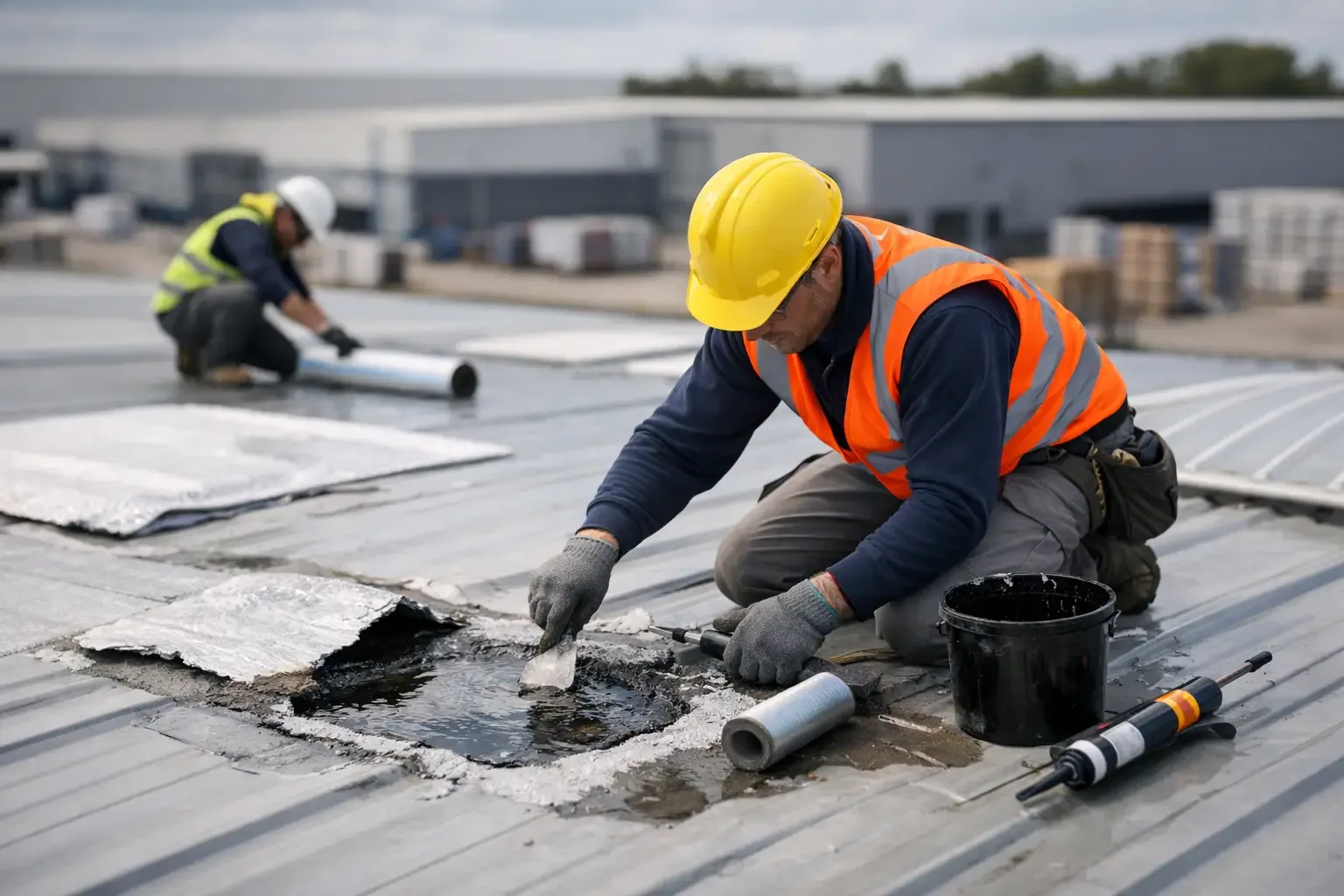
A located flex building leak repair can remain limited when the surrounding assembly is serviceable. Wet insulation, deficient attachment or multiple recurring details may change that choice. We state what the examination supports and what still needs confirmation before recommending recover or replacement. A reduced interior drip is a useful observation, but cannot establish a dry roof base or justify retaining concealed layers that have not been assessed.
Suite releases and the daily tie-in
A tenant with a process that cannot tolerate overhead exposure may release a different period from a nearby office. We compare those periods with removal, protection and closure tasks before proposing the roof sequence. Material delivery and waste handling need routes that the owner can actually release. A large uninterrupted roof area may be attractive for production, but the daily zone has to respect the interior use and the time needed for a reliable stopping detail.
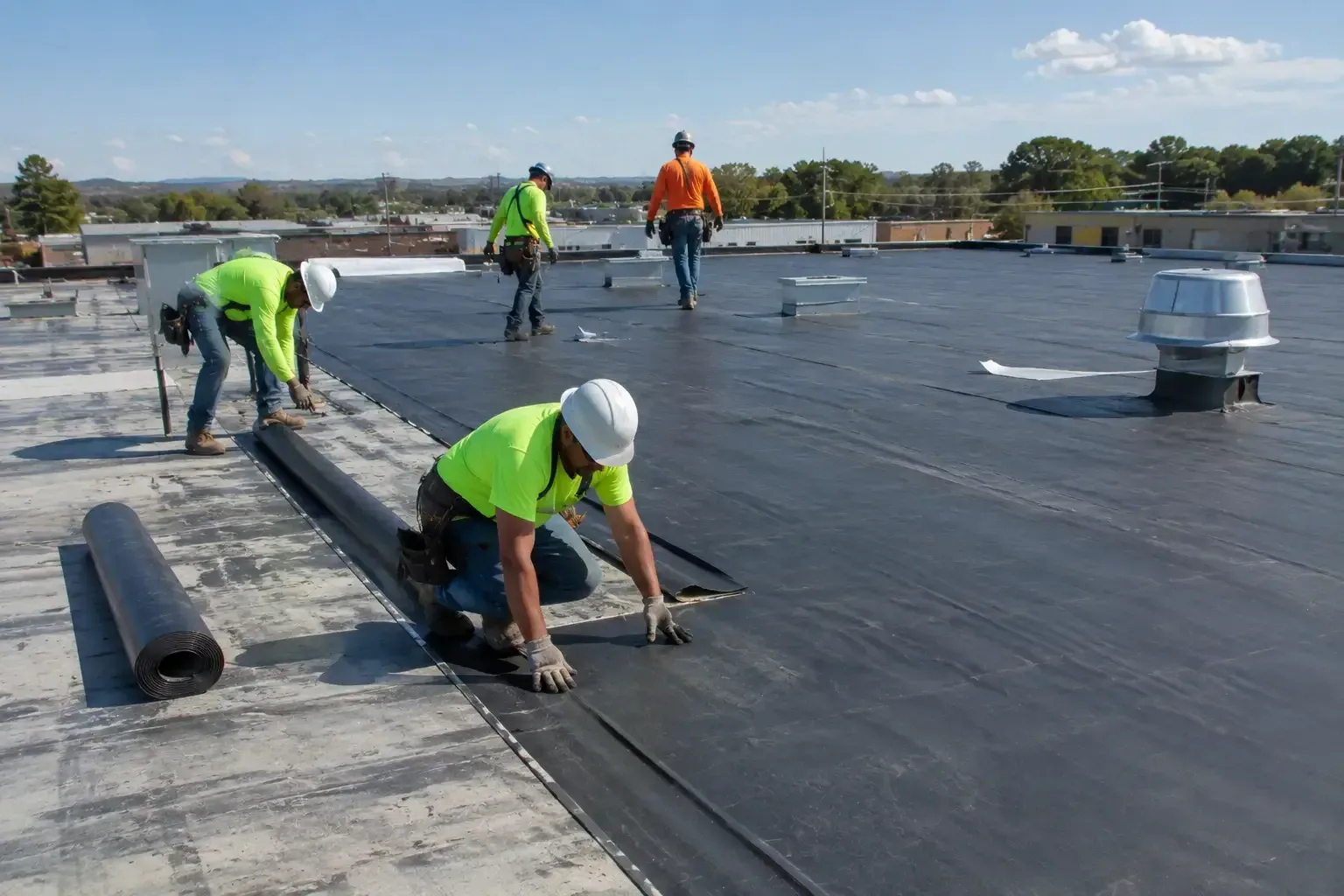
With phased roofing above occupied tenant suites, repeated setup and temporary connections can change labor and timing. The owner should see those obligations when comparing work schedules. A property near the Research Technology Park area still needs its own operating releases; a planning designation cannot supply them. We describe the exposure by roof area and affected space, allowing the owner to decide which tenant arrangements are needed before construction.
Repair history and the next alteration
A permanent repair record identifies the inspected entry, material preparation and completed connection, along with excluded areas and remaining temporary work. That history is especially useful when a tenant later adds equipment or changes a service route. The new task can be compared with the roof detail instead of relying on recollection of where a patch was placed. We recommend protection for actual equipment access paths and checks of outlets or transitions identified during the examination.
Before a future recover or replacement, the owner needs current findings about retained layers and attachment rather than a collection of unrelated repair receipts. We can evaluate the assembly and describe the confirmation required for a broader scope. Tenant approval for an earlier patch does not establish permission for the later removal. Keeping construction status and access release clear helps limit both roof exposure and disputes about what an earlier roofing task actually completed.
A roof opening above a leased space needs a stated closure responsibility even where several parties coordinate the work. We identify which roofing connection is included and which equipment task must finish before that connection can close. The owner can then arrange the tenant release using a practical sequence rather than assuming each trade's access covers the others.
Flex-industrial buildings can shift between light manufacturing, office use and storage from one tenant bay to another. Confirm the current use beneath the work area rather than relying on a prior lease or the building label. The operator can identify production schedules, sensitive inventory, fume-control needs and any room that cannot accept overhead work. Relate each roof opening to the bay below and keep tenant releases distinct when several suites share one membrane. That detail helps define protection and work hours without assuming identical operating conditions across the property.
Commercial Roofing Questions
Can we repair the roof without entering the neighboring suite?
The supported water path determines the investigation boundary. A local accessible opening may permit a limited repair, while concealed travel can require additional observation. The owner arranges any neighboring access before we treat that area as examined or included.
Who handles a leak beside tenant-installed equipment?
Task responsibility follows the identified defect and authorized scope. We examine the roofing connection and report equipment conditions needing separate service. Ownership or lease responsibility is resolved by the owner and tenant using those findings, rather than inferred from proximity alone.
Will different tenant hours increase reroofing time?
The usable daily release can govern the sequence. Repeated protection, setup and tie-ins may be necessary when adjacent suites release different periods. We explain those tasks before assigning a work zone that relies on continuous access.
Can the next tenant add a roof penetration after repair?
Review of the existing assembly and proposed detail comes first. A penetration may require support, compatible flashing and a revised service path. We compare the addition with the completed roofing record so the new opening does not defeat the earlier connection.
Describe the tenant space and roof alteration
Tell us the affected suite, water timing, recent equipment work and owner contact for access. We will identify the examination needed and the practical protection available before permanent construction is authorized.
Related Pages
Office Roof Leaks and Tenant Protection
Read the full page
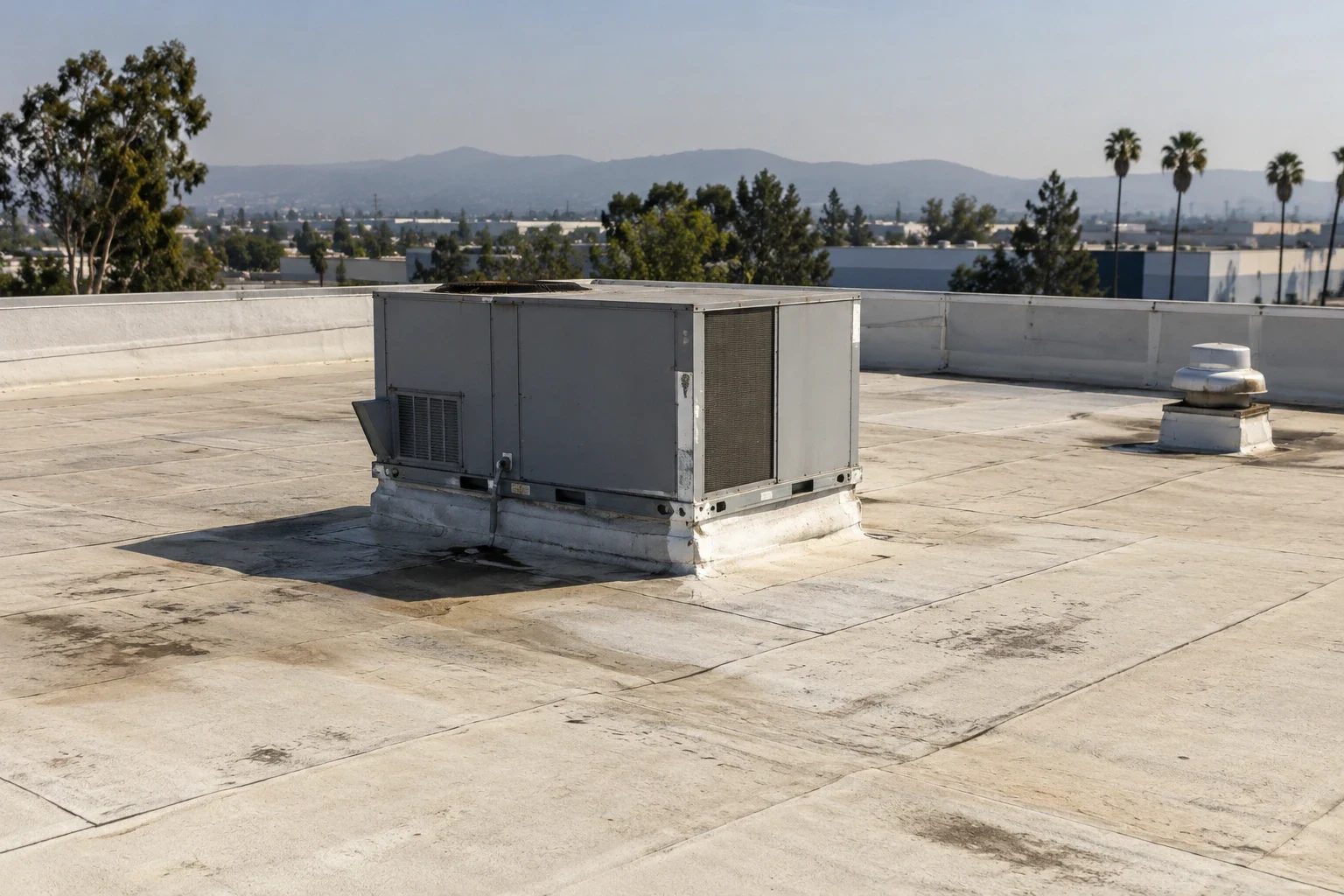
Manufacturing Roof Repairs With a Defined Work Release
See how we handle it
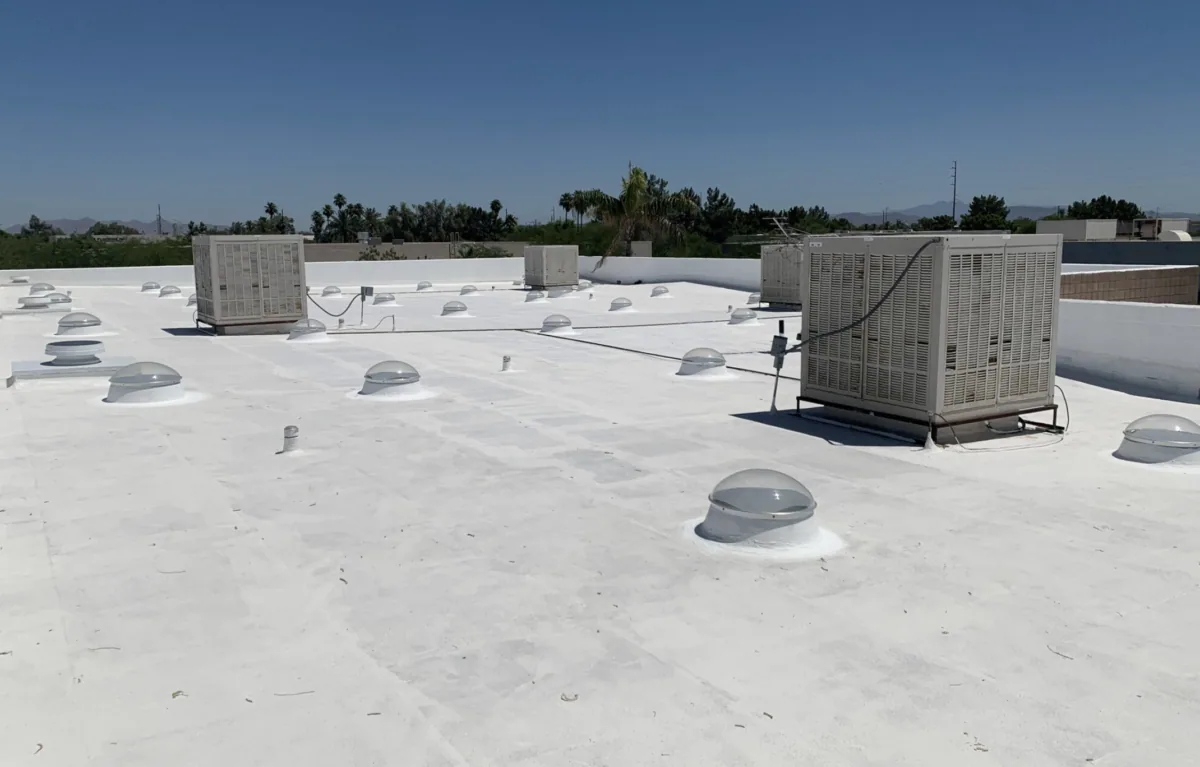
Skylight and Penetration Flashing
Scope, sequence and repair notes
Commercial Roof Leak Repair
Read the full page
Occupied Building Reroofing
See how we handle it

Clovis Research and Technology Park
Scope, sequence and repair notes