
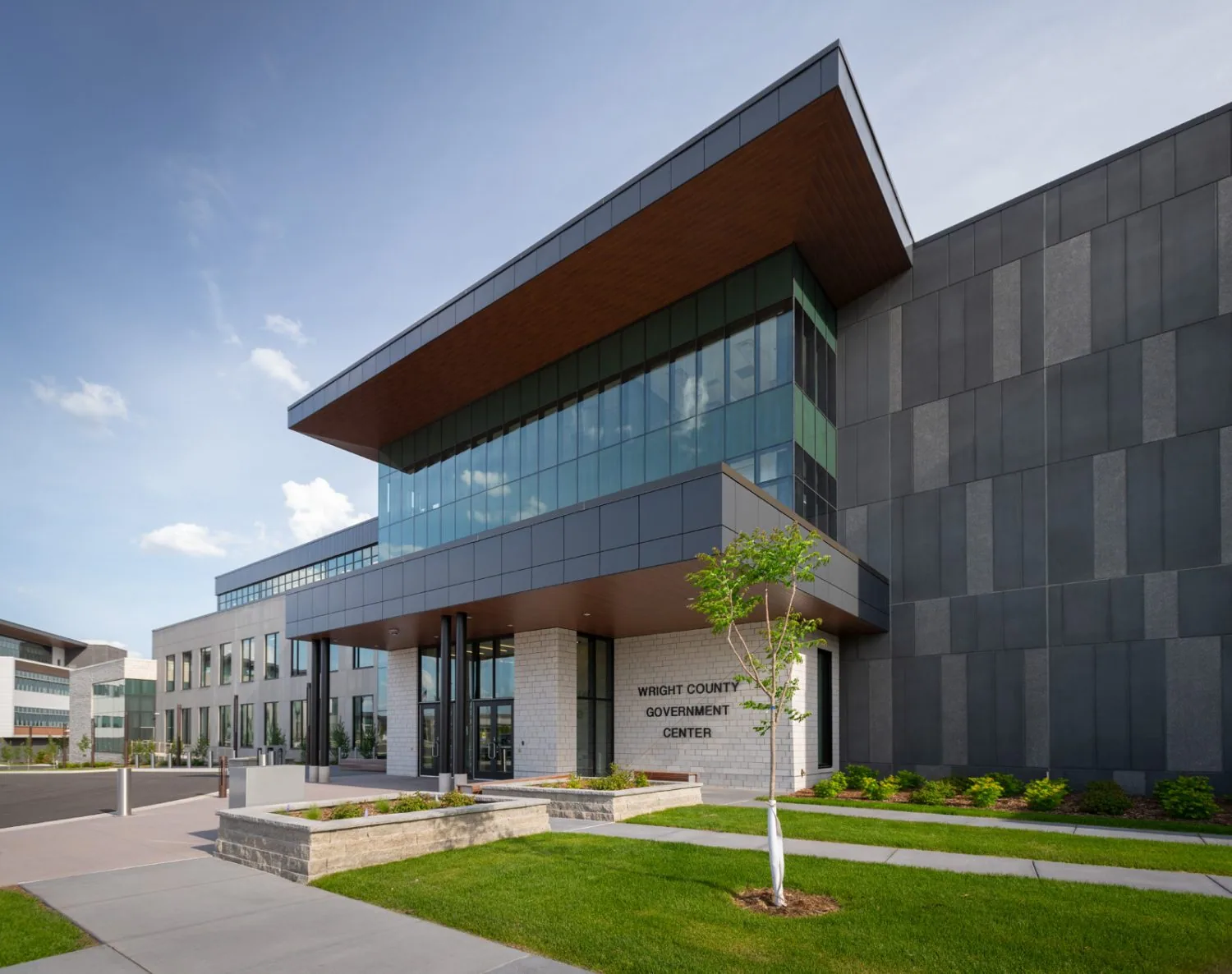
Government Building Roofing in Clovis, CA
Property Types We Roof
Water appearing above a public counter after winter rain can interrupt service before the agency knows which roof detail opened. Government building roofing in Clovis, CA, starts with the affected space, the authorized access route and the limits of the emergency task. We locate the suspected entry, establish suitable protection and record the condition, while the agency determines public access and purchasing authority. Urgency does not establish permission for unrestricted removal or a complete replacement.
Public buildings across Clovis and Fresno serve different agencies and users, so a roof scope should identify the owner, facility contact and authority responsible for the work. A library, public counter and records facility may have different visitor routes and room-protection needs. The agency should identify entrances that remain open, access controls and the person who can release each work area. Put those details into the bid boundary without publishing sensitive security information. Retain approvals and inspection records under the facility's own process, and map completed roof details to the correct building. This gives maintenance staff a clear basis for future repair without assuming nearby public properties share construction, procurement or access permissions.
Emergency authority and permanent scope
An active entry can require protective action before a permanent construction decision is ready. We describe the proposed temporary detail, its limits and the work needed to complete it, then confirm who can authorize that task. The agency's purchasing process may treat inspection, urgent protection and replacement differently. Roofing recommendations should distinguish them so a temporary measure is not represented as a funded permanent project or a broader authorization than the person granting access intended.
For urgent protection of a public building, safe access and actual conditions govern what can proceed. We take requests outside normal office hours, including holidays, and communicate the response available. A restricted roof hatch, secure interior or need for agency supervision can affect mobilization. The work record describes any remaining exposure and follow-up requirement, giving the agency useful information even when permanent construction must wait for a separate approval.
Counter service and protected circulation
A material route crossing the public entrance needs an agency decision before loading starts. We establish the roof task, proposed storage and waste handling, then identify where overhead work could affect circulation. Public access, security and room release remain facility responsibilities. A proposed daily zone should allow reliable roof closure during the authorized period, including time for unexpected wet material within the agreed investigation allowance and the temporary connection needed at the stopping point.
Work above administrative offices can require different scheduling from work above public teaching spaces. The owner identifies those uses; we explain the construction consequences. Existing access permission for inspection may not extend to material transport or removal. With occupied public building reroofing, the release needs to address the actual exposure and protection method before the first layer is lifted.
Observed defects and supporting openings
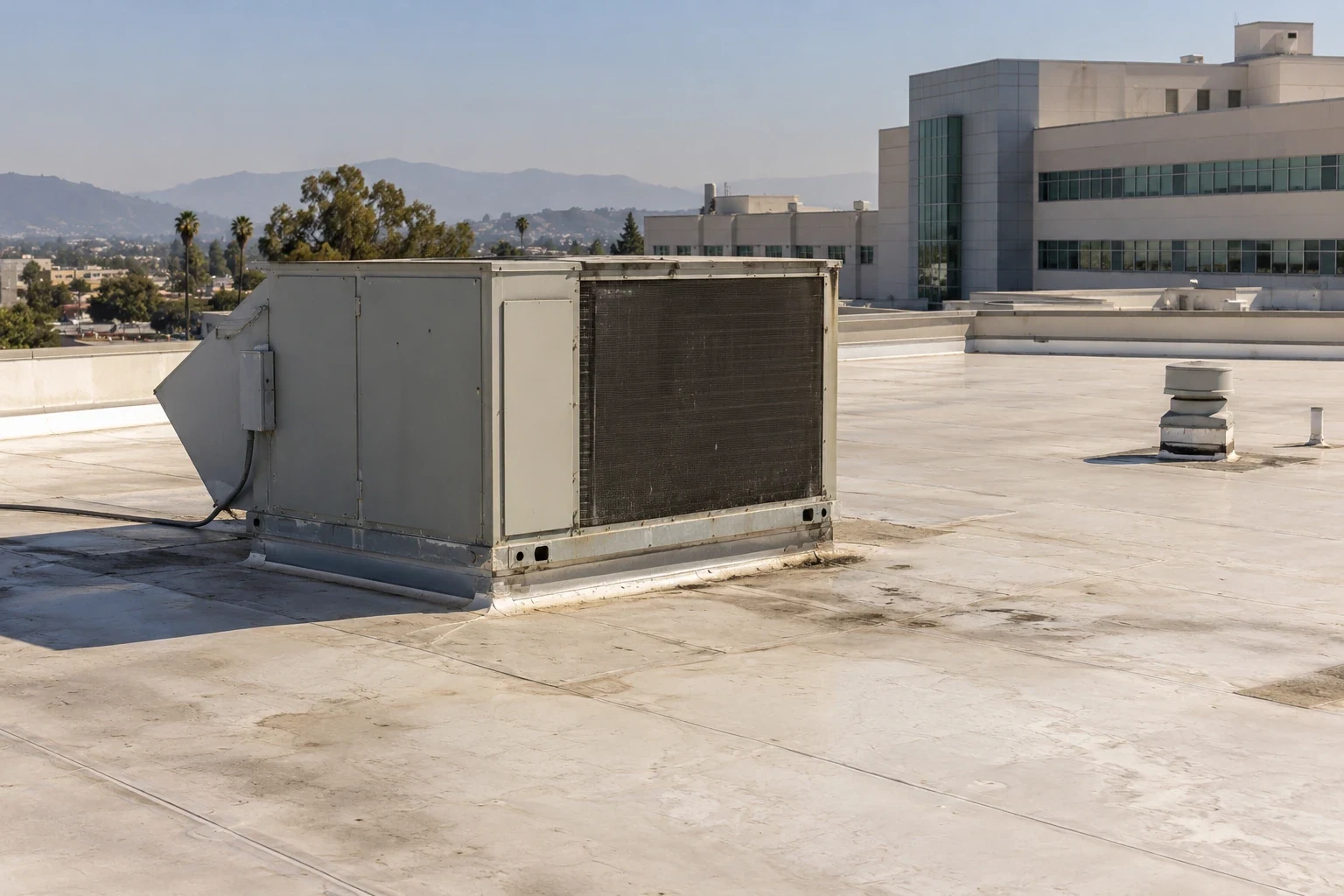
A stain near a drain does not establish that the outlet caused the leak. We compare interior timing with the accessible membrane, flashing and drainage path, then mark what was actually observed. If a concealed layer could be carrying water, targeted investigation can establish whether the repair boundary needs to move. Photographs should identify the building and detail well enough for an agency reviewer to understand the recommendation without assuming that an image represents every roof section.
Written roof condition findings for agency review distinguish confirmed deficiencies, suspected concealed damage and inaccessible areas. That distinction matters when comparing proposals: one scope may include removal and testing while another assumes retained insulation is dry. We explain the basis for each allowance and the point at which additional authorization is needed. The report supports the roofing decision but does not replace the agency's procurement, structural or environmental review.
Regional heat and morning moisture
The July 2024 Fresno record includes 26 days reaching triple digits and a monthly mean of 90 F. Those conditions support attention to movement at roof joints and exposed materials, without proving that a given agency building suffered heat damage. Fog formation after sunset in the Central Valley can produce the thickest tule fog ahead of dawn. We check surface conditions before adhesion or coating and identify whether remaining moisture is on the roof or within the assembly.
An assignment in Clovis therefore needs both a suitable construction period and a clear access release. A forecast of improving conditions cannot establish a dry substrate, just as a hot month cannot establish a replacement requirement. We document the conditions relevant to the planned material and communicate delays that affect the daily closure. That gives the agency a practical explanation for timing instead of a calendar promise detached from the roof task.
Repair boundaries and future allowances
Localized dry damage can support a focused permanent repair, while saturated insulation, deficient attachment or recurring failed transitions may justify wider work. We describe the consequence of retaining each affected component. Outlet and edge corrections should appear where they are part of making the new connection work, rather than being omitted to make the initial scope smaller. The agency needs to see which tasks address immediate exposure and which prevent the repaired detail from being stressed again.
Before closeout, we identify completed connections and any work still temporary or awaiting approval. For phased repairs, the record should show the remaining boundary and the protective obligations between phases. A later capital request then rests on the current findings, not a generalized roof age or the fact that public service continued during a rain. Clear status lets the agency decide the next authorized action while keeping the unresolved roof exposure visible.
For an agency's address discussion, the Pinedale Branch listing supplies another distinct facility identity: 7170 N. San Pablo. Separate buildings need separate roof findings and authority even if one department manages them. We attach the recommendation to the actual inspected facility so an approval for one location cannot be mistaken for permission at another.
For a public project, confirm procurement steps, design review and agency acceptance before the roofing proposal becomes a construction instruction. The estimate should separate measured repairs from concealed-condition allowances and identify who can approve a change if removal exposes additional damage. An emergency protection visit does not automatically authorize expanded construction. At closeout, return approved changes, inspection records and marked repair locations to the facility's maintenance file.
Commercial Roofing Questions
Can emergency protection proceed before replacement approval?
The agency authority for the specific protective task decides that. We describe the limited work, access needs and follow-up before authorization. Approval to stop an identified entry does not establish permission for broad removal or a replacement contract.
What makes two agency roof scopes comparable?
Matching investigation and retention assumptions is essential. We identify the removal extent, moisture confirmation, temporary closure and detail corrections included in our recommendation. A lower total may reflect omitted work rather than the same completed roof connection.
Does continued public use prove the building is ready for roofing?
Construction release requires its own decision. The agency reviews circulation, security and overhead exposure for the proposed task. An open public counter does not show that a material route or roof removal area has been authorized.
How should unresolved concealed moisture be recorded?
Separate the suspected area from confirmed damage. We state the examination performed, its limits and the opening or test needed next. That keeps an allowance reviewable without assigning an unsupported removal quantity or treating an inaccessible area as sound.
Identify the public facility and authority
Tell us the building address, affected room, current water entry and authorized facility contact. We will explain the available response and the limited roofing task that can be proposed for approval.
Related Pages
Emergency Commercial Roof Repair
Read the full page
Office Roof Leaks and Tenant Protection
See how we handle it
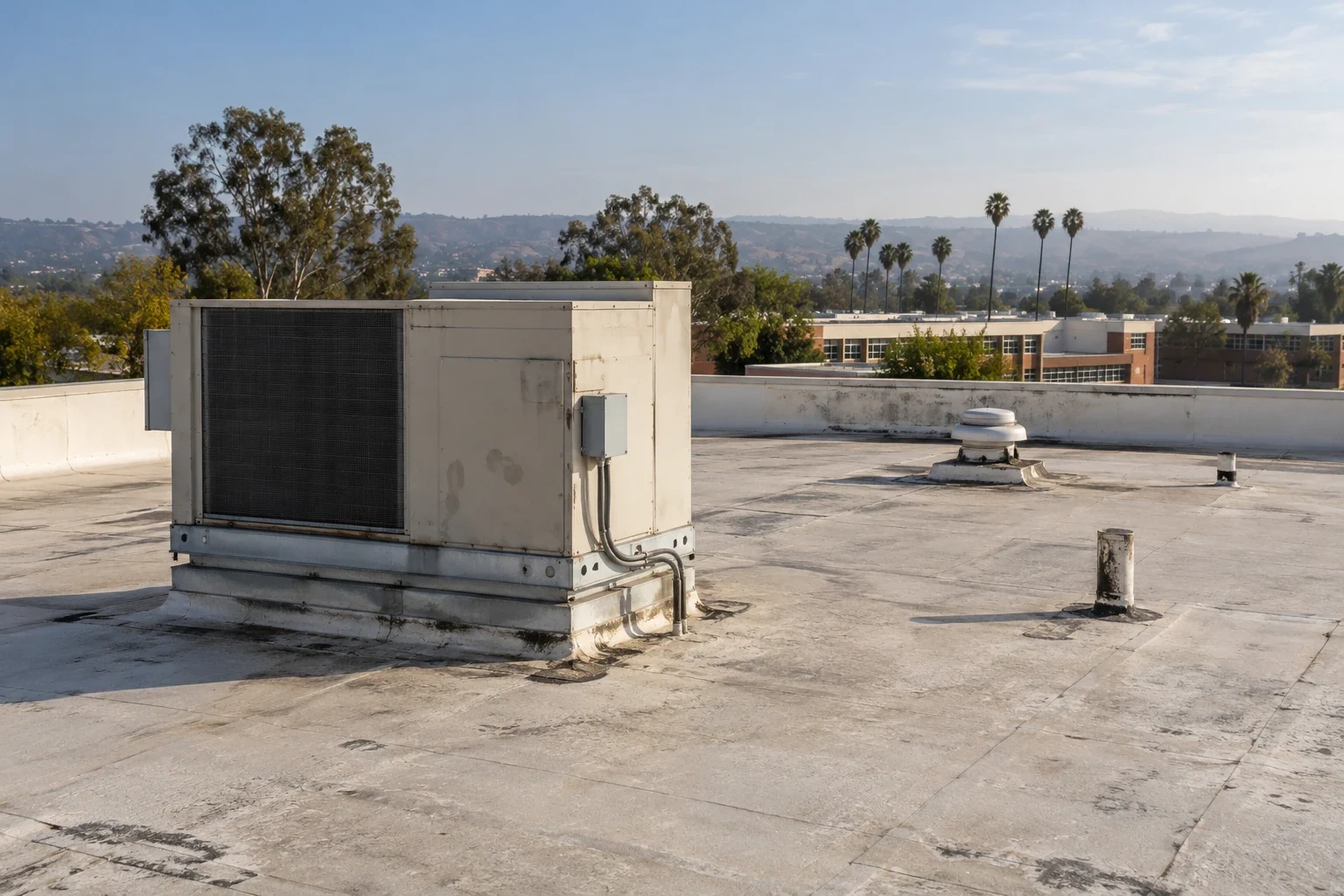
School Roof Leaks and Classroom Work Boundaries
Scope, sequence and repair notes
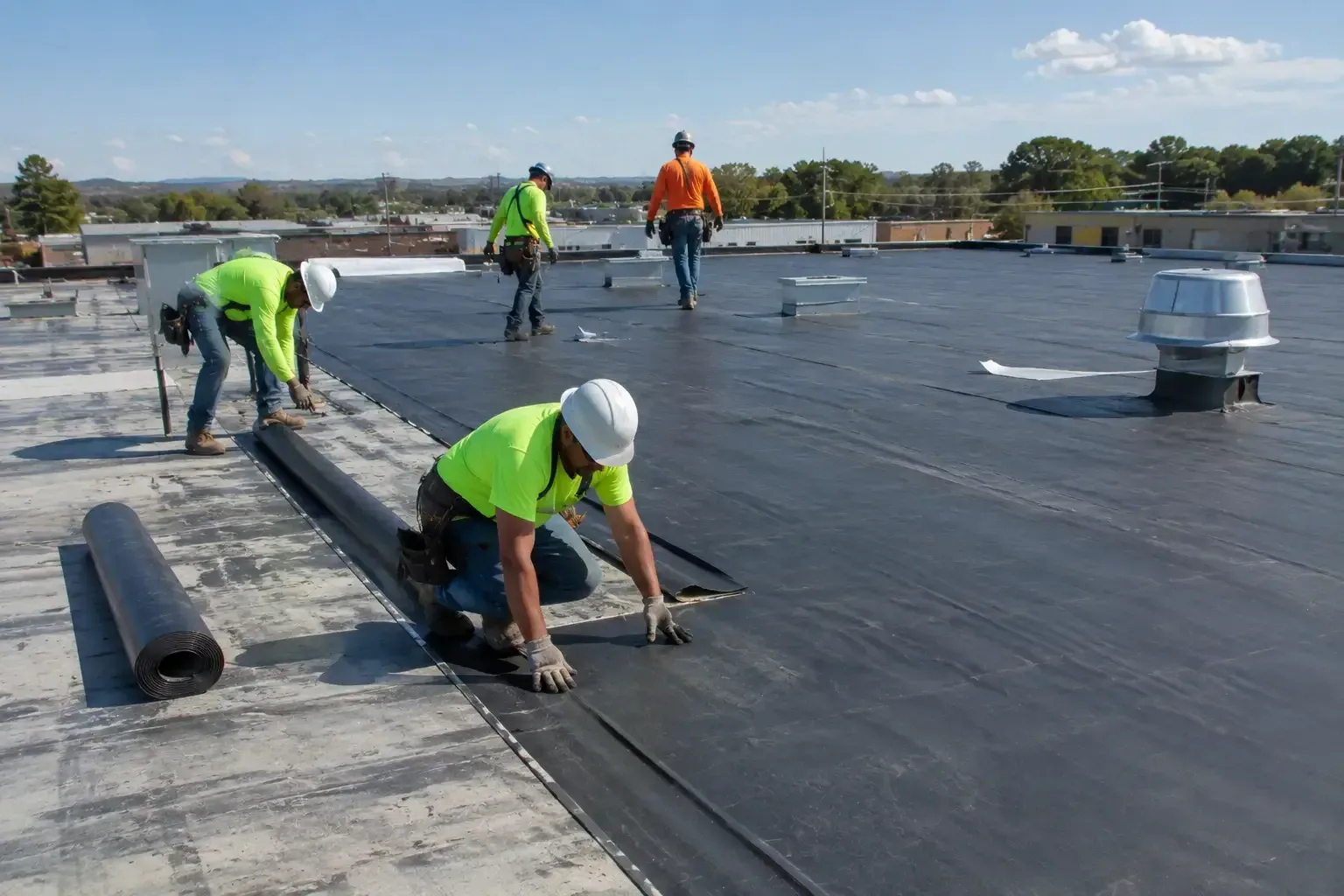
Occupied Building Reroofing
Read the full page
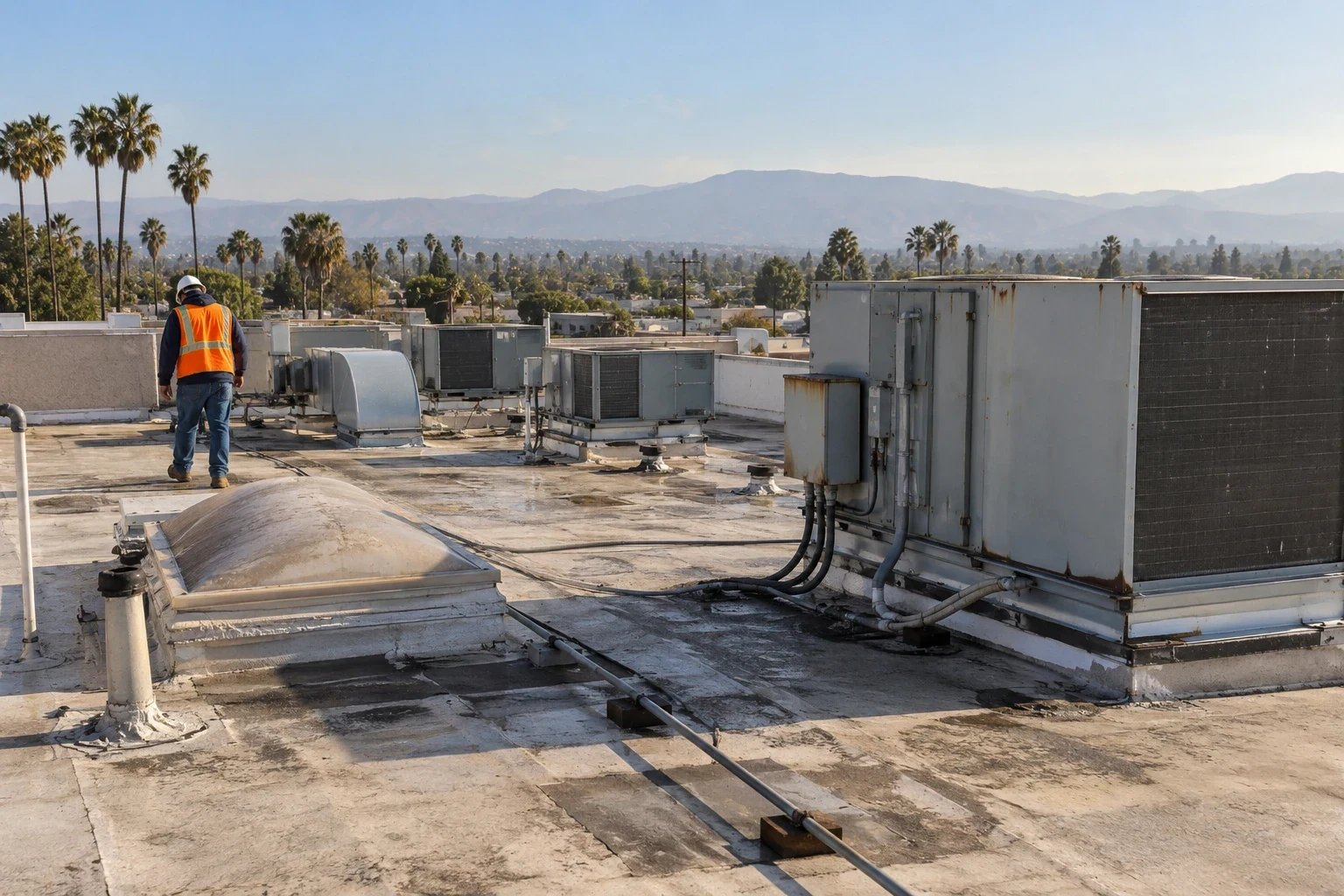
Roof Condition Records and Repair Planning
See how we handle it
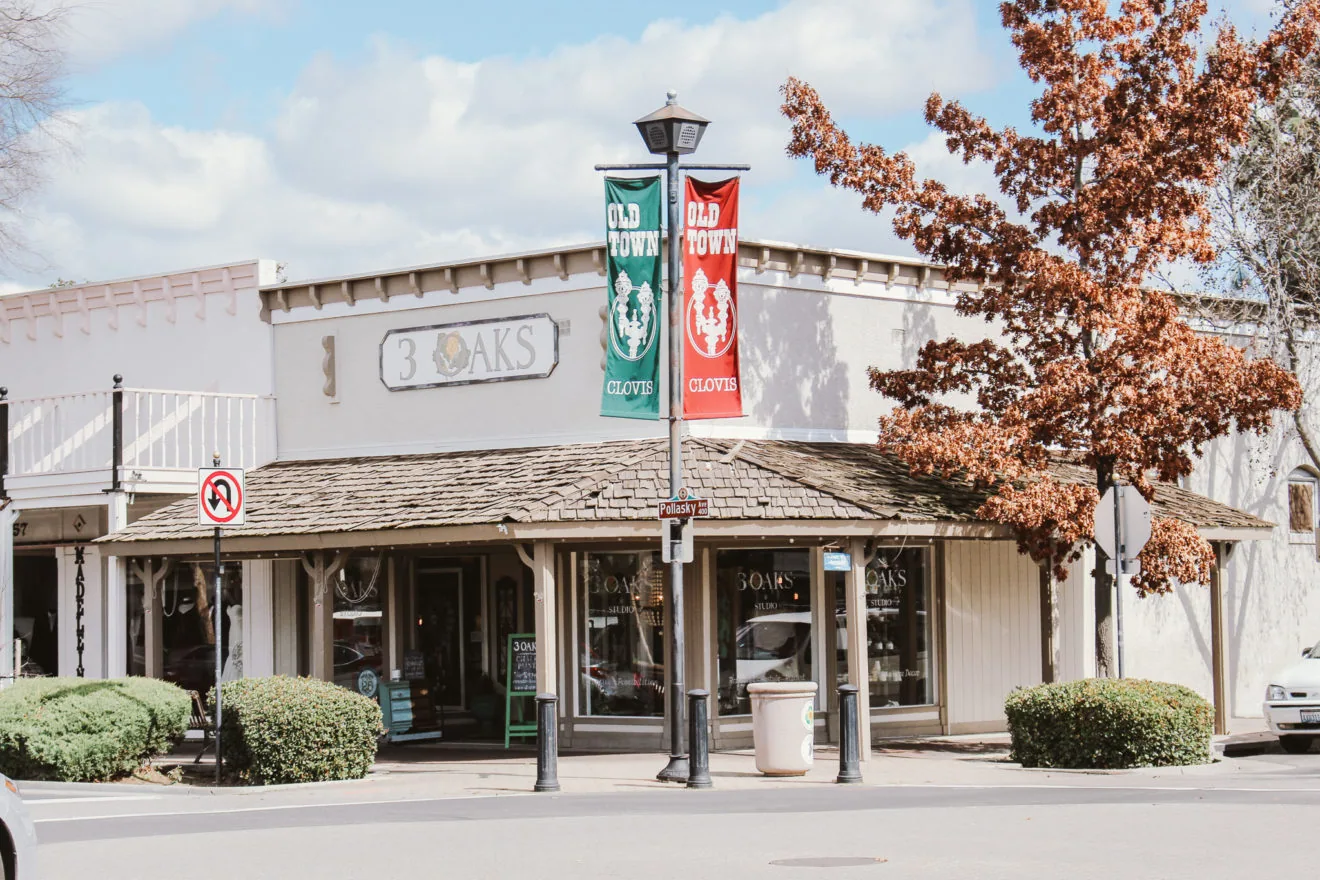
Clovis
Scope, sequence and repair notes