
Built-Up Roof Investigation in Clovis Beneath the Surfacing
Roof Systems
A first-rain drip beneath a surfaced roof can leave an owner unsure whether the opening lies in the top finish or deeper within a built-up assembly. We investigate and repair built-up commercial roofing in Clovis, CA, connecting the interior report to the accessible roof construction before assigning a patch. Protective surfacing can obscure the plies below, so a brief surface walk may establish an inspection need without establishing the exact repair. Safe access and the concern inside the building determine the initial protective action.
Fresno's July 2024 regional heat record gives context for reviewing exposed materials, while Central Valley winter fog can affect preparation even after rain ends. Neither establishes damage to an individual roof. Clovis Community Medical Center at Herndon Avenue identifies a real local facility, with construction authority and operating restrictions supplied by its operator. Our assessment of the surfaced assembly distinguishes accessible observations from concealed questions, including which openings might need authorization and what lies below them during the investigation.
The protective surface and the weatherproofing plies
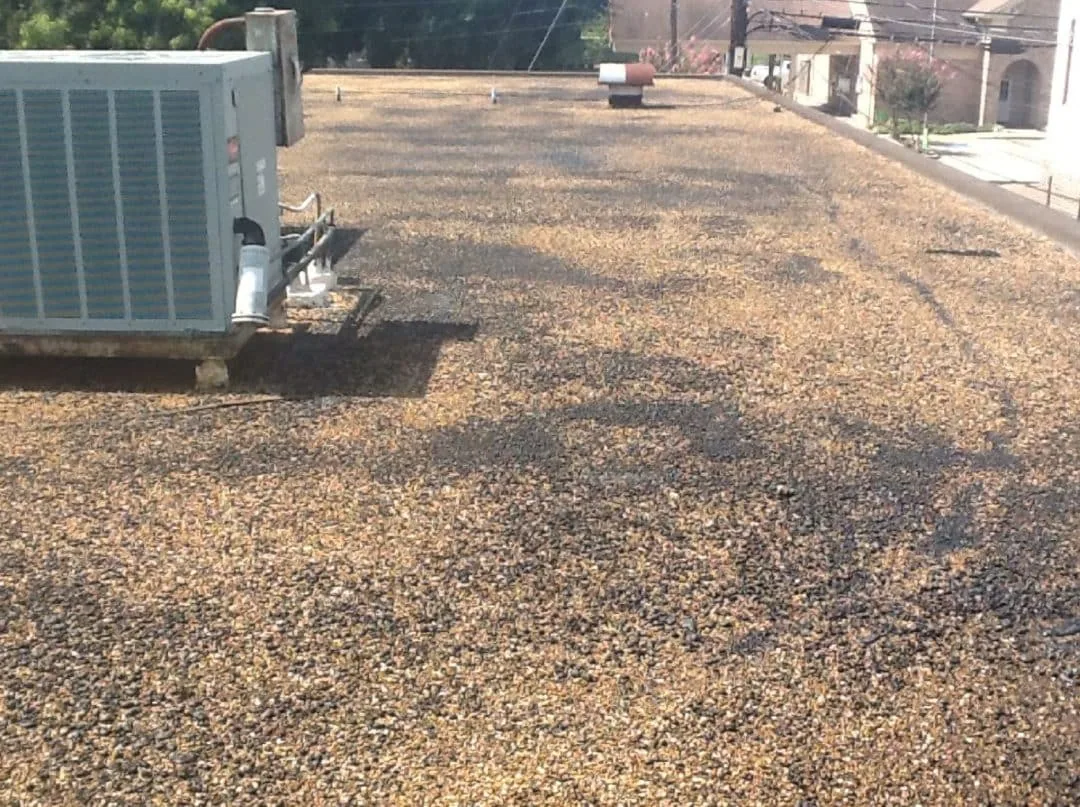
Built-up roofing uses multiple plies within an asphalt-based assembly, with protective surfacing that can vary by system. That finish is not the complete weatherproofing construction. We examine exposed conditions, transitions and accessible areas where surfacing has moved or deteriorated, then determine whether further examination is needed to understand the underlying plies. A bare patch of surface may need restoration, while a damaged layer beneath it requires another task.
The repair method must suit the actual assembly, including its reinforcement and prior treatments. Surfacing may need controlled removal to create a suitable preparation area, with reinstatement included where required. A general instruction to spread more coating can leave a ply defect unresolved. We identify the component and the boundary needed to reach sound material. Repairs at roof-wall transitions require separate evaluation because upper terminations and adjoining construction can admit water beyond the field plies. The owner's estimate should show those differences rather than use a single surface allowance for both protection loss and a complete weatherproofing correction.
The initial protection without an unplanned opening
Active water entry can justify prompt action without justifying an immediate cut into unidentified layers. We ask about the reported room, electrical proximity, sensitive contents and the facility contact who may authorize access. Qualified personnel protect the interior and handle electrical concerns. Our roofing response remains available through overnight periods, weekends and holidays, with the correction governed by safe conditions and the actual construction.
A temporary disposition should state its purpose and the follow-up it leaves outstanding. Where the visible area cannot receive a suitable permanent preparation, record the limitation instead of presenting a temporary covering as a finished reconstruction. Investigation openings need permission and appropriate restoration, particularly over occupied spaces. Owners with buildings in the Clovis service area provide each property's access and operating restrictions. The first visit should map the suspected location and preserve the information needed for the next step. This avoids an urgent surface treatment obscuring the layered condition that must eventually support a permanent correction.
Moisture findings and the reconstruction boundary
The concealed assembly matters where surface repairs have not settled the water concern or where observations suggest a deeper issue. Appropriate investigation can establish layer identity and material condition at authorized locations. Keep each result connected to the roof map rather than assuming a finding applies beyond the area examined. Saturated insulation, separated plies or damaged support may require different reconstruction quantities and different preparation.
A survey for suspect moisture with verification can help guide testing under suitable conditions, but its temperature patterns require confirmation. Where removal is justified, specify the covering, insulation and support tasks separately, including disposal and the daily closure method. The new repair needs sound construction at its boundary and compatible transitions to the retained assembly. An owner should see which quantities are established and how concealed additions will be approved. This connection between findings and reconstruction is the reason a measured localized correction can be more defensible than either a blanket surface application or an unsupported decision to remove the entire roof.
The installation method above occupied rooms
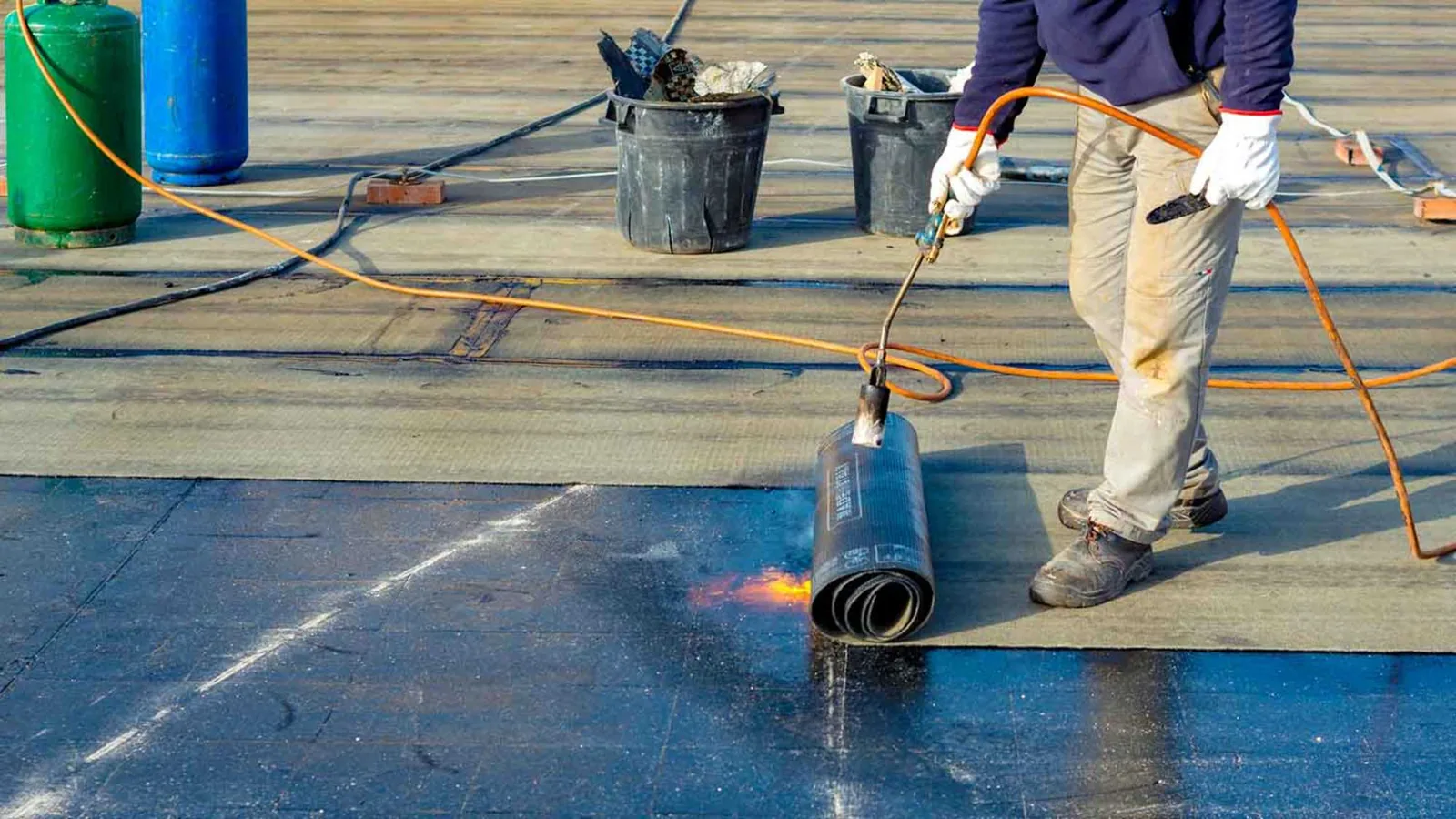
The selected built-up repair or renewal method brings its own product-handling, application and protection requirements. Those requirements need review before material is delivered. Work above occupants may involve odors, heat or equipment depending on the method, and the operator establishes the applicable restrictions. We describe the proposed process and the controls required for it rather than promising that any installation technique will leave building use unaffected.
For broader reconstruction, compare the complete requirements of modified-bitumen construction and a TPO membrane assembly where the findings support those alternatives. The field covering is only part of the task; drainage, terminations, attachment and the supporting construction remain essential. Thickness changes can affect the detail geometry. Daily removal limits should allow the roof to be closed under the agreed method before the crew leaves. Include those protection tasks and any equipment-trade dependency in the estimate so the owner evaluates the construction sequence along with the material choice.
The surface review and the completed maintenance record
Tule fog can leave a preparation question on a rain-free day, so the actual work area must meet the selected method's surface and substrate requirements. Summer heat likewise affects safety and handling without proving a particular ply has failed. We release work on measured conditions and material requirements, communicating any changed sequence and the temporary protection that remains. The surface appearance alone cannot certify the concealed assembly.
At completion, retain records of removed and repaired layers, surfacing reinstatement and corrected transitions with photographs tied to the roof location. Actual warranty obligations belong with that file, including requirements for later alterations. Maintenance should examine accessible outlets and protection at the repaired area without treating displaced surfacing as proof of the same concealed defect. If entry continues, use the findings and repair record to investigate remaining paths. Separate interior restoration and other trade tasks from roofing acceptance. The owner then has a completed correction with a known boundary, rather than a roof-wide conclusion based on a surface that could not reveal every layer during the original visit.
A built-up roof may contain several plies beneath aggregate or a coating, so surface appearance alone can understate the work. Where authorized, a small test opening can help identify the layers and moisture conditions before the repair boundary is set. Note whether the surfacing has separated, whether water is reaching the reinforcement and how the patch will tie into sound material. Aggregate handling and daily closure should be planned to keep drains clear and prevent loose material from entering occupied areas. The record should distinguish the confirmed repair from unexamined roof sections.
Commercial Roofing Questions
Is protective surfacing the waterproof layer?
The actual assembly controls its role. Surfacing protects underlying construction, while the weatherproofing plies need their own condition assessment.
Can a surface walk price concealed ply replacement?
The inspection limits establish the quantity confidence. Authorized investigation may be needed before concealed reconstruction can be defined.
Should removed aggregate be restored after a patch?
The selected system and repaired detail establish the requirement. Include appropriate surfacing reinstatement within the permanent scope.
Will a thermal survey prove every wet layer?
Verification identifies the concealed condition. Temperature patterns alone do not establish material identity or roof-wide extent.
Can renewal be phased above occupied rooms?
The closure method and operating restrictions govern feasibility. Set the daily removal boundary against the complete reconstruction sequence.
Describe the drip and the surfaced roof
Provide the interior location, available assembly records and access contact. We will assess initial protection and define the investigation needed before permanent layered work.
Related Pages
Commercial Roof Inspection
Read the full page
Flashing Failure Investigation in Clovis at Roof Transitions
See how we handle it
Clovis
Scope, sequence and repair notes
Infrared Roof Moisture Survey
Read the full page
Modified-Bitumen Roof Repairs in Clovis at Laps and Blisters
See how we handle it
TPO Roof Repair in Clovis After a New Drip
Scope, sequence and repair notes