Commercial Roofing in Chowchilla, CA
Service Areas
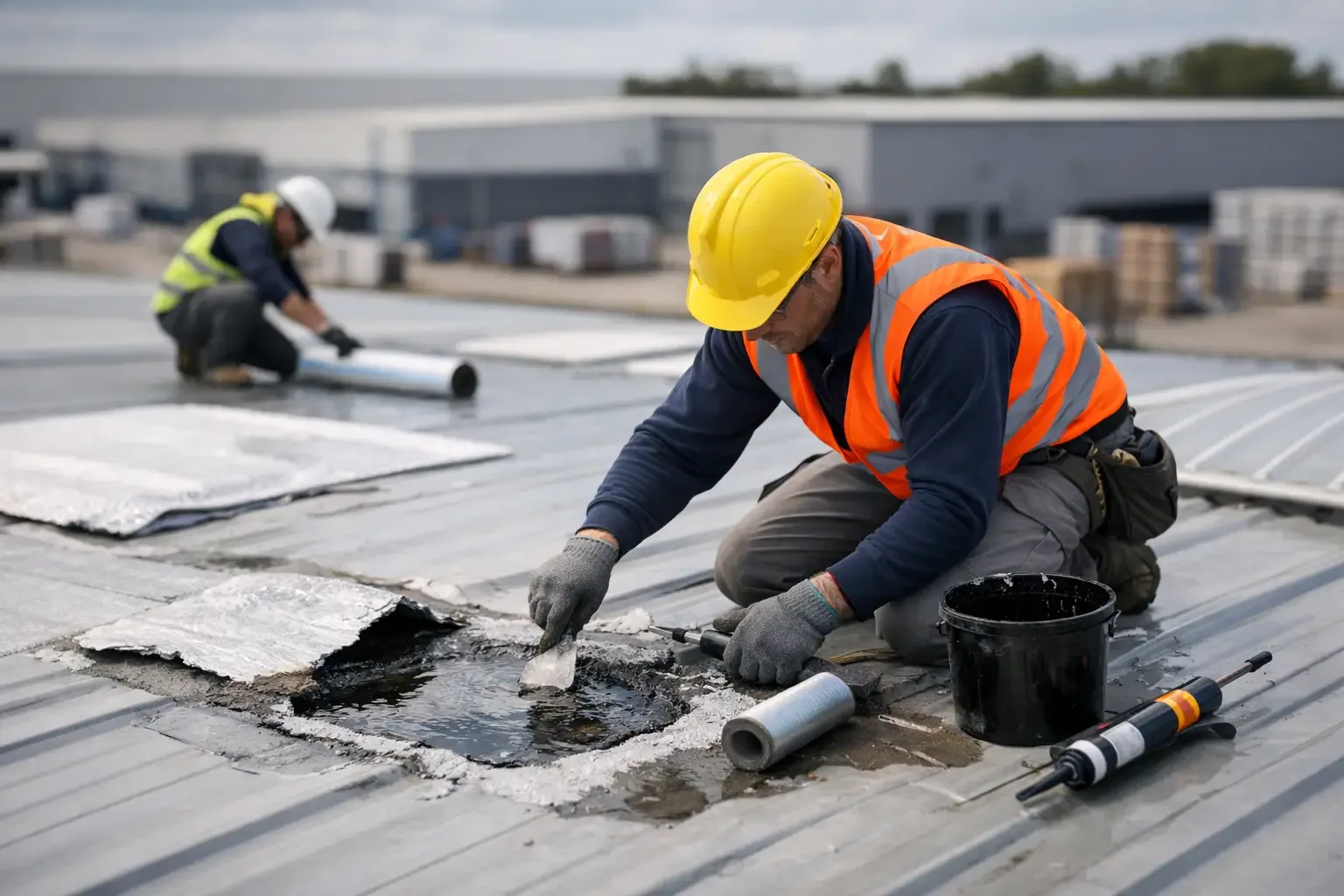
Commercial leak repair for an occupied Chowchilla, CA building deals with the water above and the activity underneath when a ceiling drip interrupts work. We repair low slope and metal roofing, investigate recurring leaks and plan replacement or restoration where the existing assembly cannot support another repair. A new mark on ceiling tile can come from a failed transition, a backed up outlet or water traveling along a deck before it drops. The opening task is to establish which condition is present, because covering the nearest visible crack can leave the actual entry point active.
Tell us where the drip appeared, whether it followed rain or equipment operation and what equipment or stock occupies the affected room. Emergency calls are handled throughout the day and night, including weekends and holidays. During the initial conversation we identify immediate exposure and discuss access; the roof examination then establishes what temporary protection is practical and what must wait for sound, dry materials. A wet ceiling near electrical equipment needs the building operator to involve the appropriate electrical professional while roof work proceeds above.
Water movement through the assembly
Moisture around a wall line can originate farther upslope, so we trace changes in slope, laps, penetrations and termination points before choosing a patch location. On a membrane roof, a seam opening may be obvious while saturated insulation underneath remains hidden. On a metal assembly, water can pass through a deteriorated fastener seal or move beneath a panel lap. Those failures require different preparations even when the interior symptom looks similar. Tracing the active leak keeps the emergency measure connected to the defect that needs permanent attention.
Temporary work should reduce entry without concealing important evidence or trapping moisture in an otherwise repairable detail. We photograph the condition before covering it, record the area affected and explain any access limitation that prevents a complete examination. The owner receives a clear account of what has been protected and where water may still move until the next work stage. A temporary repair remains a holding measure, with its own inspection needs after additional weather.
Kings Avenue access and occupied rooms
The Chowchilla Branch Library is a familiar civic reference within the city, but a roofing decision for a nearby business must come from that property’s own assembly and access conditions. Before mobilization, the owner should identify the exact building, areas that must remain open and any restrictions on lifting or staging materials. We then compare the interior report with the roof zone above it, checking drainage points, penetrations and adjoining transitions rather than treating a ceiling stain as a complete diagnosis. If a temporary repair is needed, we define what it protects and what remains for permanent work. A later visit can verify whether the correction held through another rain cycle and whether any concealed moisture still needs examination.
For an owner coordinating properties in Madera and Fresno, the practical benefit is one clear account of each building's condition while keeping their repair decisions separate. Noise restrictions, interior access and roof hatch locations can change the order of work. We identify where debris can travel, how materials will reach the roof and whether the repair area can remain isolated from normal activity. Those arrangements belong in the work plan before material removal begins.
Heat loading and a dry repair surface
The July 2024 report for Fresno records 26 triple digit days, with the monthly mean reaching ninety degrees Fahrenheit. That regional heat history explains why summer surface temperature deserves attention in a Chowchilla repair plan; it does not establish that a particular membrane failed during that month. Expansion can stress a restrained flashing transition, and a brittle exposed surface can require more removal than the visible split suggests. We examine flexibility, adhesion and the condition of the backing before deciding how much of a detail can remain.
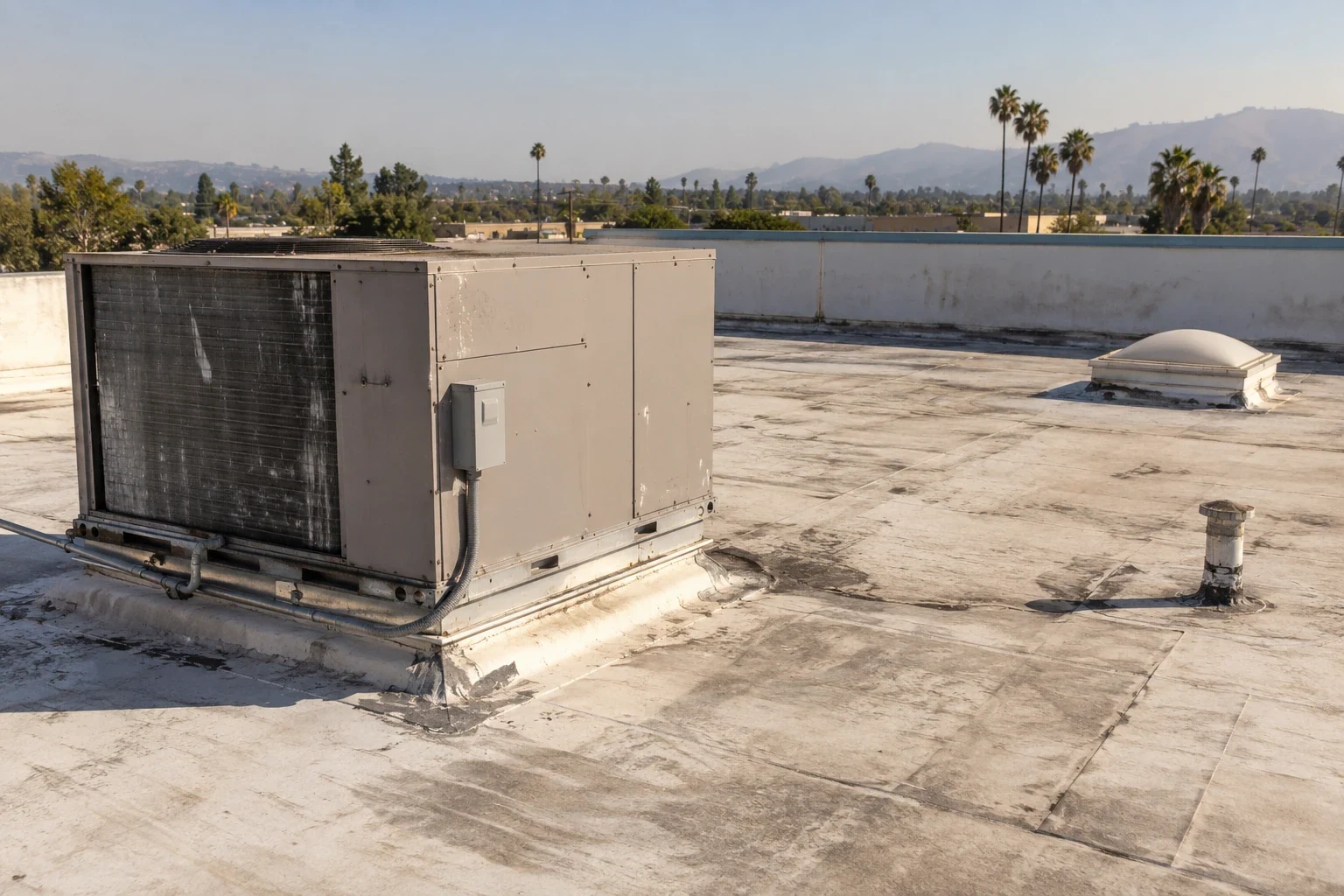
Cooler weather brings a different constraint. Moisture must be absent from the prepared bonding surface, and the selected material must be used within its application limits. A roof that looks dry from a hatch may still have damp edges or moisture beneath loose covering. Our hands on roof assessment separates surface appearance from the condition needed for reliable work. We adjust preparation and the work period to those findings, keeping protection in place when permanent bonding cannot proceed.
Wet insulation and the replacement boundary
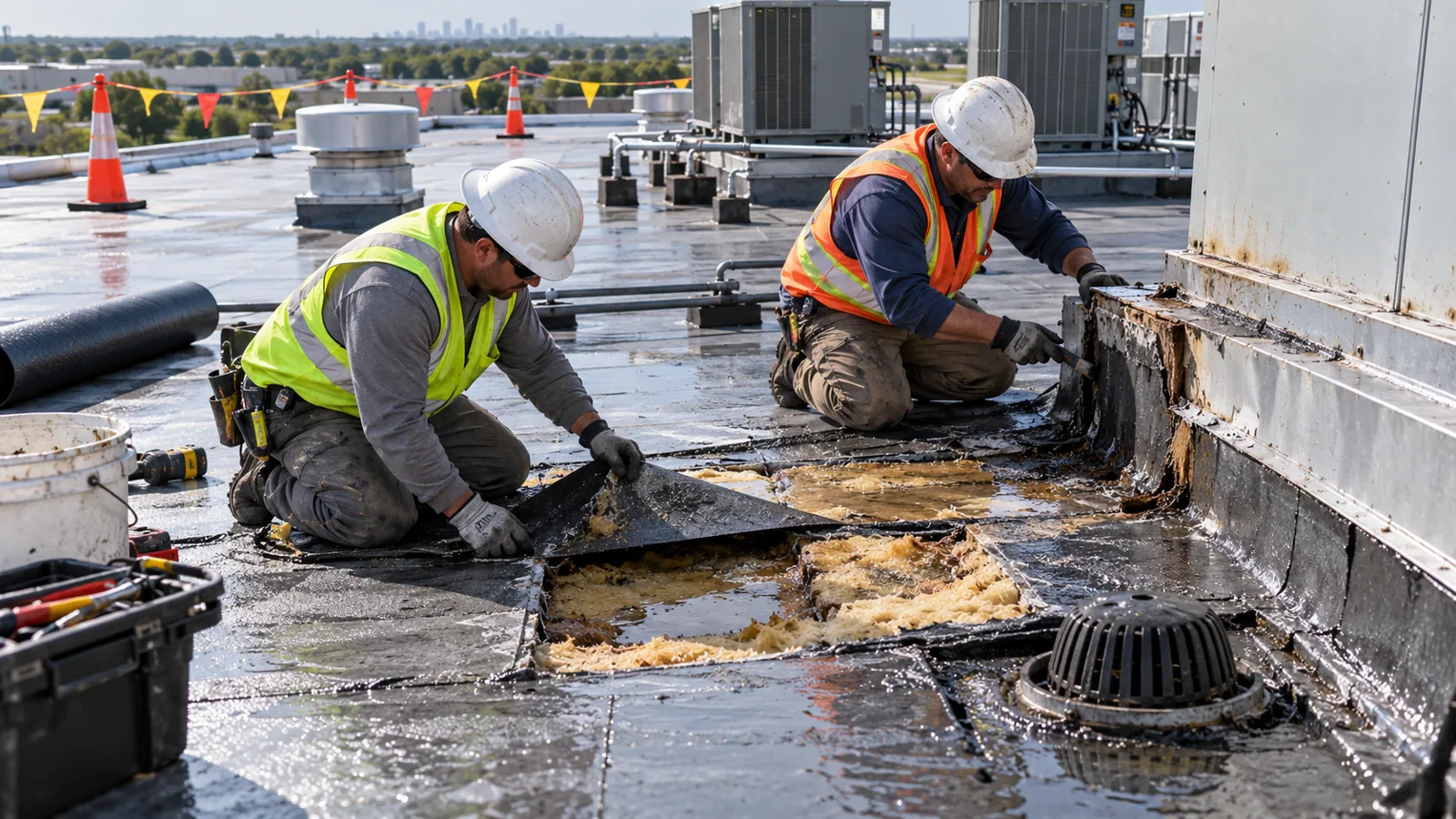
Softness underfoot or repeated water release at an opening raises the question of wet insulation, which a surface patch cannot resolve. We use appropriate investigation to establish the extent and explain when an infrared survey or limited opening would improve the decision. An infrared indication is a reason to examine the assembly, not proof by itself that every marked area is wet. The repair boundary should reach usable substrate and include the transitions necessary to reconnect the water shedding surface.
The findings may support a localized repair, a broader recover assessment or removal and replacement. An overlay evaluation requires attention to moisture, attachment and the existing layers before adding another covering. If those conditions cannot support the proposed system, retaining them would leave the owner with an unresolved weakness. We describe where the alternatives differ in disruption, disposal, drainage correction and material preparation, so the owner can choose a permanent scope with the temporary work and interior loss in view.
The follow through after rainfall
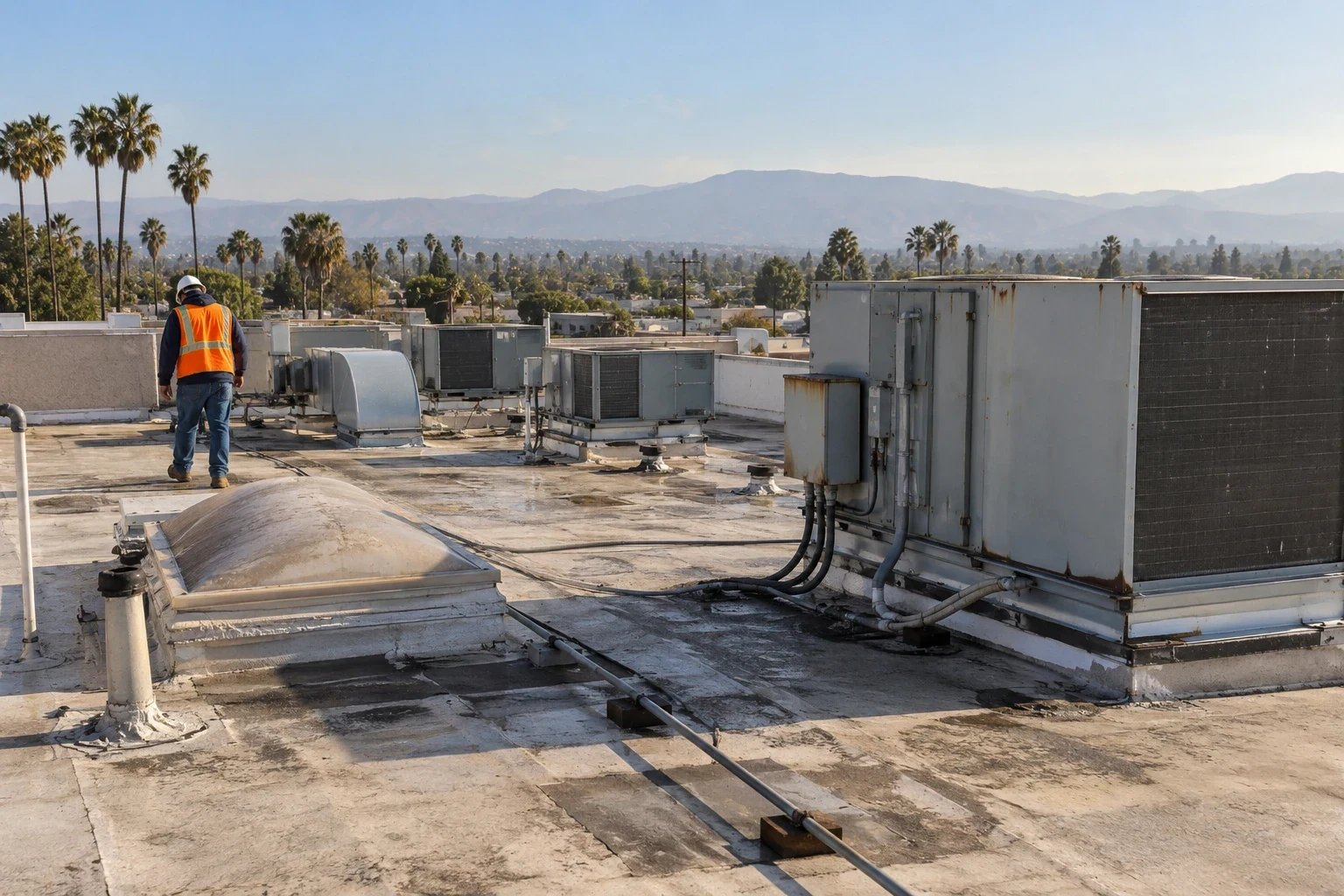
A dry room during a light shower does not test a repair in the same way as a longer rainfall with a different wind direction. We document the detail that was repaired, the surrounding conditions and the points that warrant a return examination. The owner can compare those records with any later interior observation instead of trying to reconstruct where work happened. A written condition record also helps distinguish the completed defect from other deferred roof needs.
The return visit is especially useful when debris had blocked drainage or temporary protection preceded permanent material work. We check whether water is leaving through the intended outlet and whether the repaired transition remains secure. Maintenance then follows the actual problem: clearing the relevant path, limiting avoidable roof traffic or checking an equipment interface. The purpose is to preserve the repair and give the owner a concrete trigger for the next intervention, with photographs and locations that remain understandable after the original emergency has passed.
Commercial Roofing Questions
Does a spreading ceiling mark require replacing the whole roof?
The extent of wet material decides the scope more than the size of the stain. Water can spread beneath a small defect, while a broad discoloration may follow an isolated opening. We compare the interior pattern with roof findings before recommending removal beyond the damaged assembly.
Can a blocked drain be the only cause of the leak?
An outlet obstruction can raise water against a vulnerable transition, but clearing it does not repair that transition. We examine the surrounding details after restoring flow and identify whether water entered through a separate opening that also needs work.
What changes the repair price after an initial roof visit?
Hidden substrate damage can enlarge the removal boundary. Access equipment, wet insulation disposal and rebuilding a penetration also affect the scope. We explain these conditions before permanent work proceeds and distinguish confirmed defects from areas still needing investigation.
Would a coating stop water that is already beneath the membrane?
Existing moisture must be dealt with before coating eligibility is considered. A new surface layer does not dry trapped insulation or restore a deteriorated deck. We assess adhesion and assembly condition first, then discuss restoration only where the preparation supports it.
How should a manager record a drip that stops overnight?
Timing is the useful detail. Record the room, the start and stop times and whether rain or rooftop equipment operation coincided with the event. Photographs of the interior mark help us connect an intermittent symptom to the roof examination without assuming the nearest penetration caused it.
Chowchilla leak details
Call with the property address, the affected room and the time water first appeared. We discuss immediate protection, confirm access needs and explain the roof examination that will determine the next repair stage.
Related Pages
Commercial Roof Leak Repair
Read the full page
Madera
See how we handle it
Fresno
Scope, sequence and repair notes
Commercial Roof Inspection
Read the full page
Commercial Roof Recover and Overlay
See how we handle it
Roof Condition Records and Repair Planning
Scope, sequence and repair notes