
Roof Drains and Scuppers in Clovis, CA
Commercial Roofing Services
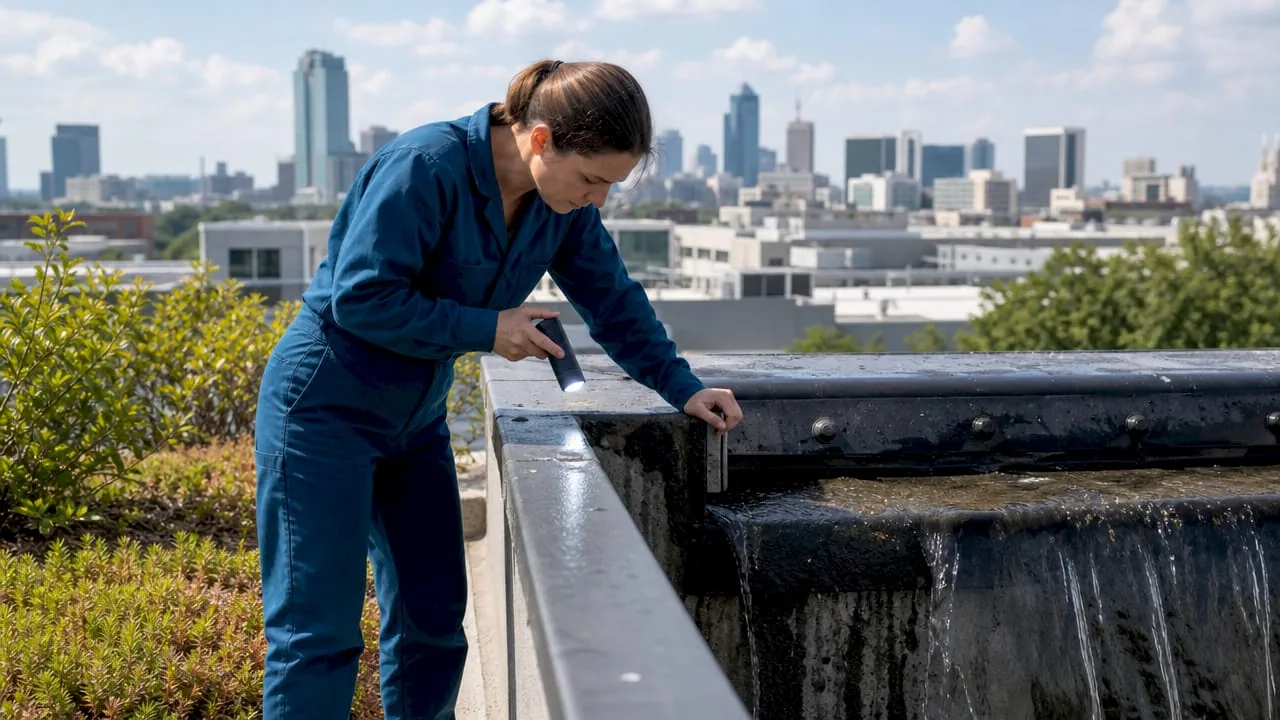
Water spilling from a wall outlet while a roof still holds a broad pool could indicate a restricted discharge, an outlet set above the low point or a problem elsewhere in the drainage route. Roof drain and scupper work in Clovis, CA starts with the route water actually takes, then follows the opening and its connection to the roof. We distinguish a blockage from a flashing defect and a slope problem before choosing a repair, because clearing one component may leave another failure active.
The first winter rain can expose a condition that remained hidden during dry weather. Fresno's record July heat in 2024 provides regional context for the long hot interval that precedes those wet-weather decisions, but drain condition must be checked on the building itself. With routine debris and detail attention, we can identify accessible obstructions before they combine with a vulnerable outlet connection. A drain that looks clean from above still needs examination at its bowl, flashing and discharge path.
The inlet, the pipe and the low area
An inlet screen can collect debris, a drain bowl can contain sediment and a downstream line can remain blocked after both are cleaned. We examine what can be reached safely and identify where plumbing investigation is required. Roofing repairs address the weather barrier at the outlet; clearing or changing piping may involve another trade. The owner should receive that distinction before an apparent drain problem is priced as a membrane patch.
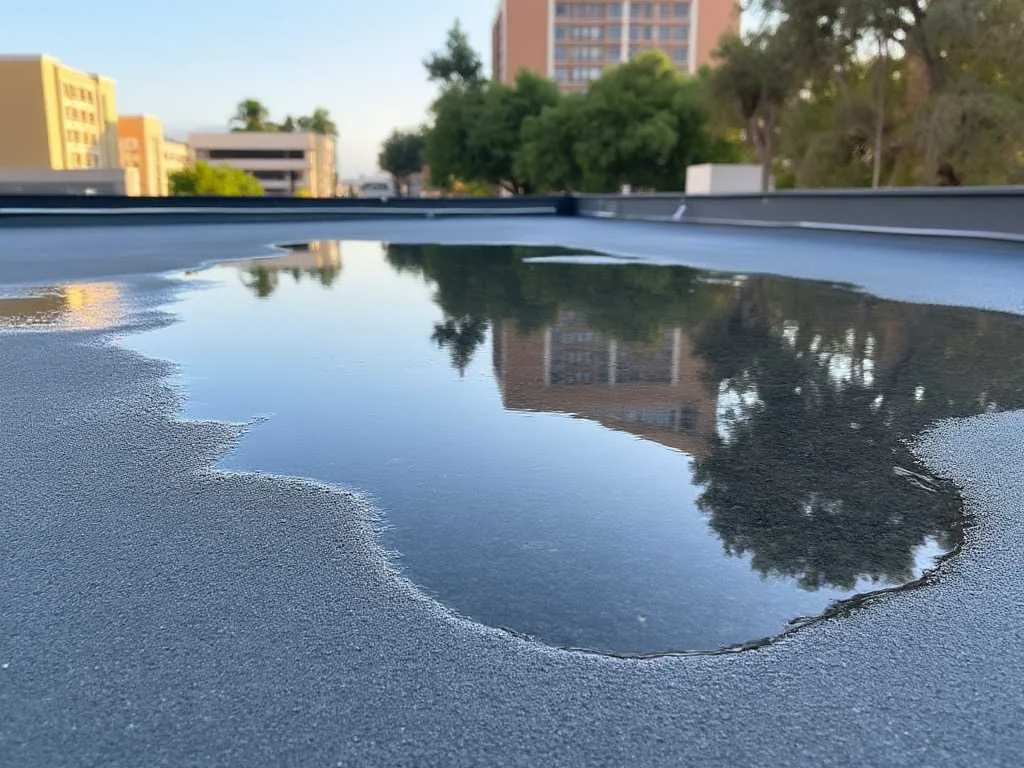
A roof low area can also hold water while an outlet functions correctly. We assess the surrounding geometry and the depth and extent of remaining water where conditions allow. Correction of persistent roof ponding may require changes to slope, drainage layout or the assembly rather than a new screen. Altering drainage or adding an opening needs appropriate design and approval. We explain the investigation required instead of treating any visible wall penetration as an acceptable new outlet location.
The flashing at the opening
A drain connection is a transition between the roof membrane and a component that may be made from a different material. Movement, corrosion, damaged clamping parts or poorly connected repairs can create a leak while water continues to flow through the outlet. We examine the connection in relation to the roof system and determine whether the surrounding membrane and substrate can support a durable correction. Tightening a component without that assessment may leave the weather barrier incomplete.
At a scupper, the transition extends through the wall and out to the discharge side. Perimeter and gutter connections may affect how the water leaves the building after it passes through the opening. We examine the corners, seams and adjoining flashing, then define a repair that joins sound materials. If opening the area reveals wet insulation or deterioration, the removal boundary must include what can no longer support the connection rather than simply sealing the exposed mouth.
Overflow and water loading
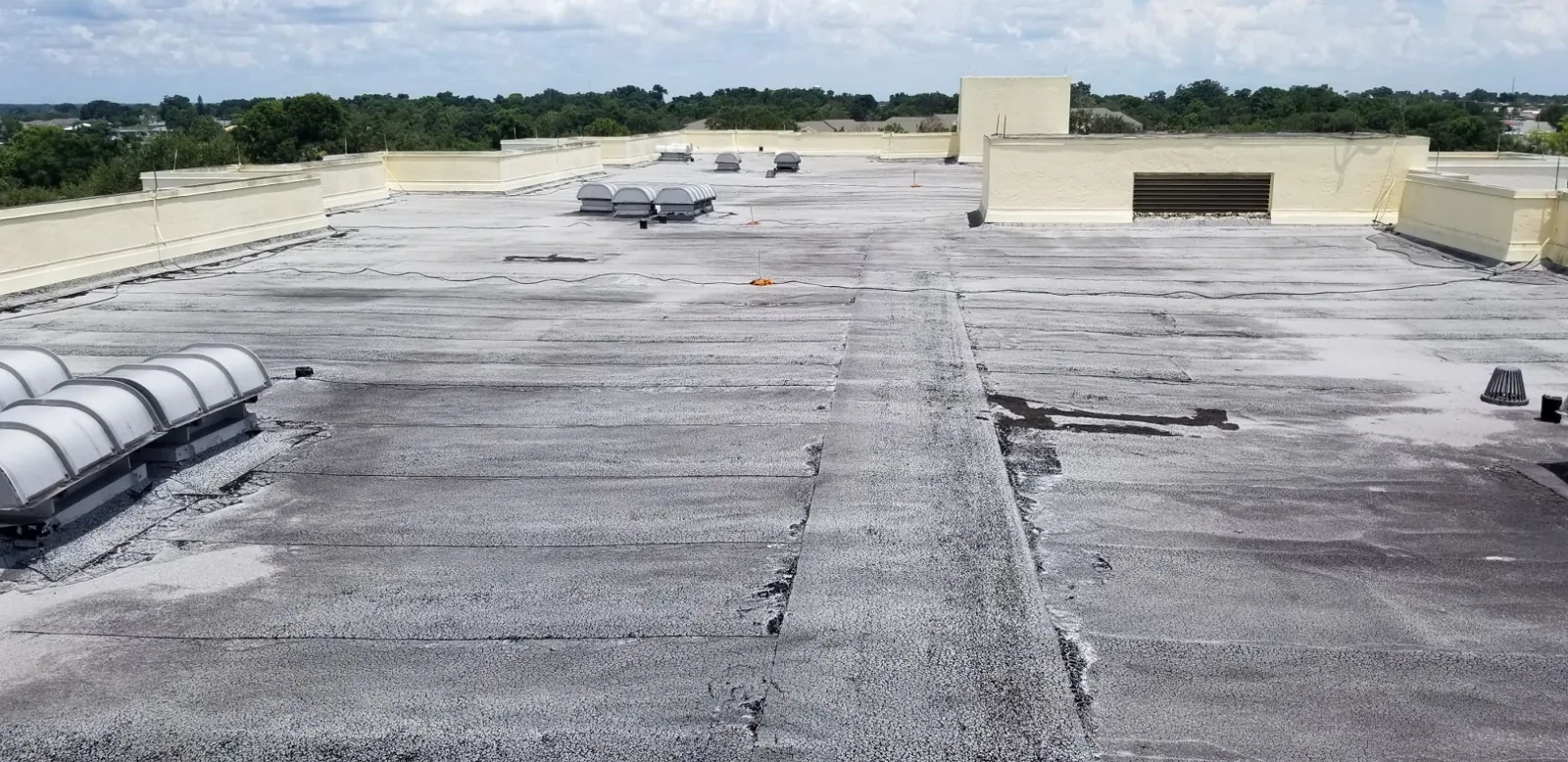
An overflow outlet has a different function from the routine drainage path, and a discharge from it deserves investigation. It may indicate that the primary route cannot carry water at that time. We identify the existing arrangement and explain the conditions found, while design questions concerning capacity, location or alteration go through the appropriate review. The purpose is to restore a dependable route using dimensions established through drainage evaluation, with the original layout examined for adequacy.
Standing water adds weight and can conceal a weak surface or electrical hazard. We assess safe access before stepping into a pooled area, and do not encourage the operator to improvise a cut through the membrane to release it. Where roof assembly repairs are necessary, the work sequence includes controlled drainage and protection of the exposed area. Any proposed structural or major drainage change needs the correct design input before permanent construction proceeds.
Discharge outside the occupied building
A gutter or scupper may drain toward a loading route, entrance or equipment area, so the problem is not confined to the roof surface. We establish where water goes after it leaves the outlet and how planned work affects people below. For restaurant roof drainage, condensate and grease exposure can complicate the area around an inlet; equipment corrections need coordination with the trades responsible for those discharges. The roofing scope should identify that dependency before a clean outlet is accepted as the complete remedy.
Clovis Community Medical Center on Herndon Avenue supplies a local healthcare reference for the importance of unobstructed building access. At the property receiving work, we obtain the actual entrance and operational requirements from its operator. For commercial properties in Clovis, outlet work should include the outside discharge condition and material handling route, so restoring roof flow does not create an avoidable hazard at the ground or interrupt a critical delivery.
The check after correction
A repaired connection needs examination after the materials are installed, and the flow route needs confirmation suited to the building. A controlled water check may be appropriate, but its extent must account for concealed piping condition, interior exposure and drainage capacity. We do not create a broad water test merely because the repair is finished. The method should help confirm the correction without putting the building at unnecessary risk.
Central Valley winter tule fog can leave damp surfaces during a planned outlet repair. We inspect actual conditions before applying a bonding material, allowing preparation and drying where required. Cost follows access, outlet construction, concealed damage and the distinction between roofing, plumbing and design work. The completed record identifies the repaired connection and any remaining restriction or slope concern, so the operator can respond to the next rainfall with a clear understanding of the drainage system.
A drain correction begins by confirming what restricts the flow: debris, a damaged bowl, a loose connection or an outlet that does not sit at the intended low point. Clearing an opening can restore a path without correcting a damaged connection or surrounding membrane. We identify the observed condition and keep any water test within the approved access and safety plan. Where the outlet connects to interior piping, the property’s plumbing contact should confirm that portion. The roofing scope can then describe the bowl, flashing, adjacent surface and any follow-up that remains outside the roof work.
Commercial Roofing Questions
Why is water still standing after the drain was cleaned?
We examine roof geometry along with the downstream path. A clear inlet may sit above a low area or discharge into restricted piping. We examine those possibilities separately so cleaning is not mistaken for correction of the entire drainage route.
Is water leaving an overflow scupper a normal condition?
The condition of the primary drainage route matters. Overflow discharge can indicate that the routine route is restricted or overwhelmed at that time. We inspect the existing arrangement and identify whether cleaning, repair or design review is needed.
Can another wall opening solve the ponding area?
Design suitability governs an added outlet. Its location, connection and discharge path must work with the building and applicable requirements. We assess the existing roof and identify the design steps before proposing a permanent alteration.
Who handles a blocked line beneath the roof drain?
A restriction inside piping needs a different response from failed roof flashing. We address the membrane and outlet flashing, and coordinate with plumbing work where the obstruction is inside the discharge line. The repair description should keep those responsibilities clear.
The water route from roof to discharge
Tell us where water remains, which outlet is affected and where it discharges outside. We trace the drainage and flashing conditions, then explain the roofing correction and any plumbing or design work needed.
Related Pages
Preventive Roof Maintenance
Read the full page
Ponding Water Review in Clovis Before Changing Drainage
See how we handle it
Edge Metal, Coping and Gutters
Scope, sequence and repair notes
Commercial Roof Repair
Read the full page
Restaurant Roof Leaks and Exhaust Detail Coordination
See how we handle it
Clovis
Scope, sequence and repair notes