Rooftop Equipment Curbs and Supports in Clovis, CA
Commercial Roofing Services
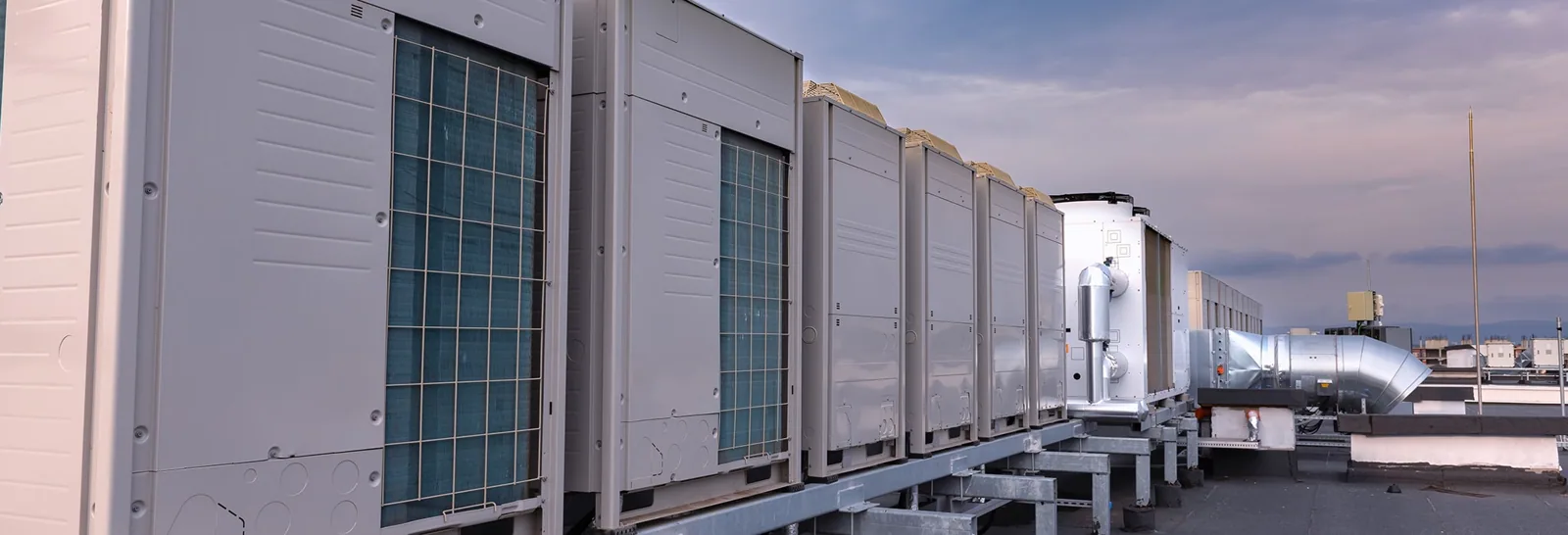
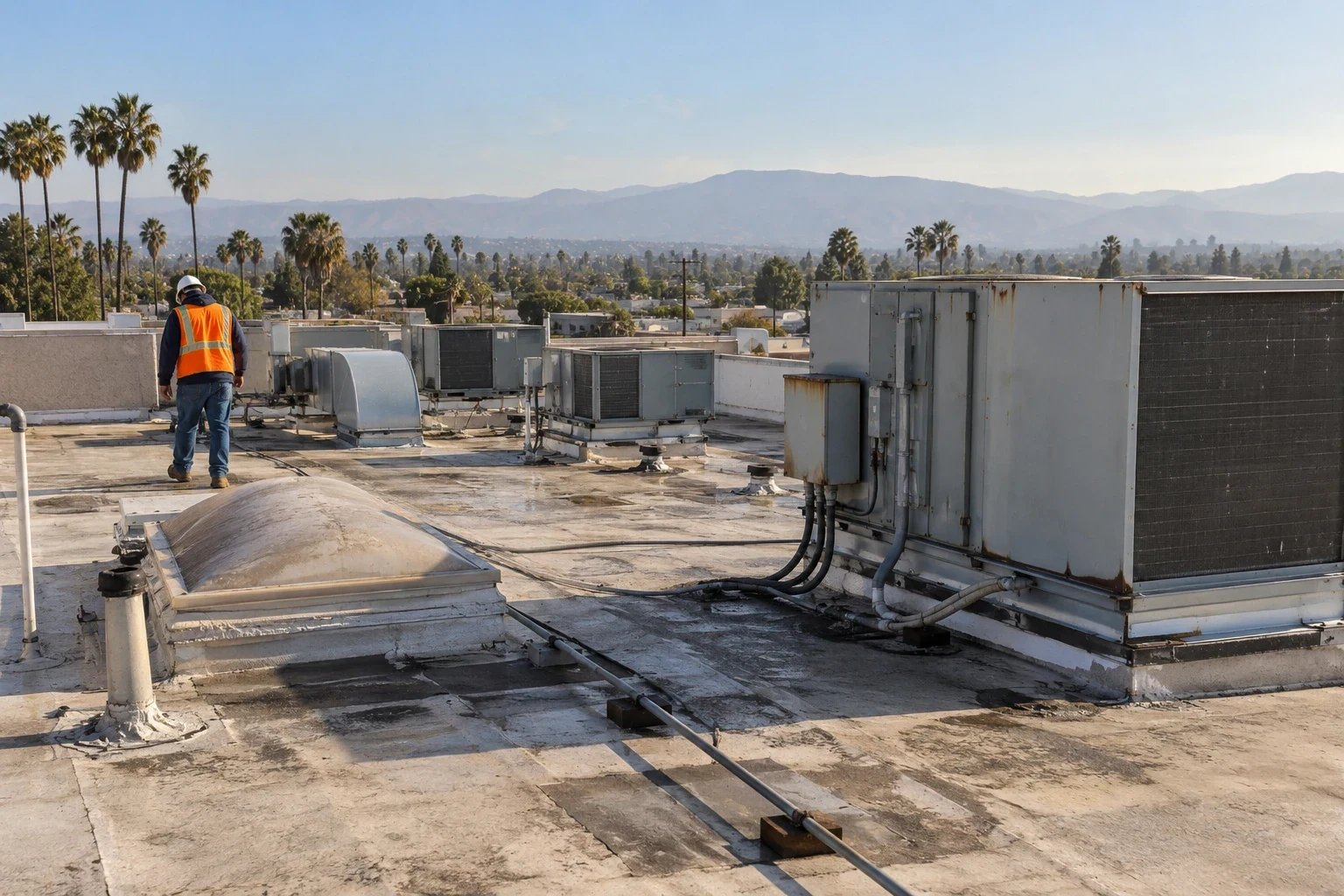
A ceiling drip beneath an air handler during a hot afternoon can leave the owner deciding whether to call the mechanical technician or the roofer. In Clovis, CA, the useful first step is to separate equipment water from rain entry, because a damaged condensate line, an open curb corner and a low flashing termination require different repairs. We trace the wet area, inspect the roof connection and coordinate any equipment isolation before disturbing the assembly. A temporary repair may limit entry at an exposed seam, while a failing support or displaced unit needs a different response and appropriate trade involvement. The equipment can keep operating only where the responsible operator confirms that doing so is safe. Our roof leak investigation starts with that distinction so a patch does not conceal the part that actually failed. Emergency requests can reach us through the night, on weekends and during holidays; the immediate response plan follows the reported damage and access available.
The curb corner and its surroundings
A split at a curb corner can result from movement between a rigid equipment base and the flexible roof covering, but the visible opening alone does not explain the whole connection. We examine the vertical flashing, corner reinforcement, termination, fasteners and nearby membrane for separation or deterioration, then compare those findings with the water path inside. Material hidden beneath an equipment skirt may require access coordinated with the mechanical trade. Where the flashing remains sound beyond a local defect, a compatible repair can address the damaged area; where wet insulation or deteriorated backing extends outward, the opening and restoration need to include that material. Penetration flashing repairs also require attention to the tie between the upright detail and surrounding field, because adding sealant at the top does little for a failed connection lower down.
Support pressure on the membrane
A crushed pad, tilted support or worn patch beneath a pipe rack deserves examination before anyone slides the equipment into a new position. We look for concentrated pressure, membrane abrasion and interrupted drainage, with the support arrangement reviewed by the appropriate designer where loads or attachment are in question. Equipment weight, wind restraint and roof capacity are not established by appearance. A support that protects the membrane must still distribute its load through an acceptable assembly, and a soft roof area may indicate a problem below the surface rather than a need for a larger pad. The condition of insulation and cover board beneath the equipment affects the repair boundary. We distinguish a replaceable surface detail from a structural concern before presenting the permanent approach to the owner.
Heat call and equipment water
Fresno averaged 90.0 F across July 2024, a regional heat episode that makes equipment operation relevant to a roof discussion without establishing how any particular unit performed. During a complaint involving cooling equipment, we ask when the water appeared, whether the unit was running and whether rain occurred, then examine the actual connections. The mechanical technician handles the equipment diagnosis while we evaluate the roof opening and water protection. A leaking line can wet the roof repeatedly, allowing water to collect near a weak flashing joint; repairing only that joint would leave the recurring discharge unresolved. At a building in the Clovis service area, the order of work follows the observed condition rather than the assumption that summer water must have come from air conditioning.
Replacement equipment and existing openings
A new unit that does not match the old curb can turn a simple equipment change into roof construction. We check the opening dimensions, flashing height, drainage route and adjacent roof condition before the proposed adapter or replacement curb is accepted. The installer needs room to connect the unit, and the roofing detail needs room to be built and maintained afterward. Lifting plans, shutdown timing and interior protection are coordinated separately from the membrane repair. For an equipment change near Temperance and Nees, the area identified in the historic Research and Technology Park expansion proposal, resolving the curb connection during design can prevent an exposed opening while the trades sort out an incompatible unit. For an existing office building with rooftop mechanical equipment, the work sequence should also account for ventilation interruptions and tenant access below the opening.
Permanent connection and future access
A finished curb detail should leave its terminations visible enough for subsequent inspection, with the surrounding roof restored using compatible materials and the equipment trade completing its own connections. We explain what was opened, what substrate was retained and which items required correction outside the roofing scope. The owner receives a distinction between the temporary water control and the completed repair, including any unresolved access or equipment issue. Routine condition reporting can track the location so later mechanical work does not treat the flashing as disposable packing. Future service paths matter as well: repeated foot traffic beside a unit may warrant protection suited to the membrane, while loose service parts and discarded fasteners need removal before they become punctures or obstruct drainage.
The service opening after repairs
A loose access panel can direct water toward a newly repaired curb even when the roof flashing is intact. We review the surrounding condition after the roofing work and ask the equipment trade to complete its panel and service connections, keeping the boundary between those tasks clear. The owner should also know where personnel can stand during later maintenance without pressing tools against the vertical flashing. A repair that leaves no workable service space invites repeated disturbance at the same connection. Where equipment must be removed to reach the hidden flashing, we explain that access requirement before describing the visible patch as a permanent correction.
Commercial Roofing Questions
Can a rooftop unit stay running during curb repairs?
Equipment isolation and the repair location determine the answer. We can discuss work outside a functioning unit with its operator, but opening the curb, moving the equipment or working near electrical connections may require shutdown and mechanical coordination. The roof schedule must follow that assessment rather than a promise of uninterrupted cooling.
Does a wet ceiling below a unit mean its curb has failed?
Rain timing and equipment discharge provide different clues. We inspect the flashing while the mechanical trade checks the unit and drain arrangement, then relate both findings to the interior water path. A curb repair is justified by a damaged roof connection, not merely by the equipment location above the stain.
Will larger support pads solve a soft area under pipes?
The material beneath the pad controls that decision. Deteriorated insulation or a damaged deck needs investigation before the load is redistributed. We examine the accessible assembly and involve the appropriate designer for load questions, so a new pad does not hide the weak layer that caused the movement.
What changes when the replacement unit is a different size?
Opening geometry becomes the main coordination issue. A curb adapter may be possible, but flashing height, equipment fit, attachment and drainage still need review. We price the roofing changes separately from lifting and mechanical connections so the owner can see which parts of the equipment change affect the roof.
Can sealant hold until the mechanical contractor returns?
Compatibility and the opening shape govern temporary treatment. A small accessible joint may accept short-term water control, while a moving curb or damaged support can prevent a reliable patch. We describe the limits of the temporary work and the access needed for completion instead of treating surface sealant as the finished repair.
Describe the unit and the water
Tell us which equipment is above the wet area, when water appeared and who controls shutdowns. We will assess the roofing connection and coordinate the next step to limit interior damage.
Related Pages
Commercial Roof Leak Repair
Read the full page
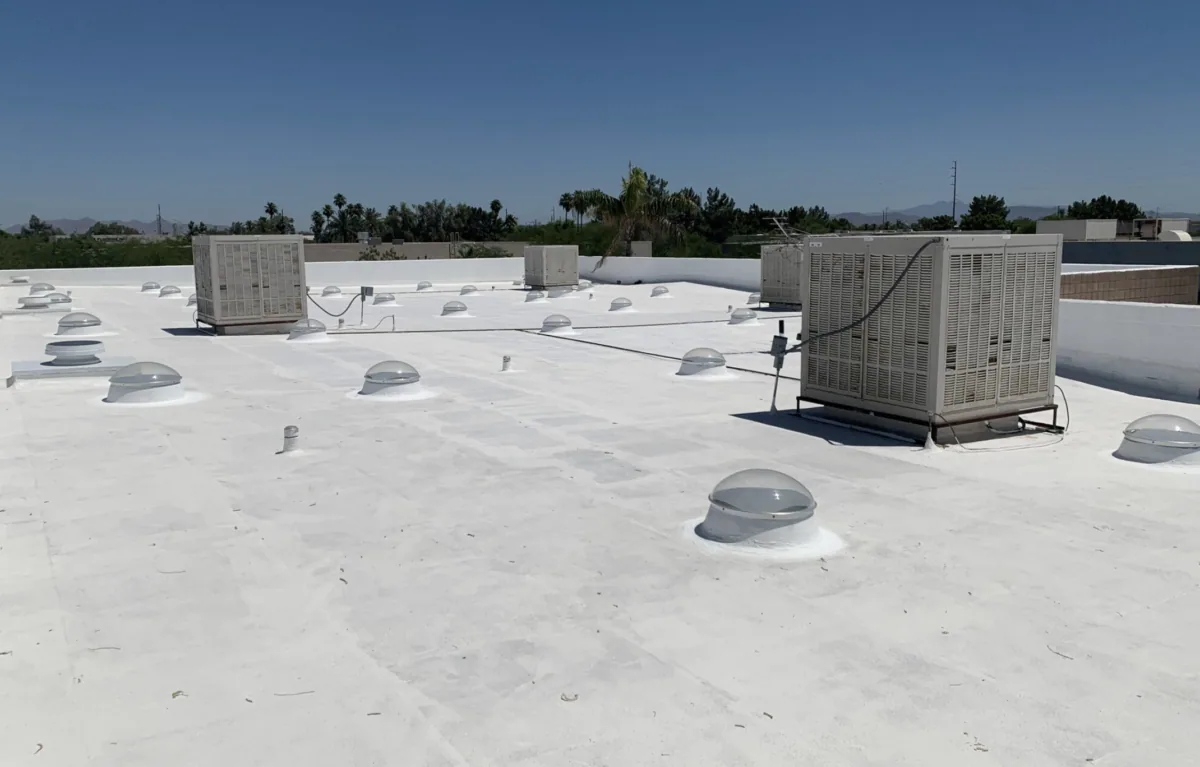
Skylight and Penetration Flashing
See how we handle it
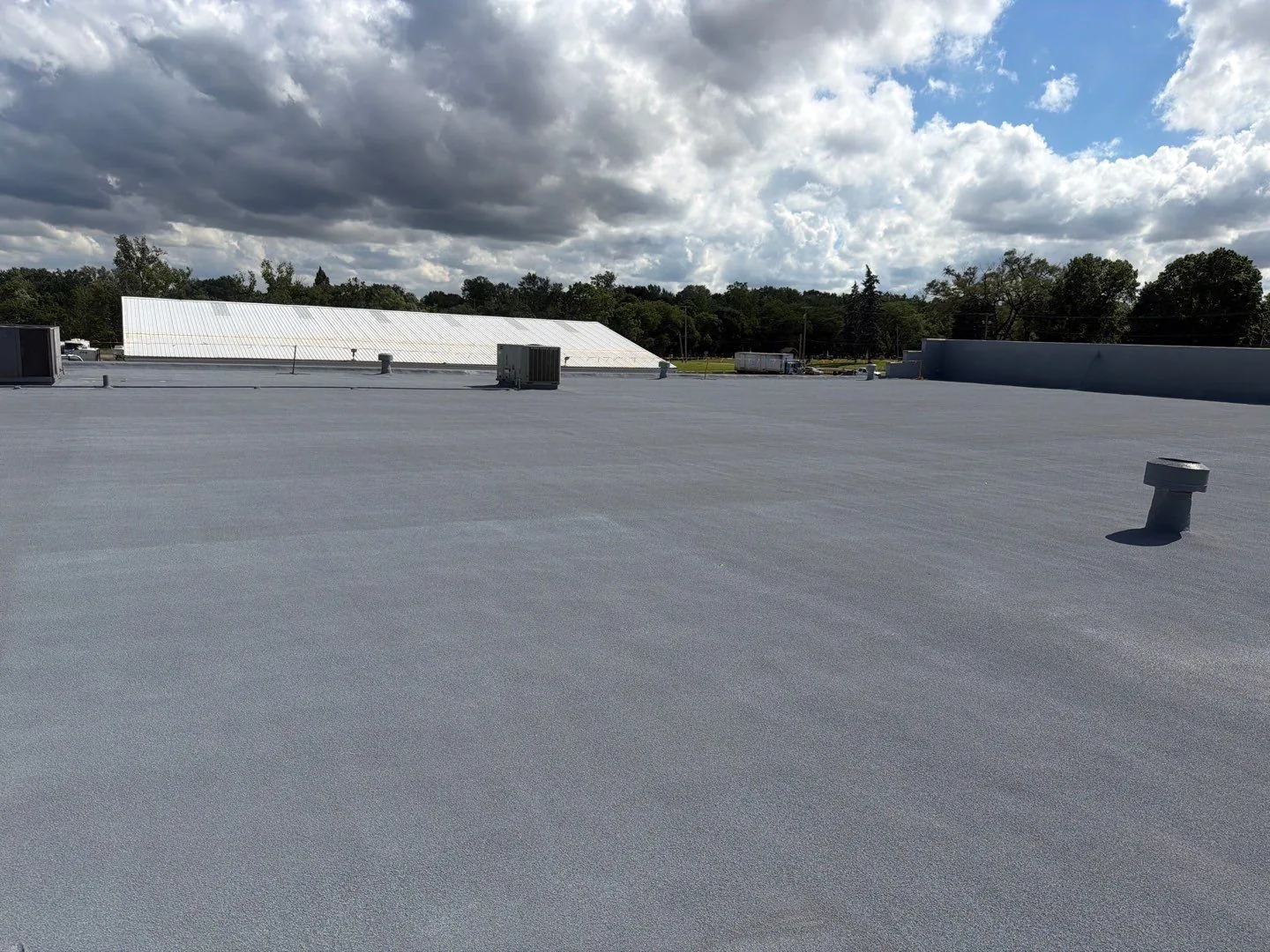
Roof Insulation and Cover Board
Scope, sequence and repair notes
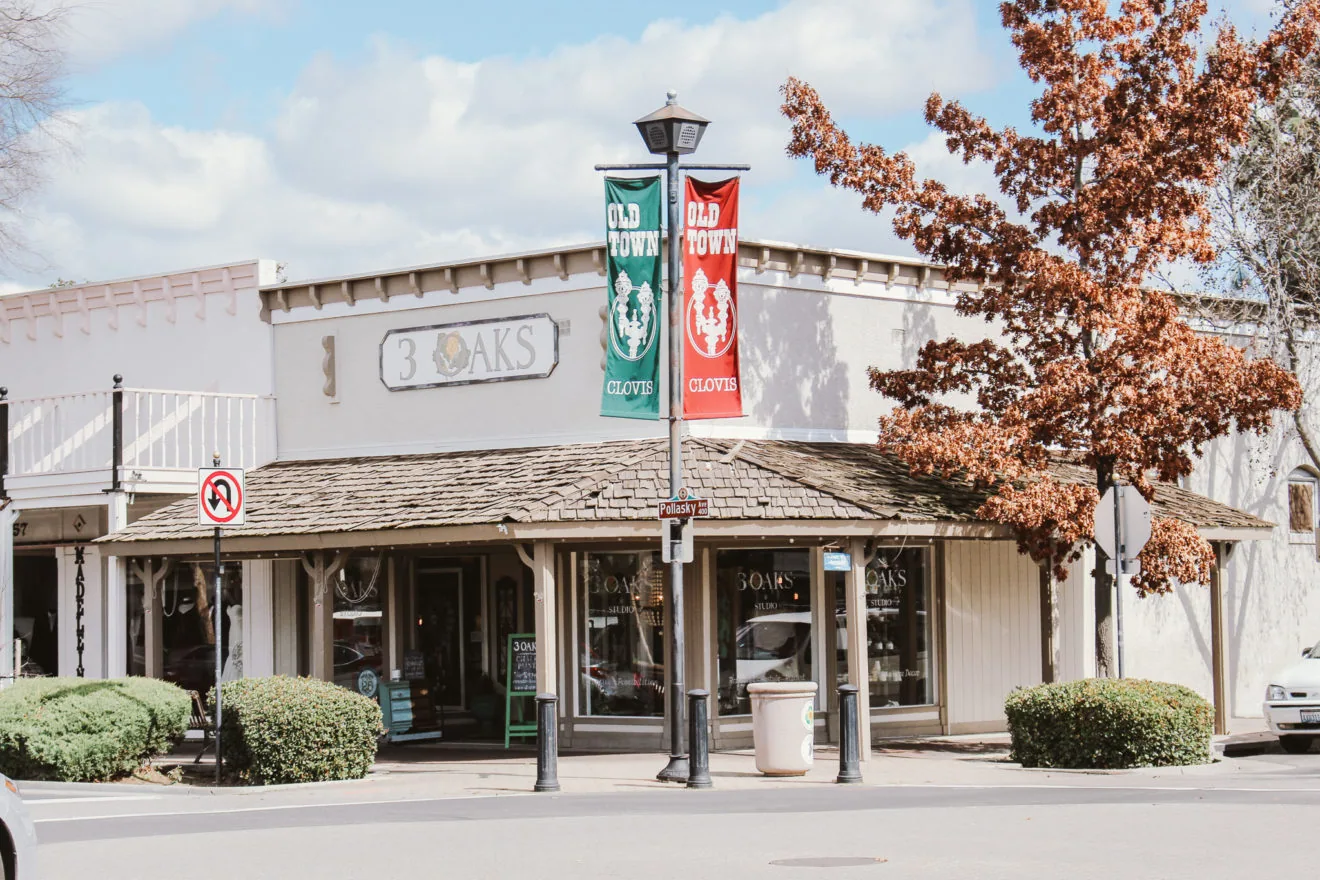
Clovis
Read the full page
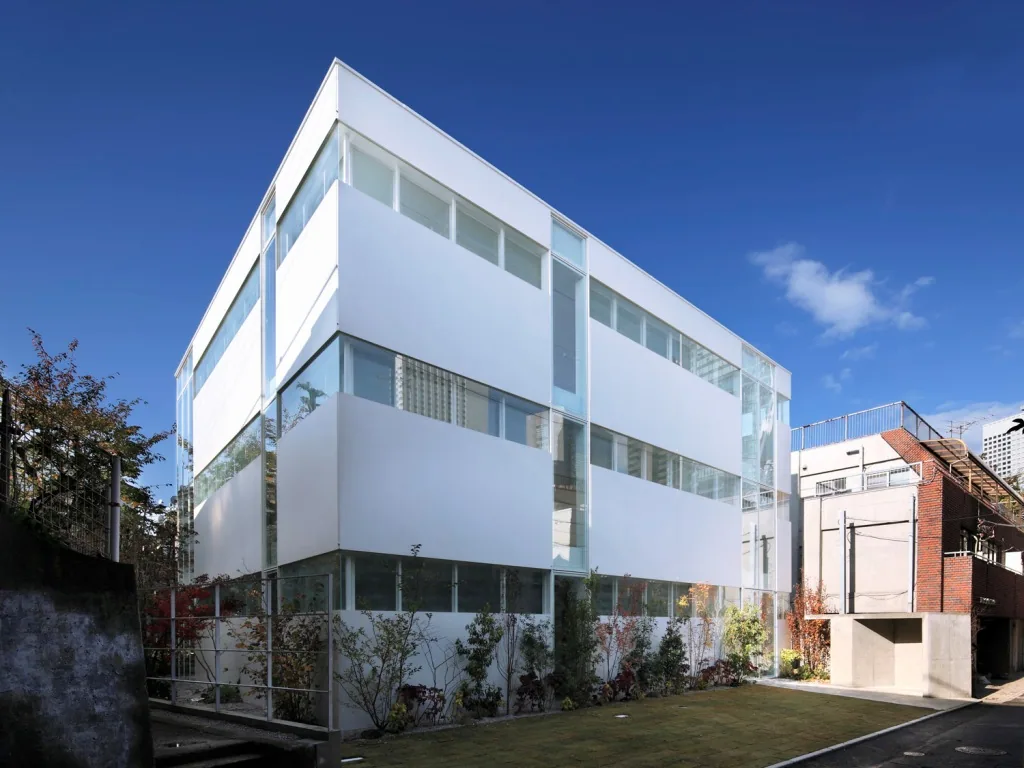
Office Roof Leaks and Tenant Protection
See how we handle it
Roof Condition Records and Repair Planning
Scope, sequence and repair notes