
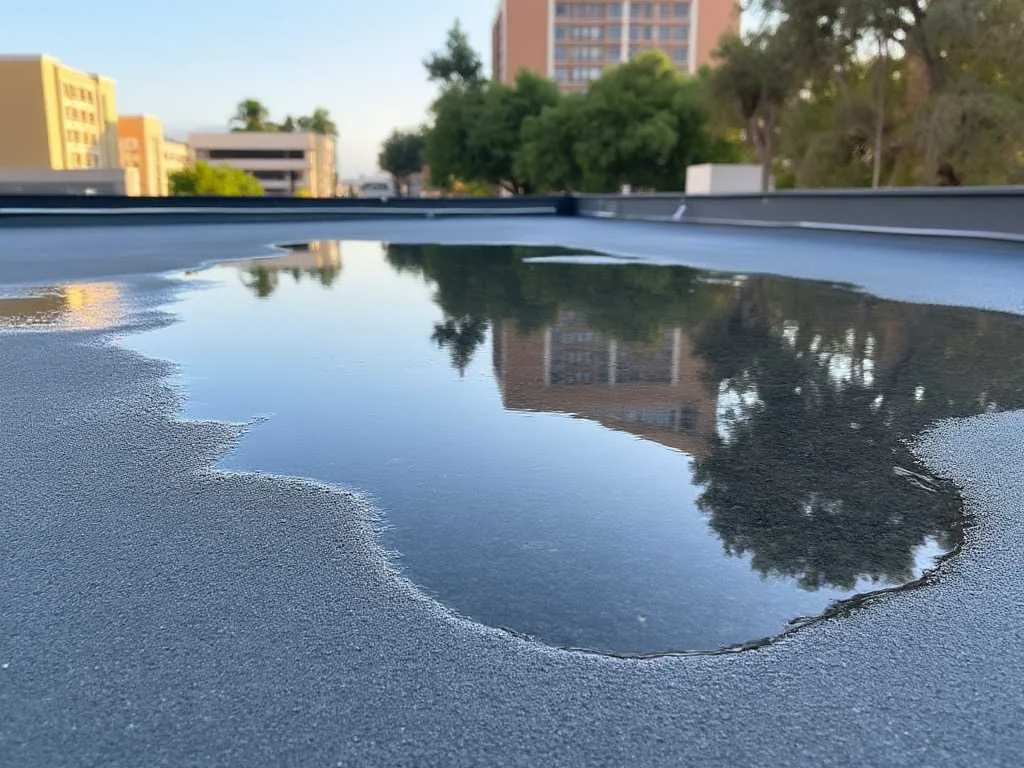
Ponding Water Review in Clovis Before Changing Drainage
Roof Damage Repair
Water remaining on a roof after winter rain could prompt an owner to request another outlet, but the visible low area does not establish why drainage is restricted. We investigate and correct commercial roof ponding concerns in Clovis, CA, tracing accessible outlets and the surrounding assembly before selecting a construction change. A blocked strainer, downstream pipe restriction and change in roof geometry can produce related observations while requiring different work. The first assessment should establish safe access and whether the reported condition requires specialist evaluation before any test or opening proceeds.
Central Valley winter tule fog can leave surface moisture even during a period without rain, which makes actual examination more useful than a season label. Fresno's July 2024 regional heat record supplies context for planning safe work rather than a diagnosis of the roof's water route. Clovis Community Medical Center on Herndon Avenue is a local healthcare facility with its own authorized operator. Our assessment of drains and overflow paths connects the correction to the subject property and assigns the boundary between roofing, plumbing and qualified design.
The outlet and the downstream route
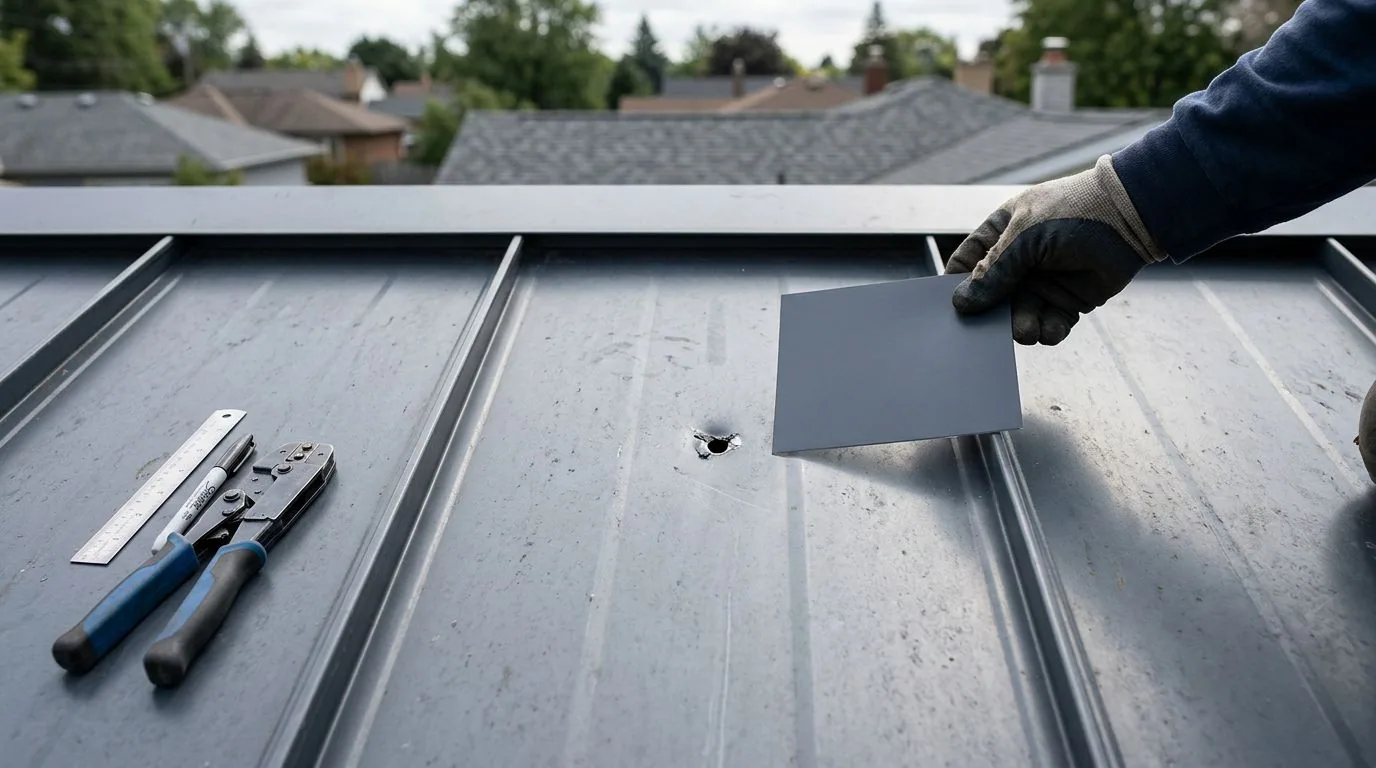
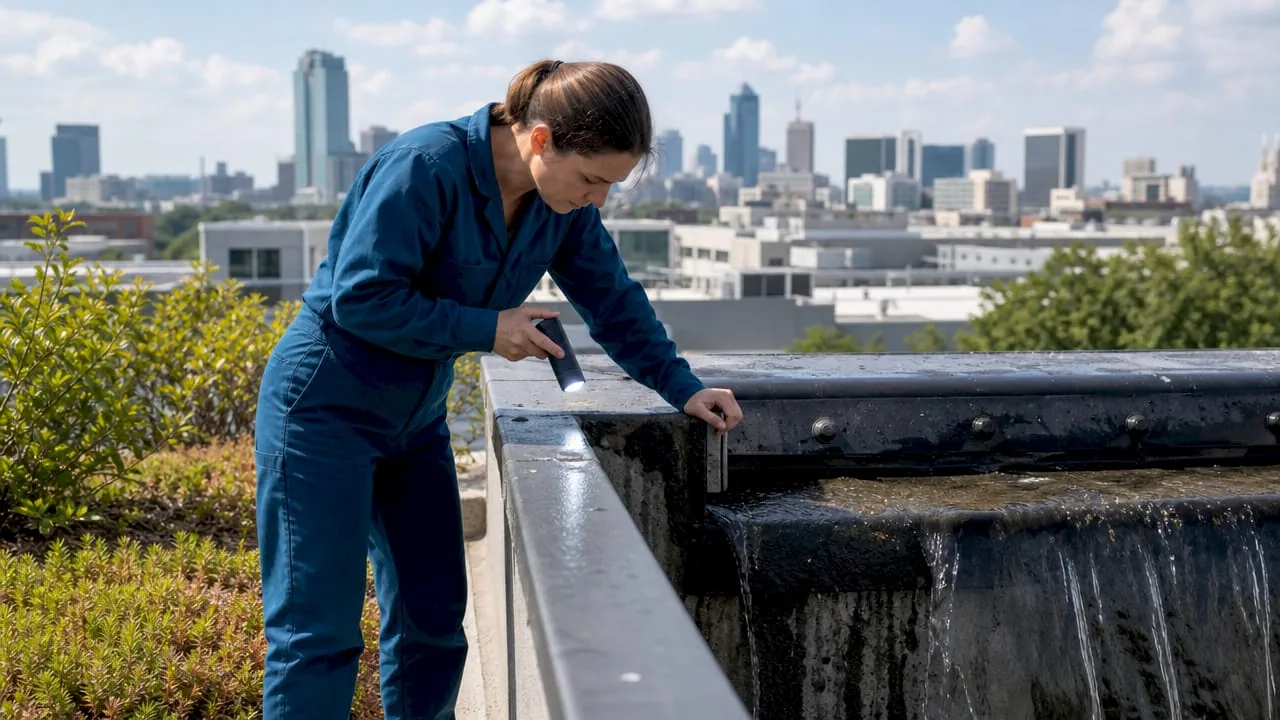
An accessible drain bowl can appear clear while a restriction farther along the route prevents flow. A scupper can have an unobstructed opening while its collector or discharge presents another concern. We record accessible roofing components and identify where downstream investigation belongs. Cleaning should describe the location and handling task rather than imply that debris removal certifies the capacity of the entire drainage arrangement.
Testing needs a method appropriate to the construction and conditions. Do not introduce uncontrolled water or block outlets merely to reproduce a complaint. Structural questions require qualified assessment, since water markings alone cannot establish the load the roof can support. Drain flashing corrections may be necessary where the weatherproof connection is damaged, even when the water route is otherwise open. Keep that detail separate from pipe work and cleaning. The owner's estimate should show which component is being corrected and which unresolved dependency remains, so a clear-looking outlet does not prematurely close the work order while the actual downstream question is still assigned to nobody.
The assessment before disturbing retained water
An owner reporting standing water should describe its approximate location from existing records or safe observations, the interior concern and the access contact. Water near electrical equipment or a suspected structural problem needs the responsible qualified personnel involved. Our roofing response is available beyond normal hours, including weekends and holidays, with safe conditions governing the action. A request to clear the roof does not automatically authorize entering or disturbing a potentially hazardous area.
Where immediate cleaning or protection is suitable, record the task and the remaining diagnosis. Removing accessible debris may restore a route without resolving why the obstruction formed or whether the surrounding roof has been injured. Work in Clovis needs the subject operator's release and any piping-trade coordination. If temporary protection is used at an identified entry point, preserve its location and follow-up separately from the drainage investigation. The initial response should narrow the concern and establish the next responsible action, rather than promise that one attendance can redesign a system whose geometry and downstream route have not been examined.
The low area and the supporting construction
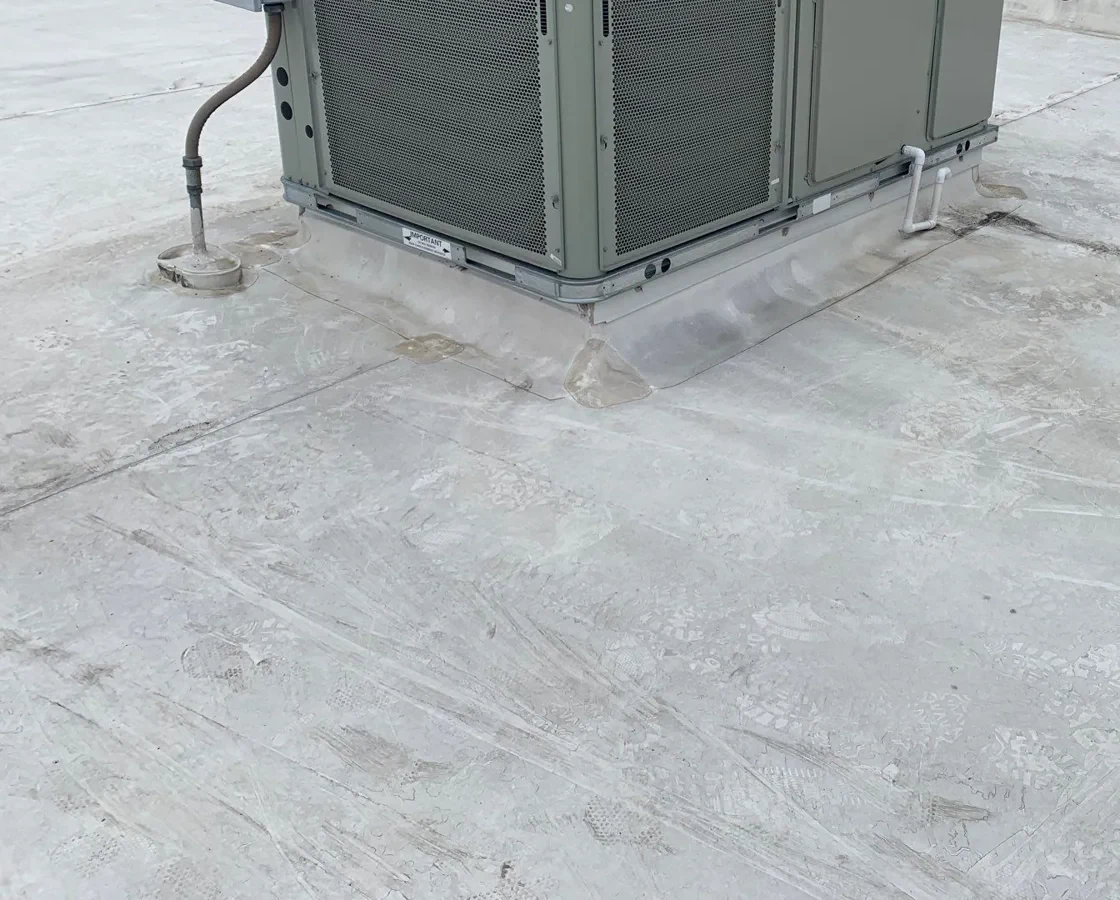
A depression may reflect several construction conditions, and its cause needs examination before material is added or an opening enlarged. We record accessible geometry and any surrounding damage, then identify measurement, moisture verification or qualified design needed to establish the correction. A surface low spot is not proof of a failed deck. Conversely, a covering patch cannot resolve a supporting condition simply by making the exposed finish look continuous.
For changes to insulation and cover board, review the finished drainage route and how the new heights meet drains, curbs and perimeter details. Confirmed wet or compromised components require their own removal scope. Keep the affected quantities mapped and distinguish them from an intended slope correction. Proposed new outlets or piping changes may require design and separate approvals, with the division of responsibility stated before work starts. This gives the owner a construction plan based on the actual cause rather than an improvised buildup intended to push water toward an outlet whose capacity or connection remains unknown.
The damaged finish and the repair decision
Repeated water exposure can warrant examination of the covering and its details, but the ponding observation does not by itself identify damaged material. We inspect accessible joints, surface condition and connections around the reported zone, identifying the existing system before selecting a repair method. Where a seam defect is established, repair of the affected joint needs suitable surrounding construction and compatible preparation. That work remains separate from correcting the water route.
A proposed coating or overlay should address its product and assembly requirements for the actual drainage condition, without treating a new surface as the drainage design. The owner needs the known repair tasks and any unresolved suitability question before approving restoration. Investigation openings need permission, protection for what lies below and appropriate closure. If concealed conditions change the work, document them and obtain the agreed approval before covering. A complete estimate connects each task to its finding, making it possible to compare outlet work, material repair and broader reconstruction without merging them into a single unexplained ponding allowance.
The completion evidence and the next rain report
Drainage corrections need a suitable acceptance process tied to the work actually performed. Document cleaned outlets, repaired connections and any reviewed construction changes, while keeping unresolved downstream or design tasks visible. A photograph of a dry area after work does not establish how the full system performs under every rainfall. The owner's written record of observations and corrections should preserve that distinction with the locations and responsible contacts attached.
Preparation and application follow actual material conditions, including fog-season moisture and safe heat-period working requirements. Those regional conditions do not settle the property's drainage diagnosis. At handoff, explain maintenance access to outlets and the approved handling of future debris or cleaning residue. Keep warranty and alteration requirements with the roof file. If standing water or interior entry returns, the report should describe its timing and location so investigation can compare the completed work with remaining potential causes. Roofing acceptance, piping completion and interior restoration may be separate tasks, each needing its own disposition before the entire concern is closed.
A ponding-water correction begins with the drainage path: locate the low area, inspect the nearest outlet and determine whether debris, settlement or a damaged drain contributes to retention. A single wet-weather photograph cannot establish how long water remained or whether the deck has deflected. If the condition raises a structural concern, involve the appropriate engineer before adding material or changing slope. The roofing scope should separate drain repair, localized correction and broader re-sloping, then note the limits of any observation made without a controlled water test.
Commercial Roofing Questions
Does a puddle justify adding a drain immediately?
The established cause and reviewed water route govern that change. New openings may need design, piping work and approval.
Can drain cleaning settle the downstream question?
The inspected route defines the finding. Accessible debris removal does not establish concealed pipe condition or system capacity.
Should water markings establish a structural conclusion?
Qualified assessment provides that basis. Markings direct examination but do not measure support capacity.
Will new insulation solve every low area?
Construction findings and finished drainage geometry control the method. Separate slope work from wet-material removal and support corrections.
What helps investigate ponding that returns?
Recorded timing, locations and completed tasks guide the next review. Keep remaining piping or design dependencies with the same property file.
Describe the retained water and the interior concern
Provide the location, available drainage records and access authority. We will assess safe initial action and separate outlet, piping and roof-construction tasks for approval.
Related Pages
Roof Drains and Scuppers
Read the full page
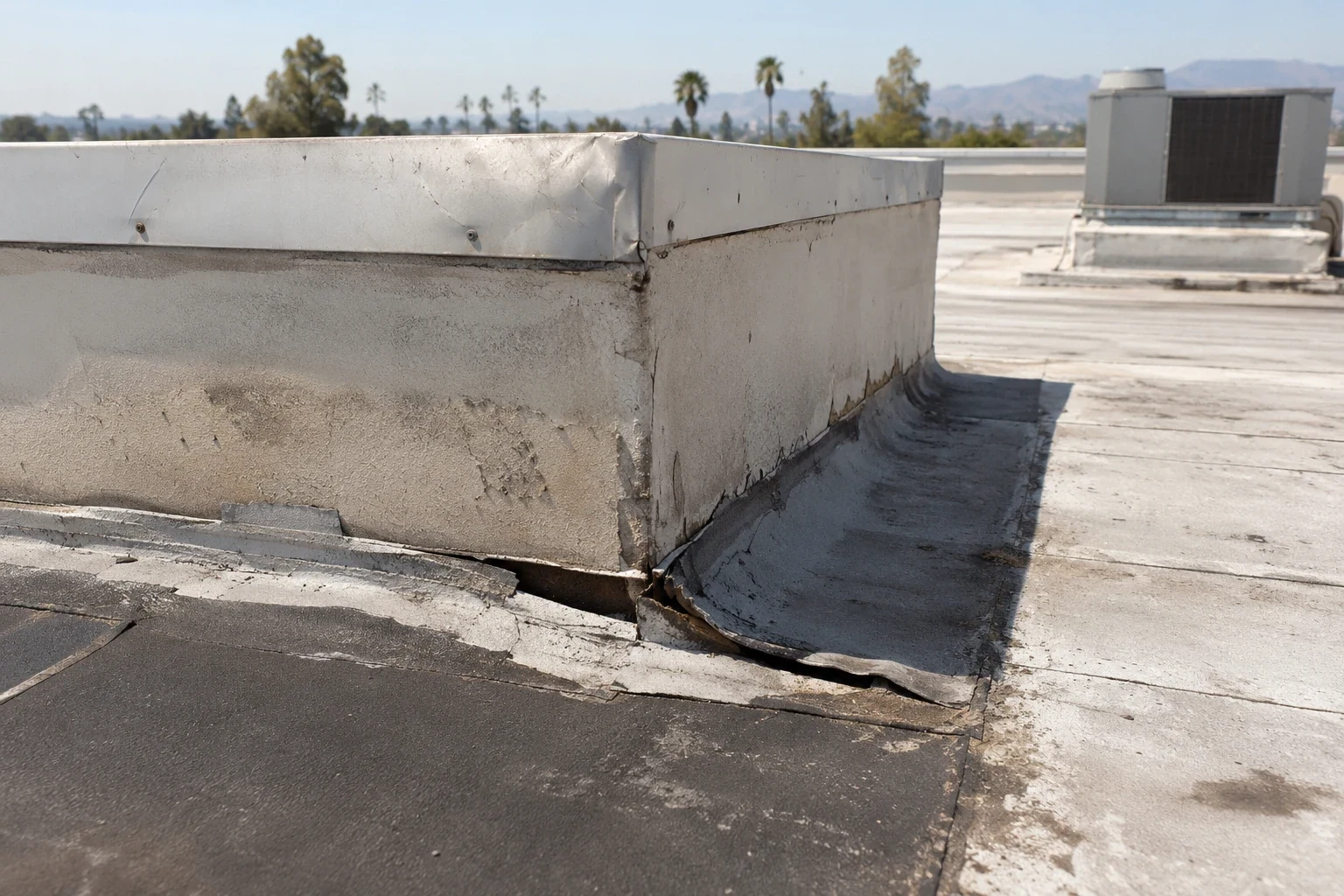
Flashing Failure Investigation in Clovis at Roof Transitions
See how we handle it
Clovis
Scope, sequence and repair notes
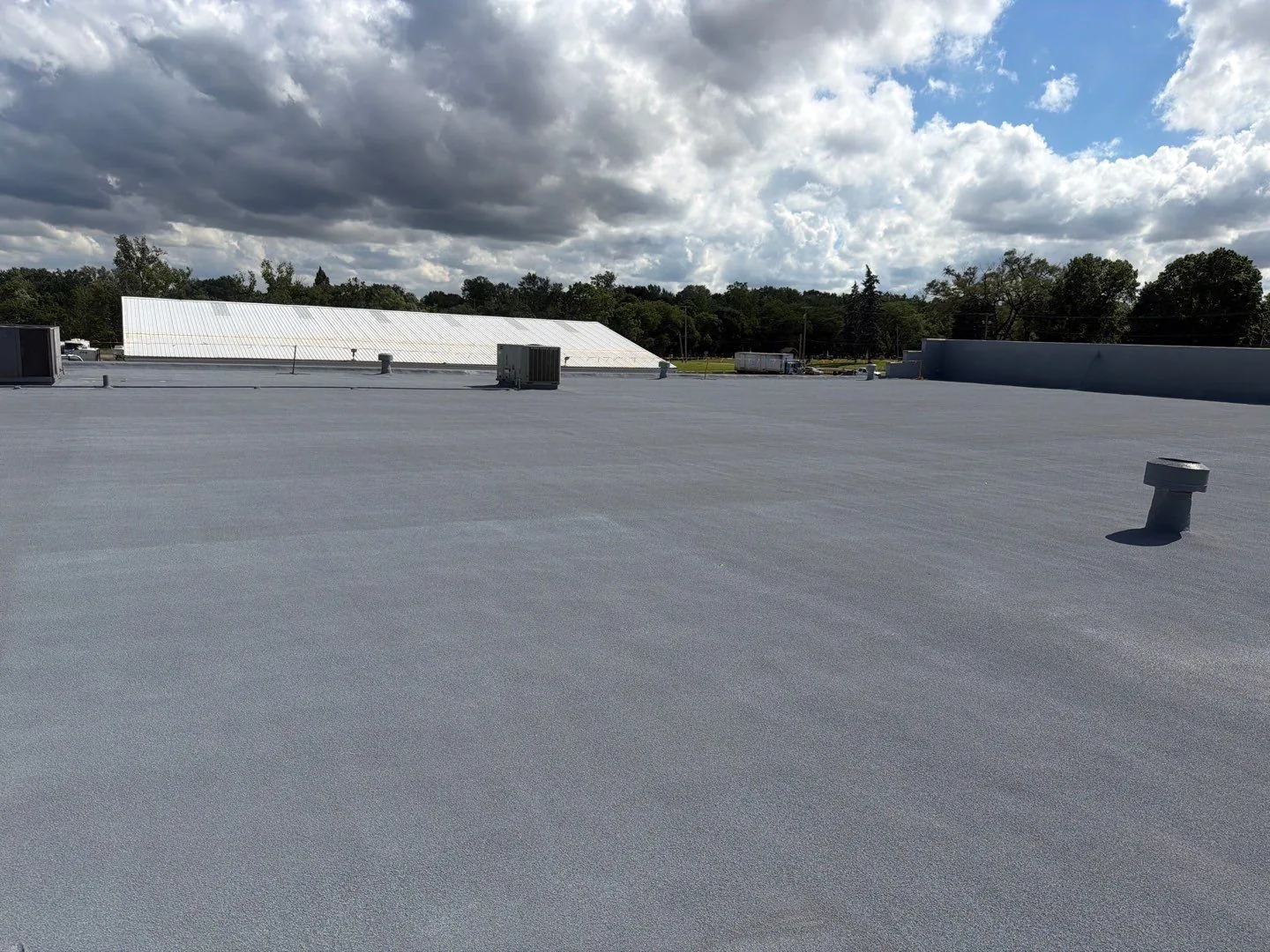
Roof Insulation and Cover Board
Read the full page
Commercial Roof Seam Corrections in Clovis After Entry
See how we handle it
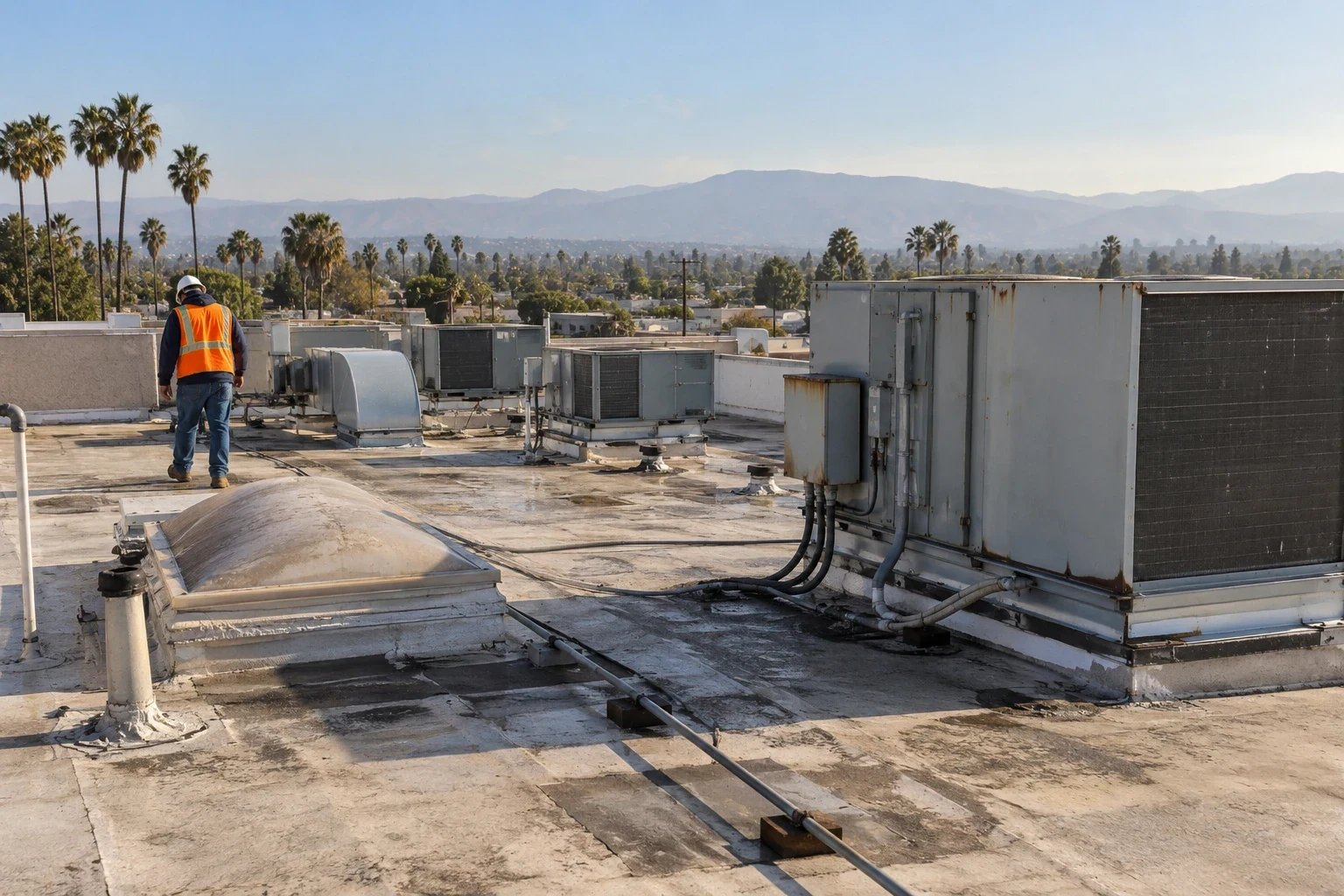
Roof Condition Records and Repair Planning
Scope, sequence and repair notes