
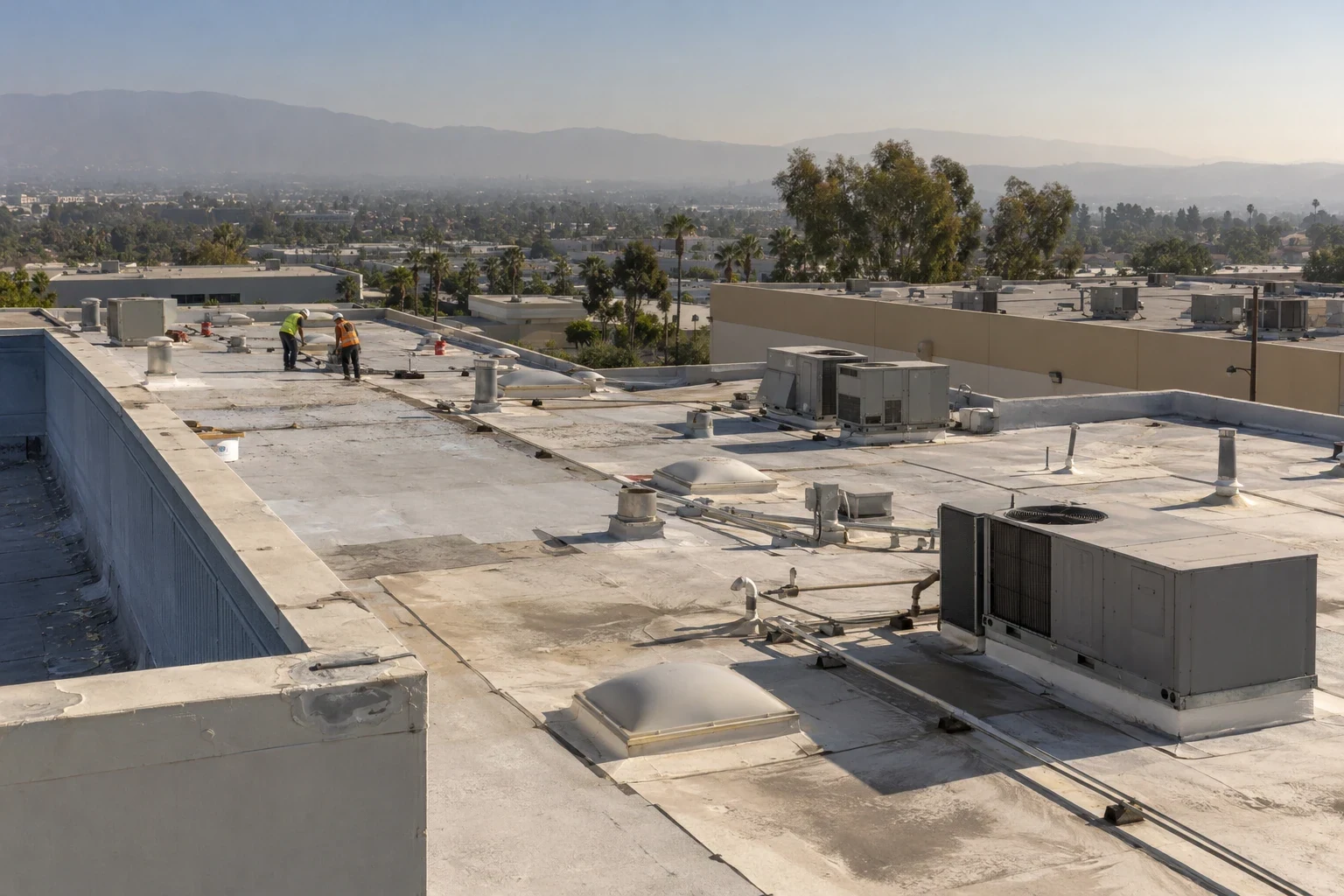
Coordinated Roof Work Across Clovis Commercial Properties
Roofing Capabilities
Two buildings reporting winter rainwater on the same morning can need different roofing responses even when one owner approves both. We coordinate multi-site commercial roof work in Clovis, CA, beginning with the reported loss at each address and the contact who can release its affected space. An active drip over equipment, a stain in a vacant room and water beside an outlet do not establish the same repair boundary. Each roof examination needs its own accessible conditions and practical protection before the shared work program can set an order.
The central record connects building identity, condition findings and the next authorized task while keeping each construction decision separate. We can organize immediate response, maintenance and renewal around the owner’s approval process without assigning identical materials or dates to roofs that have not been examined. A coordinated program should make local action clearer, especially when a temporary repair at one building is awaiting investigation while another is ready for permanent construction.
The individual incident
A central maintenance contact may know the property number while the person at the building knows where water appeared and how to reach the roof. We connect those accounts before attendance is arranged, identifying the street address, affected interior space and available entrance. The local contact also needs to explain restrictions that affect access or protection. Another property’s permission does not release the space under the present complaint.
Continuing records for each identified roof area retain that location through later visits. Where active entry needs urgent attention, the practical initial task stays attached to the particular incident. An owner should be able to see which building has a temporary intervention and what examination must follow it, rather than receive a general statement that the program’s leaks have been addressed.
The condition comparison
Two roofs with the same exposed membrane can have different retained layers, drainage details and repair history. We compare the examined conditions using clear area references instead of assigning one building’s construction to another. A localized puncture above suitable material can support a different recommendation from an opening surrounded by confirmed wet insulation. Access limitations remain visible where they prevent a reliable comparison.
Building-specific condition findings should establish the evidence behind the recommended order. The owner can then distinguish active entry, necessary investigation and planned renewal without treating a cosmetic difference as the only measure of urgency. Interior exposure and the ability to protect the affected operation also belong in that decision.
The local approval route
A temporary correction can be authorized quickly while broader removal requires another person to review quantities and operating effects. We establish the approval route before the opening and retain who can accept a concealed-condition change. The local manager should know how to report newly exposed material without being expected to authorize construction beyond the responsibility assigned by the owner.
Investigation of a building’s particular water path also separates roofing from equipment and piping tasks. A shared maintenance order needs to identify the responsible outside trade where the permanent connection depends on its work. We keep those dependencies with the affected detail so one completed roofing task does not close an unresolved equipment concern across the program. A changed authorization should retain the responsible person and the roof area included. The next crew or building contact can then see which opening was accepted and which proposed extension still requires a decision before material is removed.
The separate operating releases
A regional roof program may span healthcare facilities in the Herndon Avenue Medical District and retail properties along the Shaw Avenue Commercial Corridor. Those different building uses call for consistent condition records but separate access releases, work windows and approvals. Keep each roof area tied to its own operator and repair history so a multi-building summary does not turn local coordination into a single assumed scope.
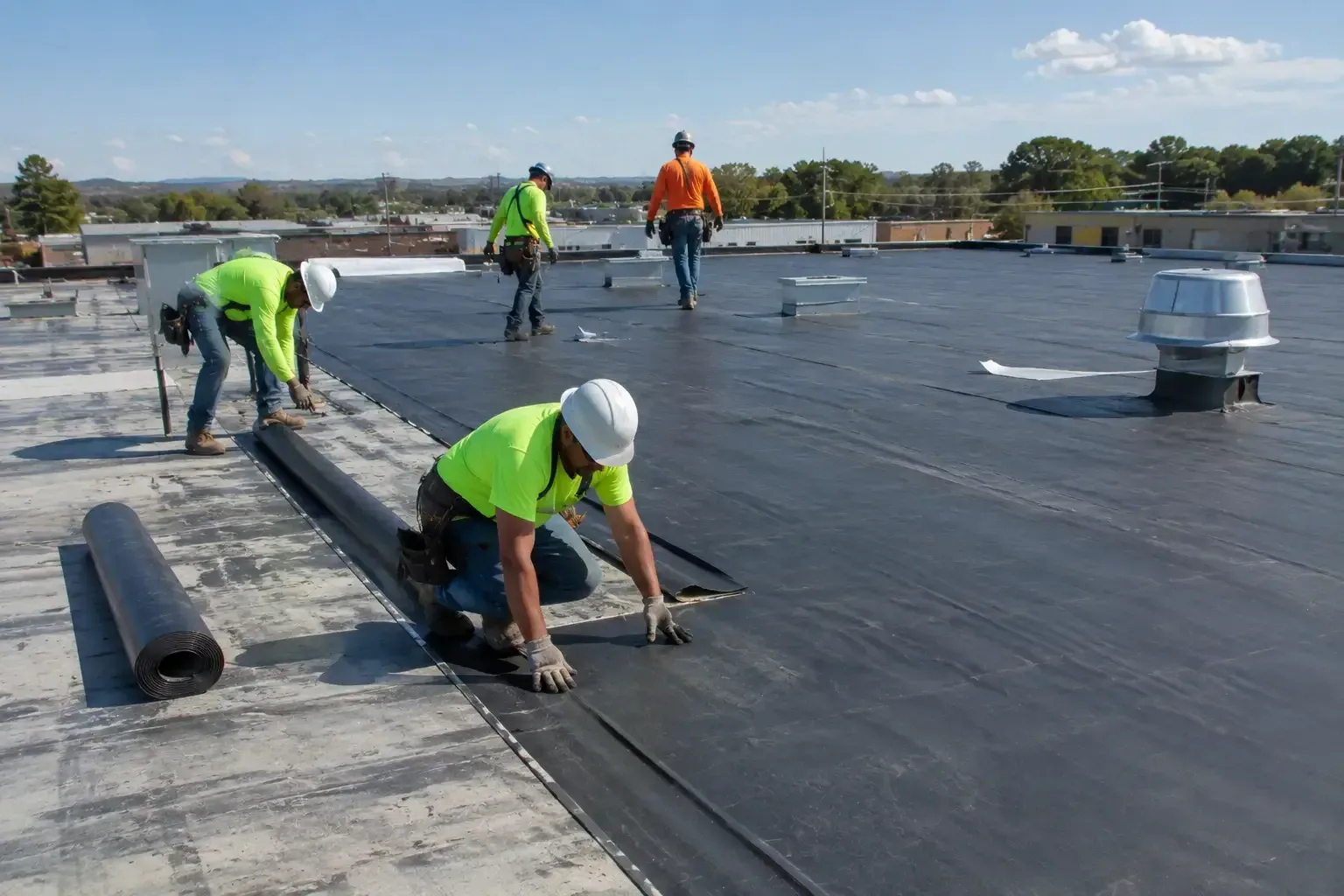
Occupied roof construction with daily closure needs a removal zone that fits the usable period. Lifting and disposal may require separate arrangements at each address, while an equipment shutdown must be coordinated with the responsible service personnel. We retain those differences when the owner compares schedules, making the repeated setup and stopping detail part of the actual work rather than an unexplained delay.
The accepted repair method
A purchasing instruction for one repair material needs review against the receiving roof assembly at each property. We identify compatible preparation, the permanent connection and the material beneath the opening. A shared product description cannot establish suitable retained layers or an acceptable detail for every roof. Where the work needs design or structural input, the responsible review remains attached to that building before the affected construction proceeds.
Each building’s warranty requirements also remain distinct, including notification or alteration obligations in the actual document. The completion record identifies the correction accepted, outstanding work and relevant material information. This lets another building contact follow the construction actually installed rather than assume that a program-wide instruction fully describes the local repair.
The coordinated renewal sequence
Several properties awaiting renewal can have different investigation and preparation needs even under one expenditure approval. We identify which conditions support local repair, which require confirmation and which support a broader assembly method. Recover depends on retained construction suitability, while removal introduces disposal, protection and closure obligations. Those differences need to be established before a common scheduling target becomes a construction commitment.
The coordinated roof expenditure decision can then use actual building findings. In July 2024, Fresno recorded 26 triple-digit days, regional heat context for examining exposed movement details throughout nearby work. The individual roof condition still governs its correction. Owners arranging a shared program in Clovis receive the location, approval and next task for each address, keeping the urgent incident and later renewal in an understandable order.
A multi-site program works best when the reporting structure is consistent but the recommendations remain specific to each property. Agree on common condition categories, photo references and escalation rules, then maintain separate approvals, access records and closeout files for every site. Roll up findings by urgency or roof system only after confirming the underlying descriptions are comparable. The program manager can use that summary to schedule inspections and prioritize budgets, while local contacts retain control of building releases and operating constraints. This keeps multi-site decisions traceable to field observations.
When a site misses its scheduled review, show that gap explicitly instead of carrying forward a prior condition as current.
Commercial Roofing Questions
Can several buildings share the same repair instruction?
Each receiving assembly and defect must support that instruction. We compare the actual roof detail before a shared purchasing description becomes a permanent method.
What should the local contact report when water appears?
The street address, affected space, timing and accessible entrance make the incident actionable. Operating restrictions and equipment concerns also need to accompany the report.
Who approves a larger concealed removal boundary?
The owner’s designated authorization route governs the change. We identify the finding and measurement needed so local personnel can refer it to the appropriate decision-maker.
Does one completed emergency patch close the program’s repair task?
Its permanent disposition and remaining investigation need to be resolved at that address. Other buildings retain their separate incident and construction status.
How should several renewal projects be placed in order?
Confirmed condition, continuing loss and operating protection support the next action. Missing access or unresolved layers need investigation before a firm construction sequence is assigned.
Identify the buildings and the current incident
Give us each affected address and the local contact who can arrange access. We will establish the immediate roof task and connect its next authorization with the shared work program.
Related Pages
Continuing Roof Care and Repair Records
Read the full page
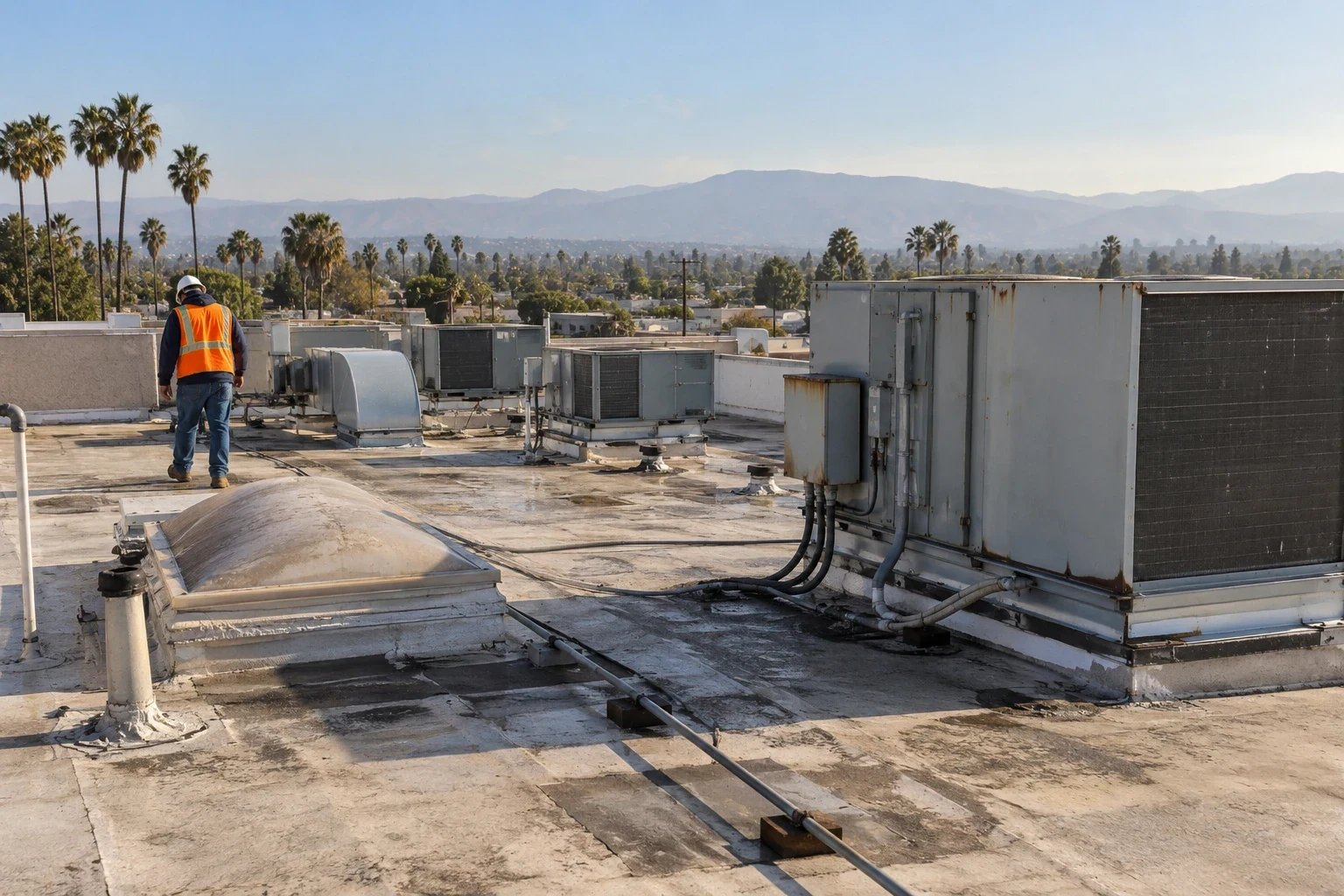
Roof Condition Records and Repair Planning
See how we handle it
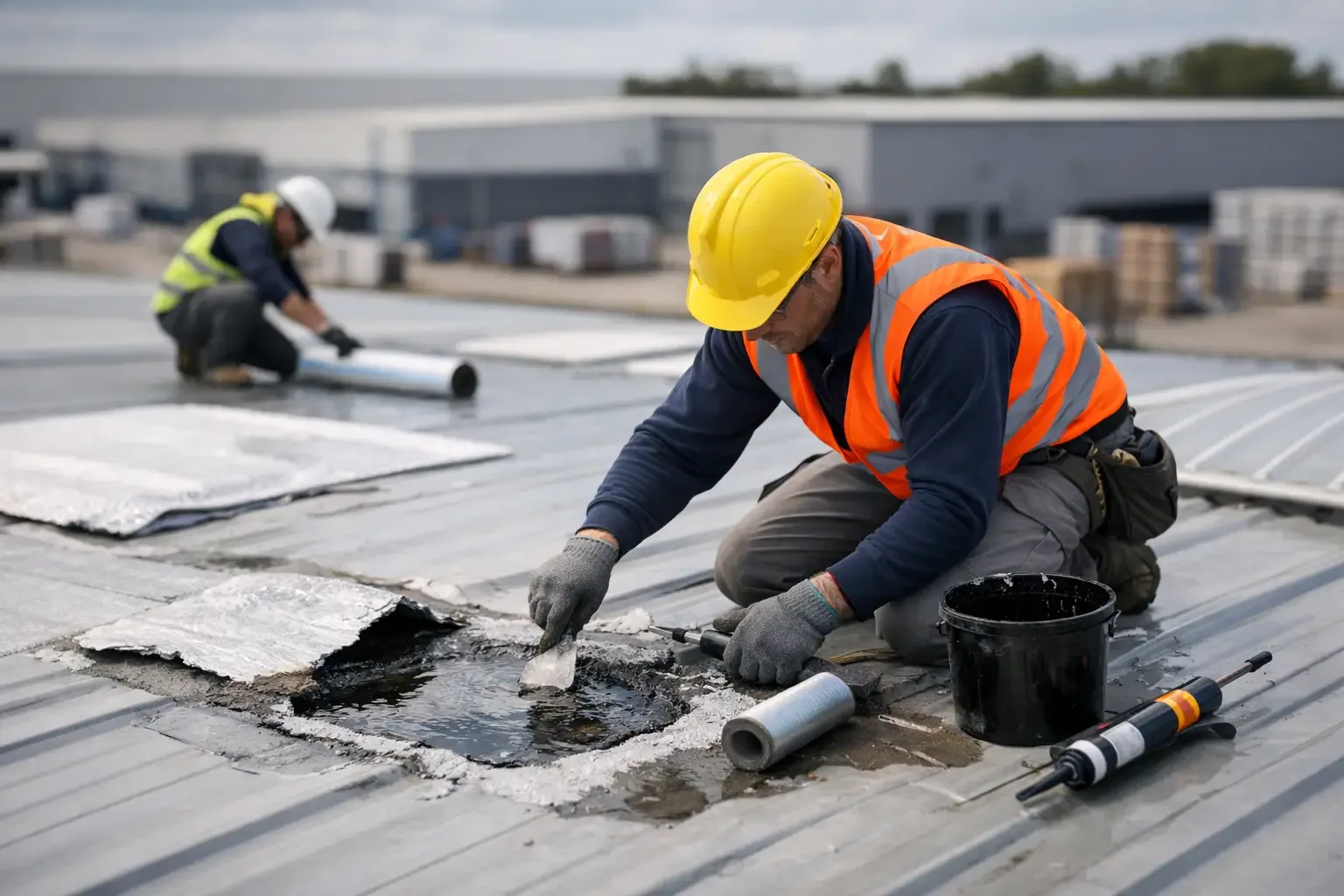
Commercial Roof Leak Repair
Scope, sequence and repair notes
Occupied Building Reroofing
Read the full page
Roof Warranty Records and Repair Coordination
See how we handle it
Roof Renewal Decisions and Work Planning
Scope, sequence and repair notes