Carlisle SynTec Commercial Roofing in Clovis, CA
Roofing Manufacturers
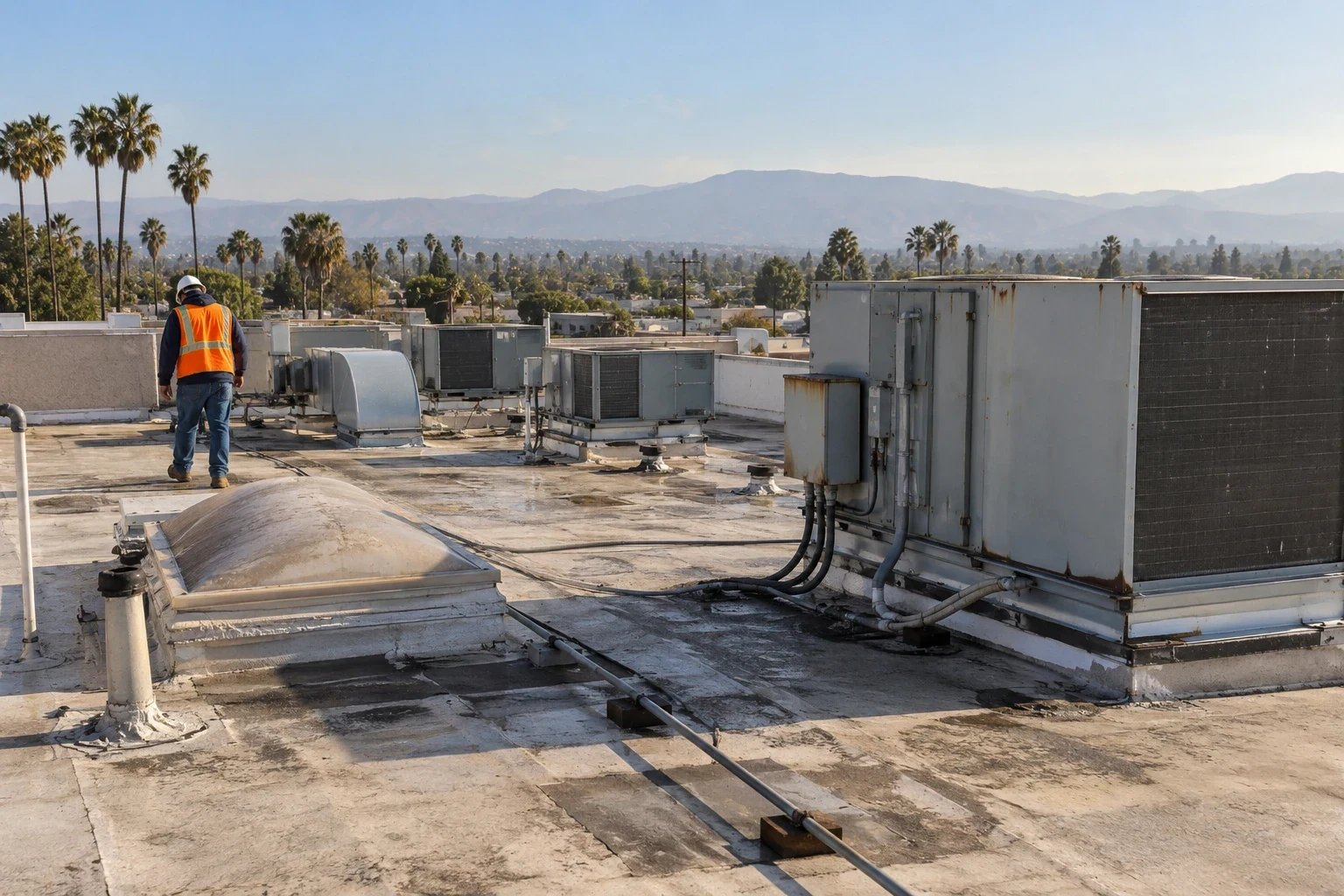
Water tracking down a rooftop curb during winter rain can send a Clovis, CA owner looking for the Carlisle name in an old roofing file. The curb may be leaking through its flashing, an adjacent seam or a damaged covering hidden by equipment. Carlisle identifies EPDM, TPO, PVC and fleeceback options, so the manufacturer alone cannot tell us how that detail was constructed. We begin with the actual covering and the path of the water, then decide whether immediate protection is possible without covering evidence needed for the permanent repair.
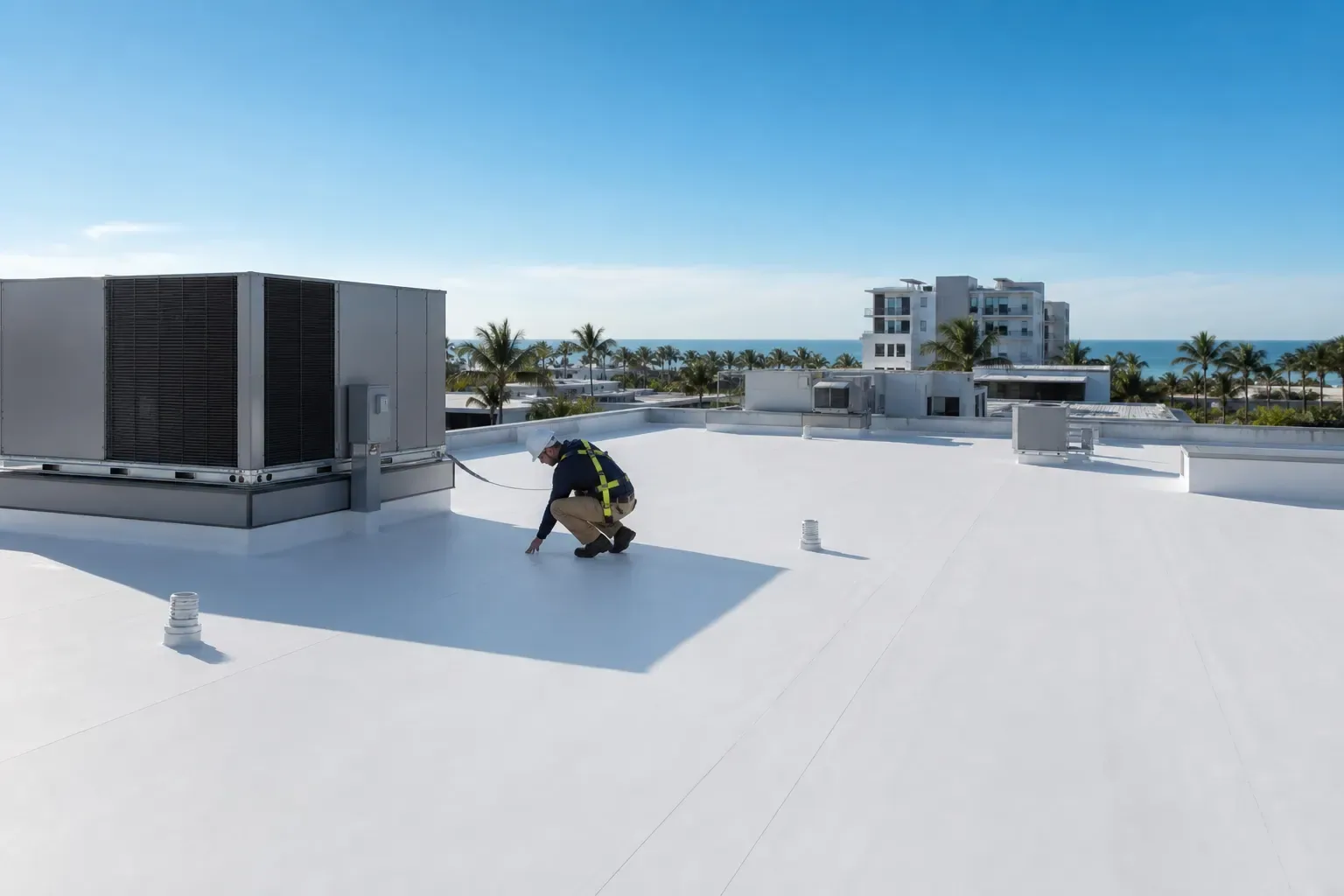
A call outside business hours still reaches our emergency response. Tell us whether the affected room contains equipment that cannot tolerate water and who can arrange roof access. We establish safe inspection conditions and coordinate interior protection before disturbing the curb. The early objective is to limit further entry; rebuilding a failed detail requires more information than the ceiling stain supplies.
Movement at the curb
A lifted flashing corner can reflect repeated movement between equipment, curb and roof field. We examine the transition, its termination and the surrounding membrane for tension or damage. A new surface patch will have limited value if the curb remains loose or the adjacent membrane is pulling away. Equipment supports and roofing have different jobs, and the repair must address the point where those jobs meet without treating the membrane as structural support for a moving unit.
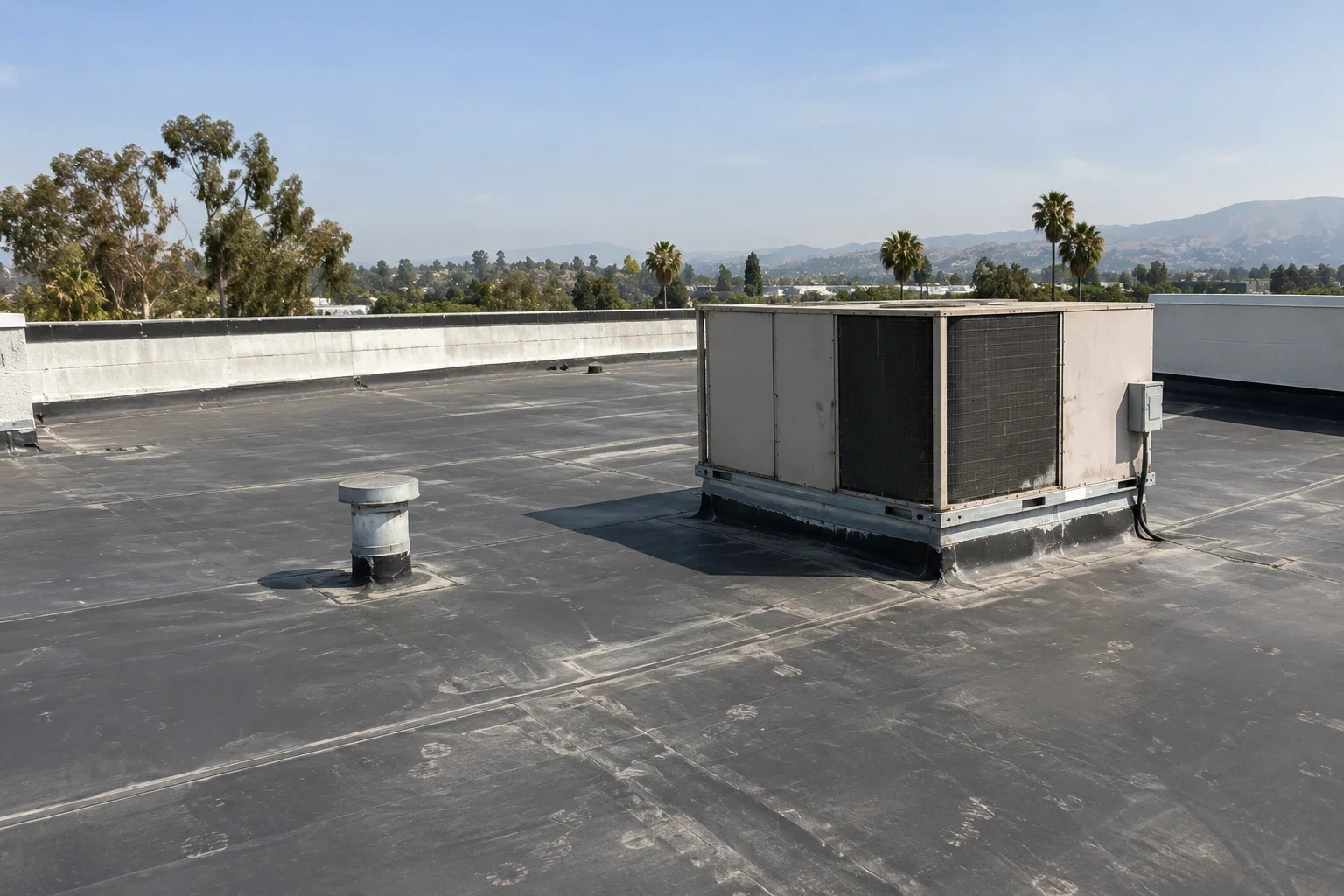
With an EPDM covering at that transition, material condition and the correct repair system matter as much as the shape of the opening. A thermoplastic roof requires its own joining procedure. We do not transfer the approach merely because both assemblies bear the Carlisle name. An owner comparing Versico roof families for future replacement needs the same distinction between a material family and a complete, building-specific assembly.
The equipment-side investigation
Condensate near a unit can wet the roof during dry weather, while rain entry may appear only when water reaches a particular flashing defect. We ask when the indoor damage began and whether it changes with equipment operation. That timeline helps separate possible paths but does not establish a cause by itself. We examine the roof-facing details and coordinate with the appropriate equipment technician when a drainage or mechanical issue lies outside the roof assembly.
For curb and equipment support repairs, temporary work may involve a limited closure at an accessible roof defect while the mechanical problem is investigated. Covering an entire equipment base in sealant can block inspection and introduce incompatible material. We record the location of the intervention, preserve drainage and explain what remains unresolved. A dry afternoon after that work does not show how the detail will perform when the next rain reaches it.
Firm material for a lasting junction
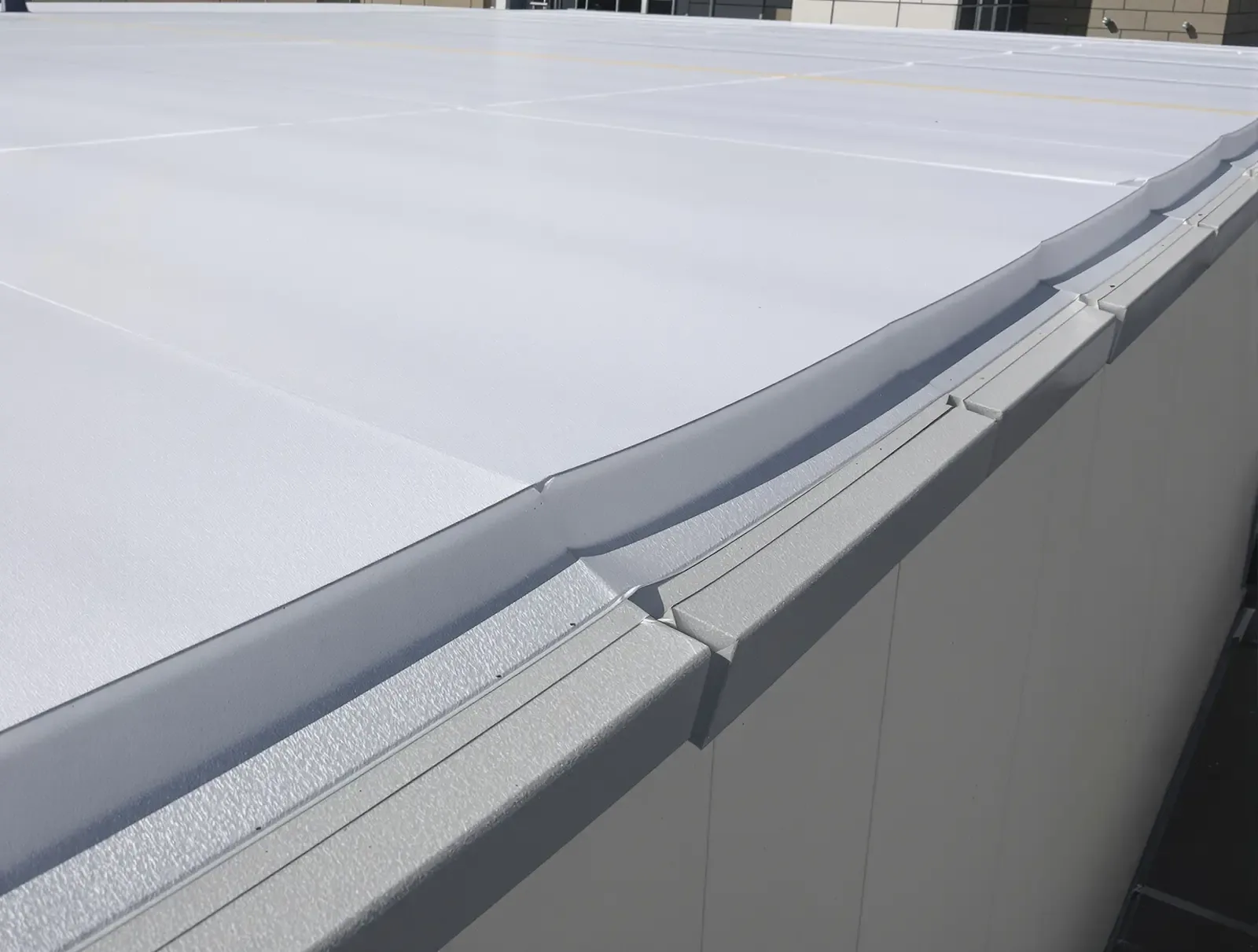
A repair around a curb needs a serviceable receiving surface and an assembly that can support the reconstructed detail. We check the field beside the curb and investigate suspicious insulation before choosing a patch size. Debonded material, wet layers or several earlier repairs may make a neat-looking perimeter misleading. The appropriate boundary may extend beyond the visible defect to remove compromised material and produce a junction that can be prepared properly.
The permanent scope describes the membrane family, affected support layers and the transition being rebuilt. Where recovery is being considered, attachment and moisture findings shape that separate decision. GAF commercial roof options can be evaluated alongside Carlisle options during a larger replacement, but a brand comparison cannot substitute for examining the old assembly. We keep the urgent curb repair distinct from replacement planning so the owner can respond to the active leak without losing sight of broader roof condition.
Valley exposure at the transition
In July 2024, a 90-degree monthly mean in Fresno put regional heat exposure into sharp focus for inspection of rooftop transitions. Regional heat is a reason to examine exposed transitions for movement and material deterioration, not proof that a particular curb has failed from heat. We look at how the covering meets the vertical surface, whether earlier repairs are carrying strain and whether rooftop traffic has damaged the field. The roof geometry and actual material condition carry more weight than a hot date on the calendar.
During Central Valley tule fog, moisture can persist on roof surfaces into the morning. We assess drying and preparation conditions at the repair area, particularly where equipment shade changes exposure. For a property in Fresno, the dispatch discussion includes an acceptable protected stopping point if the intended application cannot proceed. The owner should not be left with a stripped curb detail simply because the scheduled arrival occurred before the roof became ready.
Operations beneath a concentrated leak
A repair above an occupied healthcare room needs a clear boundary for access, debris and indoor protection. In Clovis, properties within the Herndon Avenue Medical District may include different operators and roof assemblies, so the facility name alone cannot determine the specified Carlisle SynTec components. Identify the actual membrane and project documents at the repair location, then coordinate equipment, room controls and closure with the authorized contacts before removal.
A written account of the roof condition and repair findings distinguishes observed defects from possible causes. It also records the limits of any moisture investigation and the work left for the next visit. The owner can then arrange mechanical correction, roof repair and operational access in the proper order. Keeping those tasks connected avoids a repaired flashing that is immediately exposed to the same equipment discharge or uncontrolled movement.
When a project specifies a Carlisle SynTec system, confirm the exact assembly and current project documents before selecting repair materials or describing a warranty path. Existing roofs can include older components or later repairs that do not match the new specification, so verify what is installed where the proposed work connects. Keep substrate preparation, attachment and transition details tied to the project requirements, and refer system-design questions to the manufacturer or qualified designer. At closeout, identify the materials and areas actually installed rather than imply that a product name alone verifies compliance.
Commercial Roofing Questions
Does fleeceback mean the curb patch follows one standard method?
The exact covering and installed detail govern the method. Fleeceback identifies an option rather than a universal repair instruction. We examine the roof-facing surface, supporting assembly and existing transition before selecting the compatible permanent treatment and explaining its preparation needs.
Could condensate explain water without rain?
Timing helps separate the possible paths. Water associated with unit operation needs an equipment-side investigation as well as inspection of the roof. We assess accessible roofing defects and coordinate the mechanical findings before calling the problem resolved.
Should the unit be moved for a corner repair?
Access to the complete damaged junction matters. Some defects can be repaired without relocation, while concealed damage may require coordinated equipment work. We explain the required exposure and arrange the sequence with the owner rather than patching only the corner that is easy to reach.
Does a lifted curb detail require a whole new roof?
The surrounding assembly sets the scale. A localized failure over firm, dry layers may support reconstruction of the transition. Repeated failures, moisture beyond the curb or deteriorated field material can expand the scope, which we describe separately from the emergency closure.
How can we distinguish temporary roof work from mechanical work?
The written work limits separate them. We identify the roof defect treated, the equipment issue awaiting another trade and the condition needed before permanent closure. That account gives the owner a usable sequence instead of leaving responsibility hidden beneath a broad patch.
Report the curb and equipment timing
Describe the leaking room, the unit above it and whether the damage appears during rain or equipment operation. We review safe access and immediate protection, then coordinate the roof investigation with any mechanical work the permanent repair needs.
Related Pages
EPDM Roof Repair in Clovis at Adhesive and Flashing Joints
Read the full page
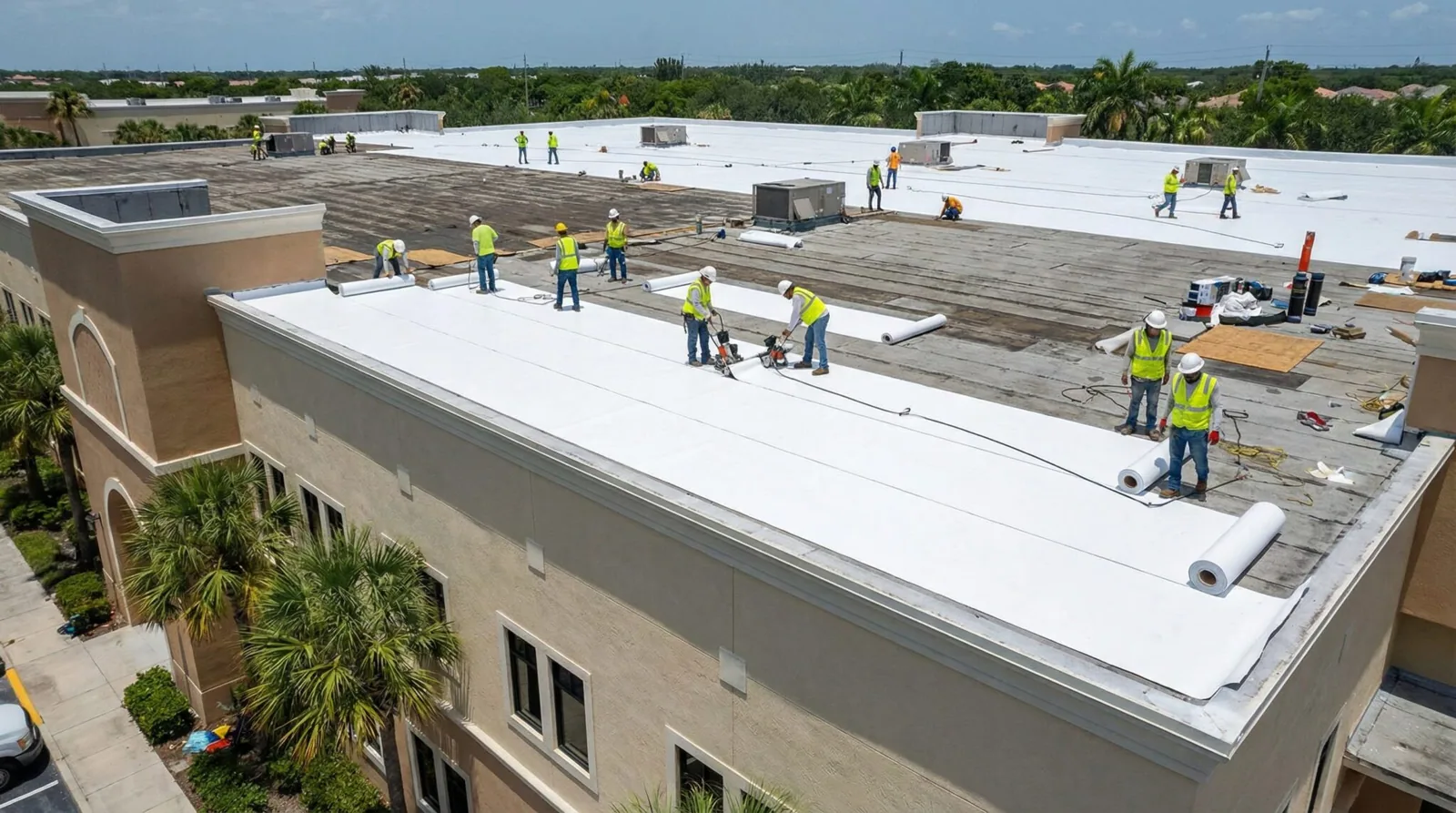
Versico Commercial Roofing
See how we handle it
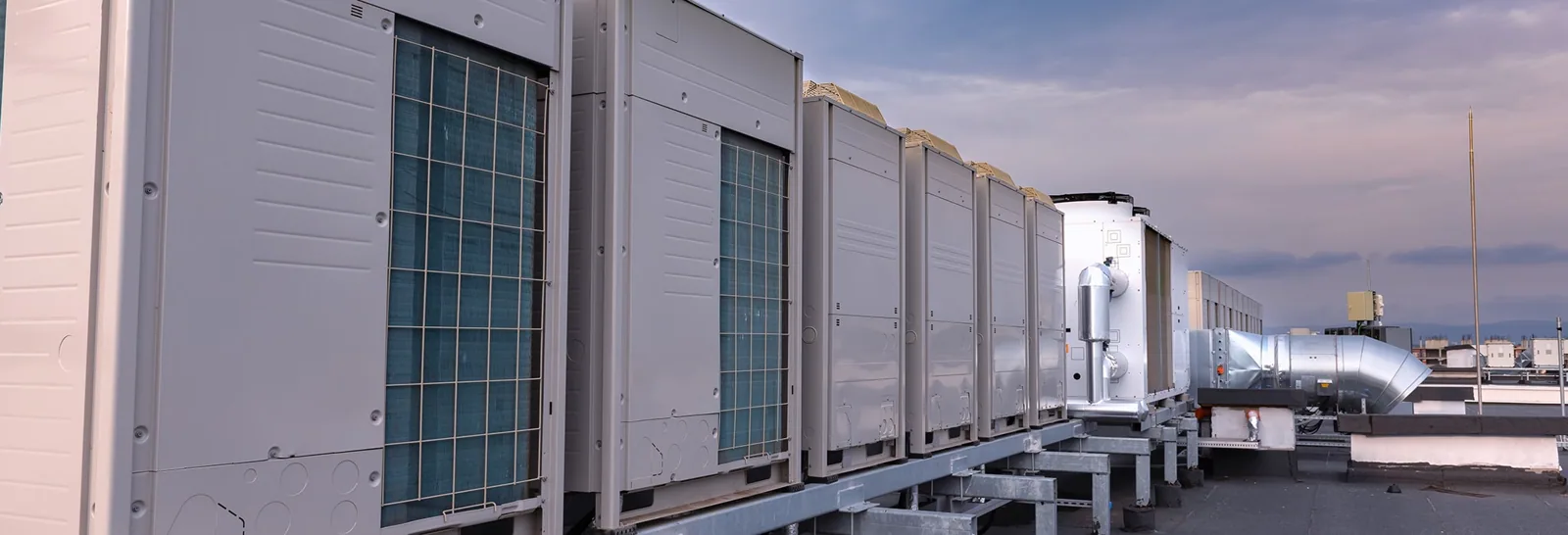
Rooftop Equipment Curbs and Supports
Scope, sequence and repair notes
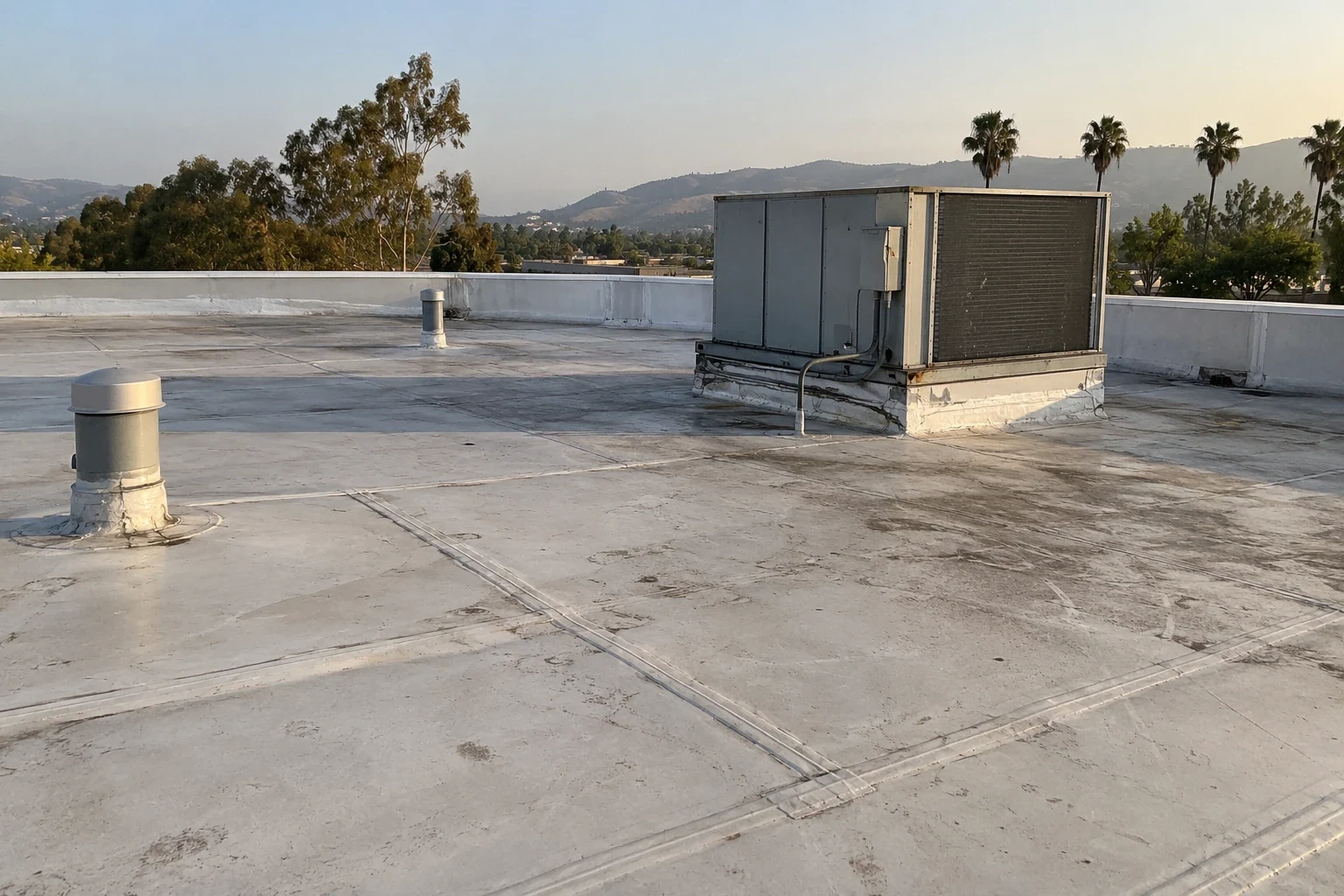
GAF Commercial Roofing
Read the full page
Fresno
See how we handle it
Roof Condition Records and Repair Planning
Scope, sequence and repair notes