
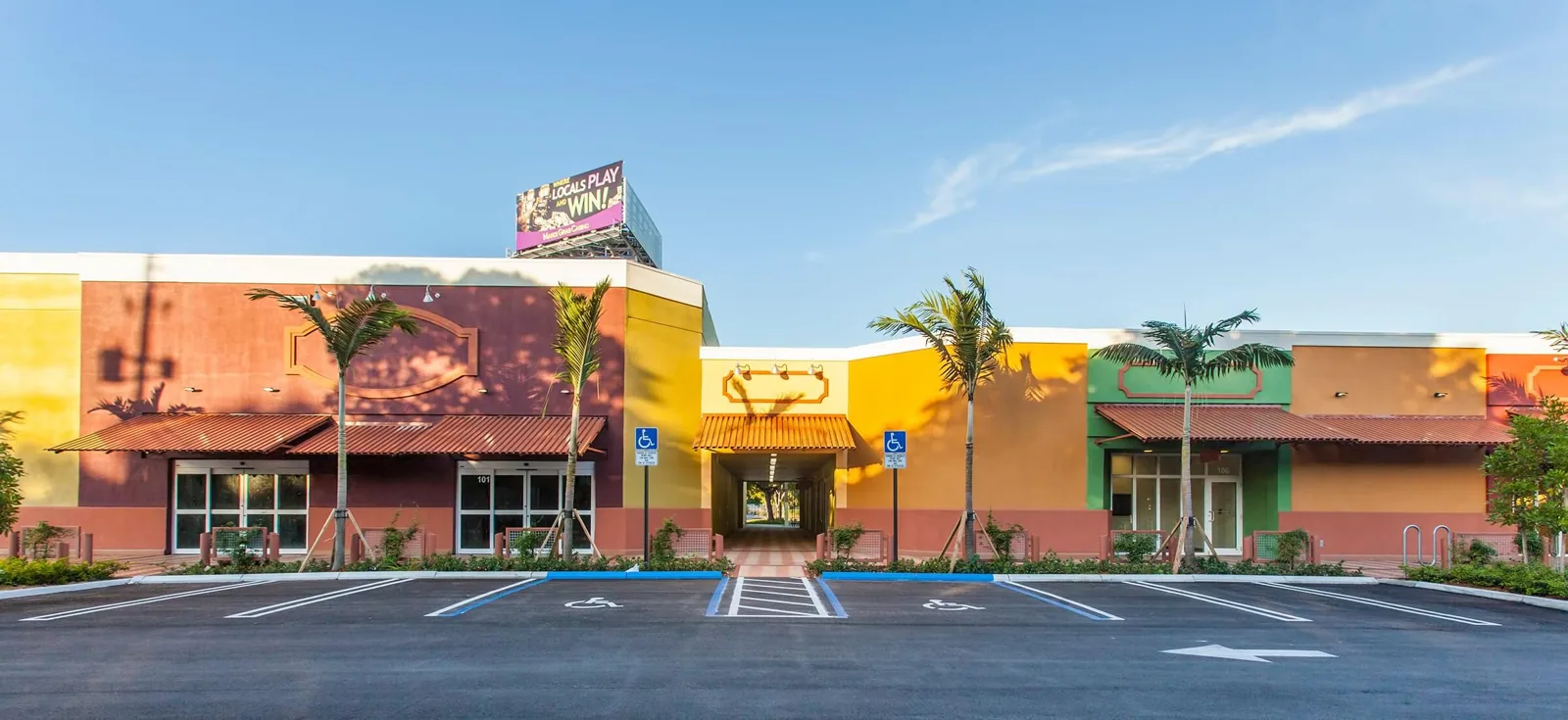
Retail and Restaurant Roofing in Clovis, CA
Industries We Serve
A cashier notices a new drip near the checkout while a restaurant manager reports water beside the extraction hood during the same winter storm. For a chain operating in Clovis, CA, those incidents need separate roof investigations even if they share a maintenance contact. A retail opening can expose customers and stock, while restaurant leakage can involve grease deposits, exhaust curbs and food preparation restrictions. We confirm the affected store, interior exposure and roof access before selecting temporary protection. Permanent work follows the physical cause at that location, with the store representative and facilities contact agreeing the construction limits. A shared purchase process can support consistent communication without forcing different assemblies or operating risks into one assumed repair.
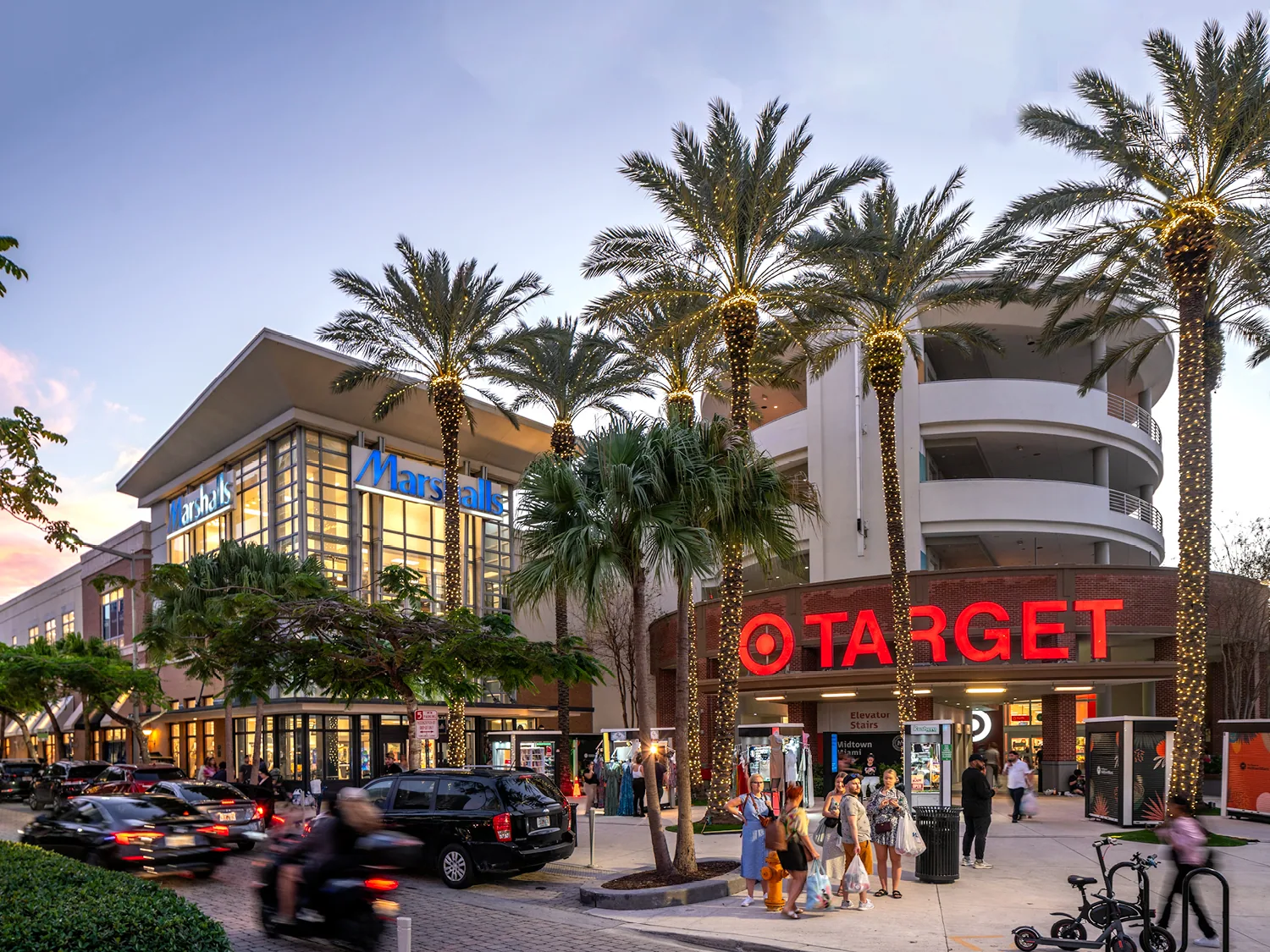
Restaurant exhaust and material compatibility
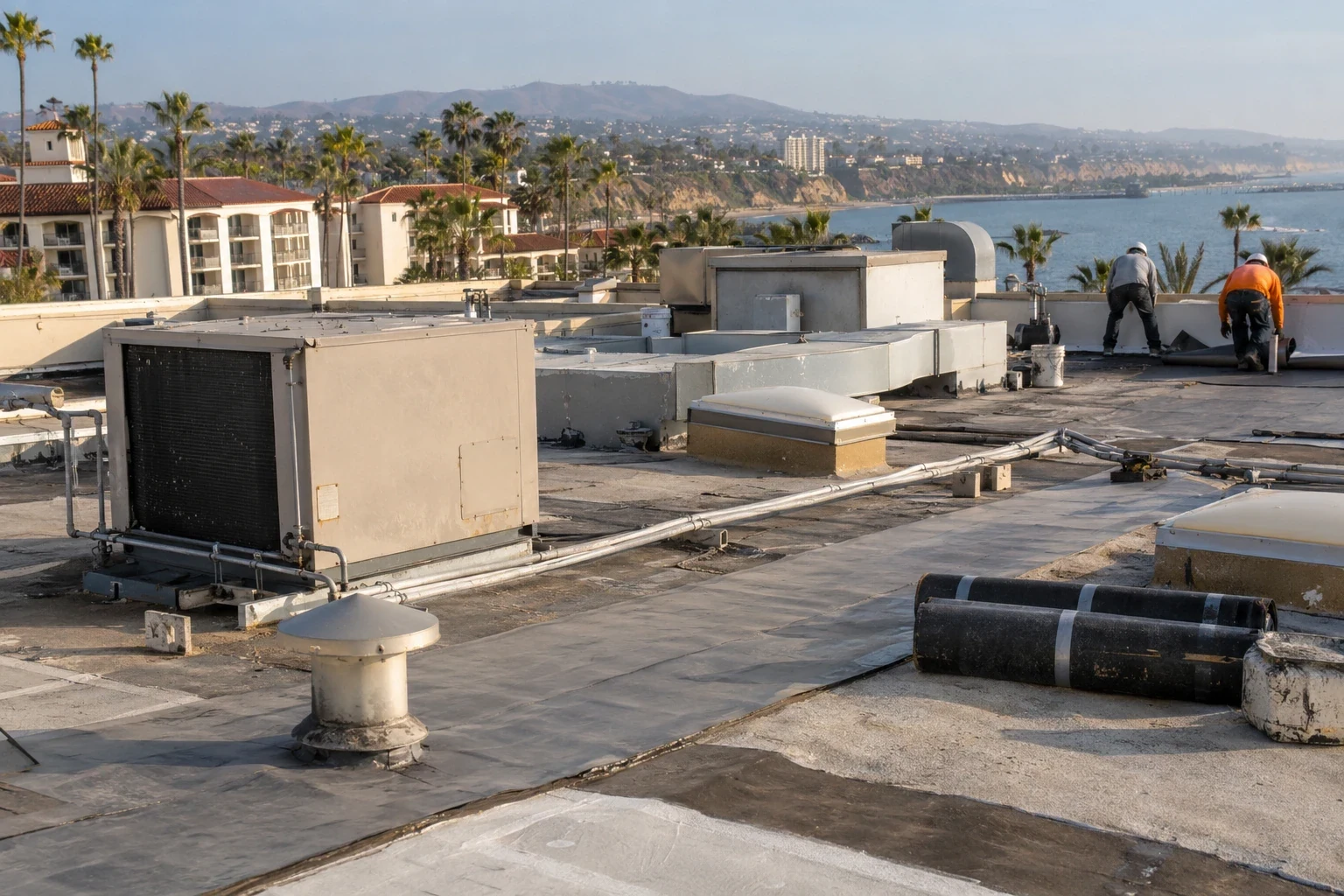
Grease collecting near an exhaust fan can soften or damage materials that are unsuitable for repeated oil exposure, and a heavily contaminated surface can prevent a repair from bonding. We inspect the membrane, curb and discharge arrangement, then coordinate cleaning and equipment work with the responsible service trade. Restaurant roof repairs need a detail suitable for the actual exposure, with flashing clearance that allows later fan maintenance. A compatible membrane patch still needs preparation on a sound substrate. If the fan must be raised or disconnected, the restaurant controls the shutdown and the equipment trade handles the operational work. We keep that interface separate from the roofing task so a repaired water barrier does not leave an exhaust unit improperly seated or an unresolved grease discharge recurring over the new material.
A multi-location operator may compare maintenance records from a Shaw Avenue storefront with a Blackstone Avenue Commercial Corridor site, but the work scope must follow the roof at the individual property. We tie photographs, repair boundaries and operating restrictions to each manager’s location so a chain-wide standard does not replace field findings.
Retail interiors and trading routes
Water over a merchandise aisle can require stock relocation while an entrance remains usable, whereas a leak above a payment terminal may need electrical attention and a different isolation area. We discuss those controls with the store manager before ladders or waste containers are placed near customers. Roofing during occupied trading hours requires a defined material route, noise planning and protection at air intakes. Removal work can affect rooms beyond the visible drip, so the store needs the actual construction boundary rather than a promise that only one ceiling tile will be disturbed. Where a landlord controls the roof, tenant permission alone may not authorize the permanent repair. We identify that responsibility early and describe the findings to the contact who can approve work on the assembly.
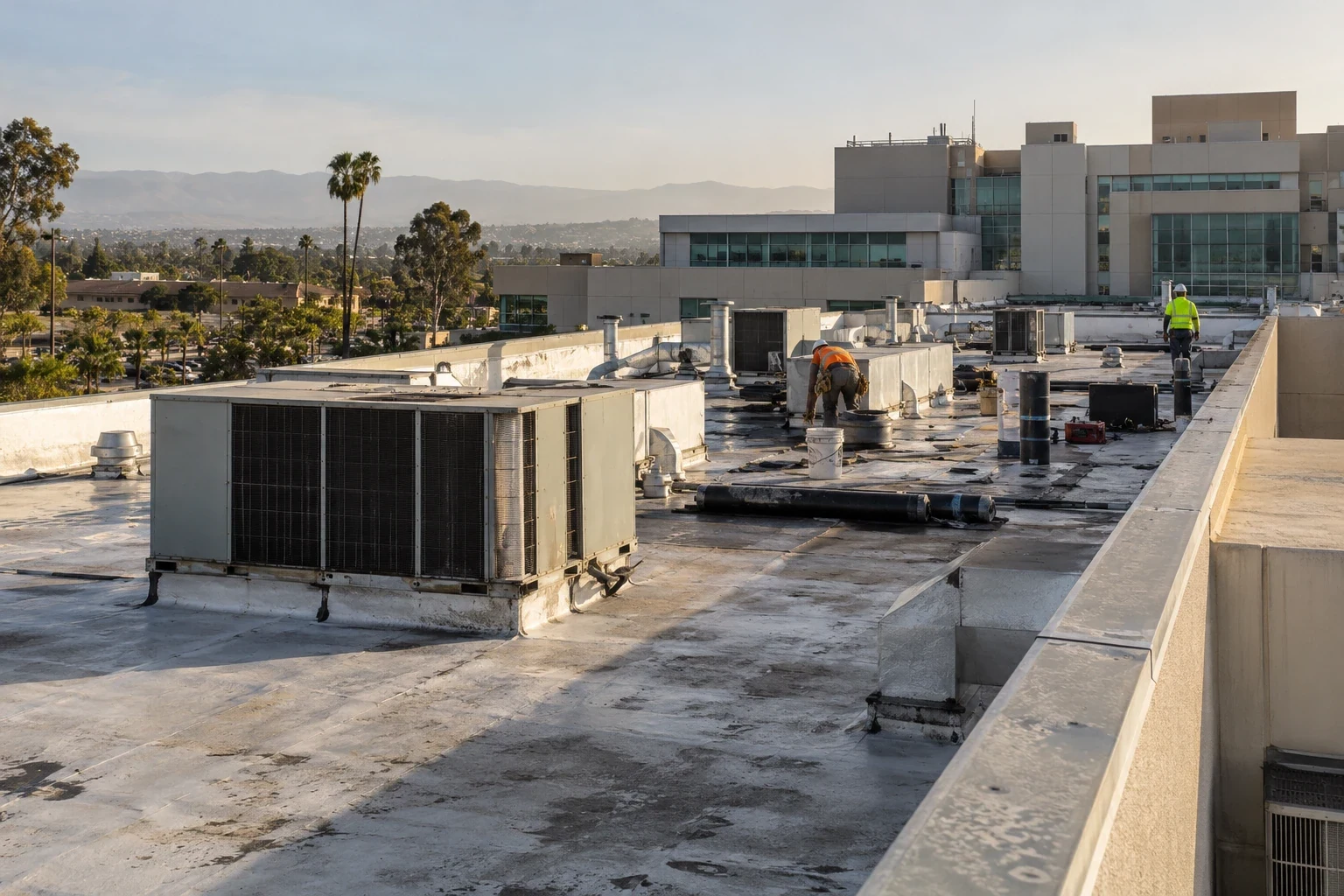
Shaw Avenue assignments and local dispatch
The Shaw Avenue Commercial Corridor includes large retail uses and nearby restaurant properties with different loading and operating patterns. A chain facilities team should connect each store identifier to its actual roof access, tenant restrictions and affected interior space before dispatch. Coordinate exhaust, deliveries and customer circulation with the local operator, then keep the repair scope tied to that store’s assembly. Shared branding or proximity does not establish a common roof system or grant permission across nearby tenants.
Drainage and rooftop service traffic
A condensate hose laid across a drain path can collect debris, and repeated equipment visits can leave punctures beside a walking route. We inspect those conditions together with seams and curbs before deciding whether the leak is isolated or connected to recurring service damage. Drainage repair and cleaning can restore the outlet without resolving a damaged membrane, so the scope should identify both tasks where needed. Protective walkways must preserve drainage and keep access clear of vulnerable details. The maintenance contact also needs to know which equipment trade is responsible for a discharge or support correction. Otherwise, the next service visit can recreate the condition after the roofing crew has completed an otherwise suitable repair, leaving the store with another incident at the same location.
Chain approvals and site-specific quantities
A national repair allowance can speed authorization, but it cannot establish how much wet insulation lies beneath a particular store roof. We provide the observed defect and discuss additional investigation where the concealed condition could alter the work. Multi-site roof coordination connects the store report, access contact and approval route while keeping each repair boundary distinct. Facilities teams managing lodging alongside retail may recognize the occupied-area discipline used for hospitality groups, although guest-room and food-service controls require different decisions. We identify the person authorized to approve added removal during the opening and explain what would pause the work. That arrangement gives the local manager a clear escalation route without asking that manager to approve construction outside the authority provided by the chain.
Heat-period work and permanent follow-up
A July 2024 monthly mean of 90.0 F at Fresno provides regional heat context for checking roof temperatures before a store repair. Surface condition, material requirements and worker exposure affect the work sequence, even where a store permits early deliveries. We discuss permanent work after the active entry is controlled, including wet material removal and equipment coordination that could not be completed during the initial visit. Planned store roof maintenance can check drains, grease-exposed areas and service routes according to the building condition. Emergency assistance is available overnight, across weekends and during holidays, with attendance and temporary repair options confirmed for the actual incident. Follow-up records should distinguish a completed permanent detail from a temporary measure still awaiting access or approval.
A chain may coordinate facilities standards centrally while each restaurant controls kitchen operations, deliveries and customer access locally. Schedule roof work around exhaust service and food-handling requirements identified by the operator, and define how the roof will be secured at the end of each shift. For a related property type, see hospitality group roofing coordination and the Shaw Avenue Commercial Corridor.
Commercial Roofing Questions
Can every location use the same roof repair material?
The repair material must be compatible with the existing membrane and local exposure. A restaurant roof near grease discharge may require preparation or materials different from a dry retail roof. We identify the actual assembly and damaged detail at each store before treating a shared purchasing specification as a suitable repair.
Who approves work on a roof controlled by the landlord?
Roof authorization needs to follow ownership and the lease responsibilities. The store can describe the interior problem and arrange permitted access, but the landlord or designated manager may control roof construction. We connect the defect findings to the authorized contact before permanent removal proceeds.
Does cleaning the grease solve a leaking exhaust curb?
Cleaning exposes the detail for inspection but does not repair damaged flashing. Movement, inadequate height or damaged membrane may still require correction after the contaminated material is removed. We examine the curb detail and coordinate fan access before defining the permanent roof repair.
How are store operations handled during a wider opening?
The isolation area should protect the merchandise or food activity exposed to removal. We explain the removal boundary, debris route and ventilation concerns to the local manager and facilities contact. They can then arrange relocation or a pause in the affected activity, with changes communicated if concealed damage enlarges the work.
What should facilities staff request after a temporary patch?
A description of the protected location, its limitations and the permanent task keeps the incident moving toward closure. We identify access or trade requirements that remain outstanding and report the repair condition. A stopped drip should not close the work order while wet insulation or an unresolved curb interface still needs attention.
A store incident with customers or food below
Tell us the store address, the affected activity, any exhaust or cooling equipment nearby and the contact who approves roof work. We will discuss containment, operating controls and the permanent repair requirements for that location.
Related Pages
Restaurant Roof Leaks and Exhaust Detail Coordination
Read the full page
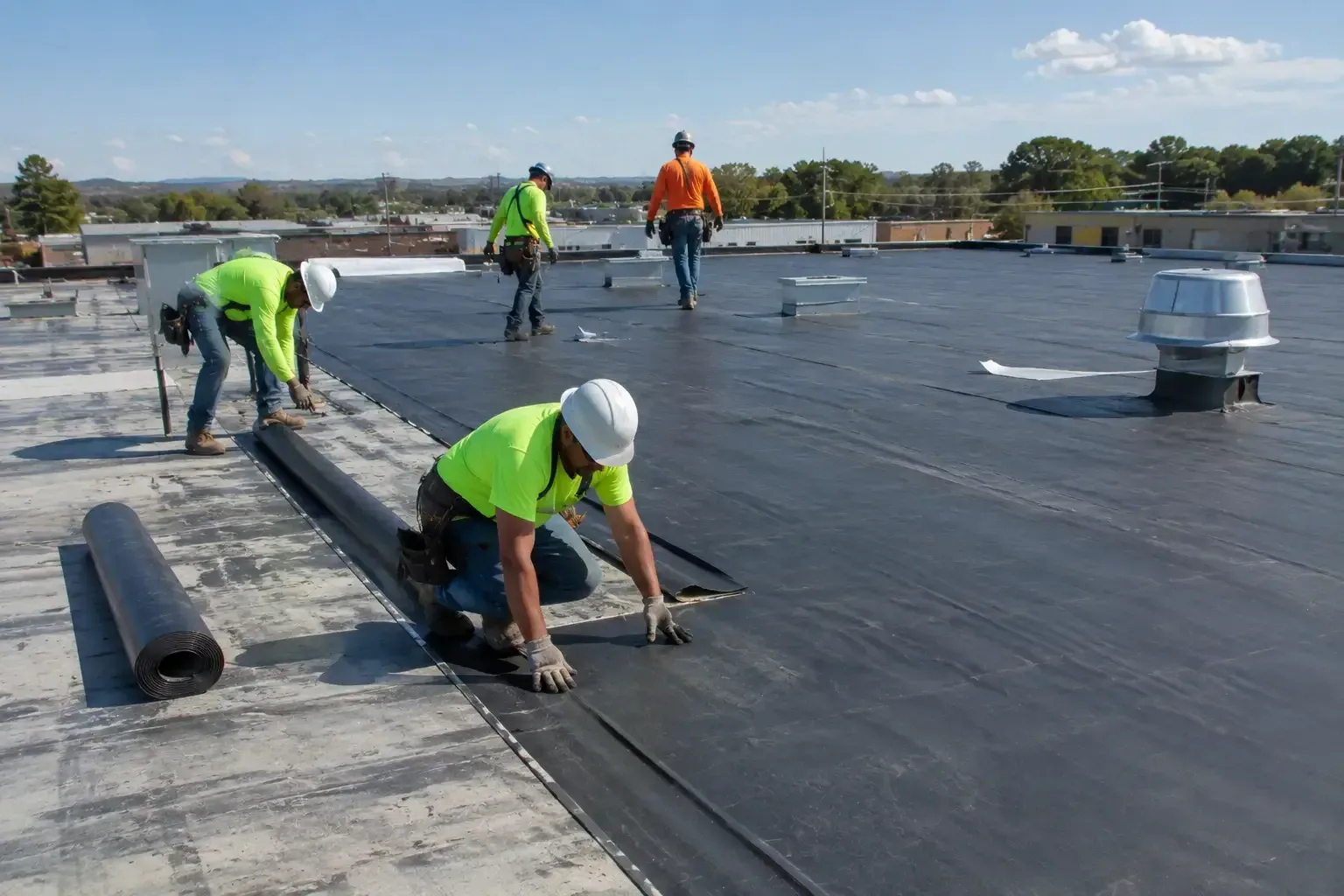
Occupied Building Reroofing
See how we handle it
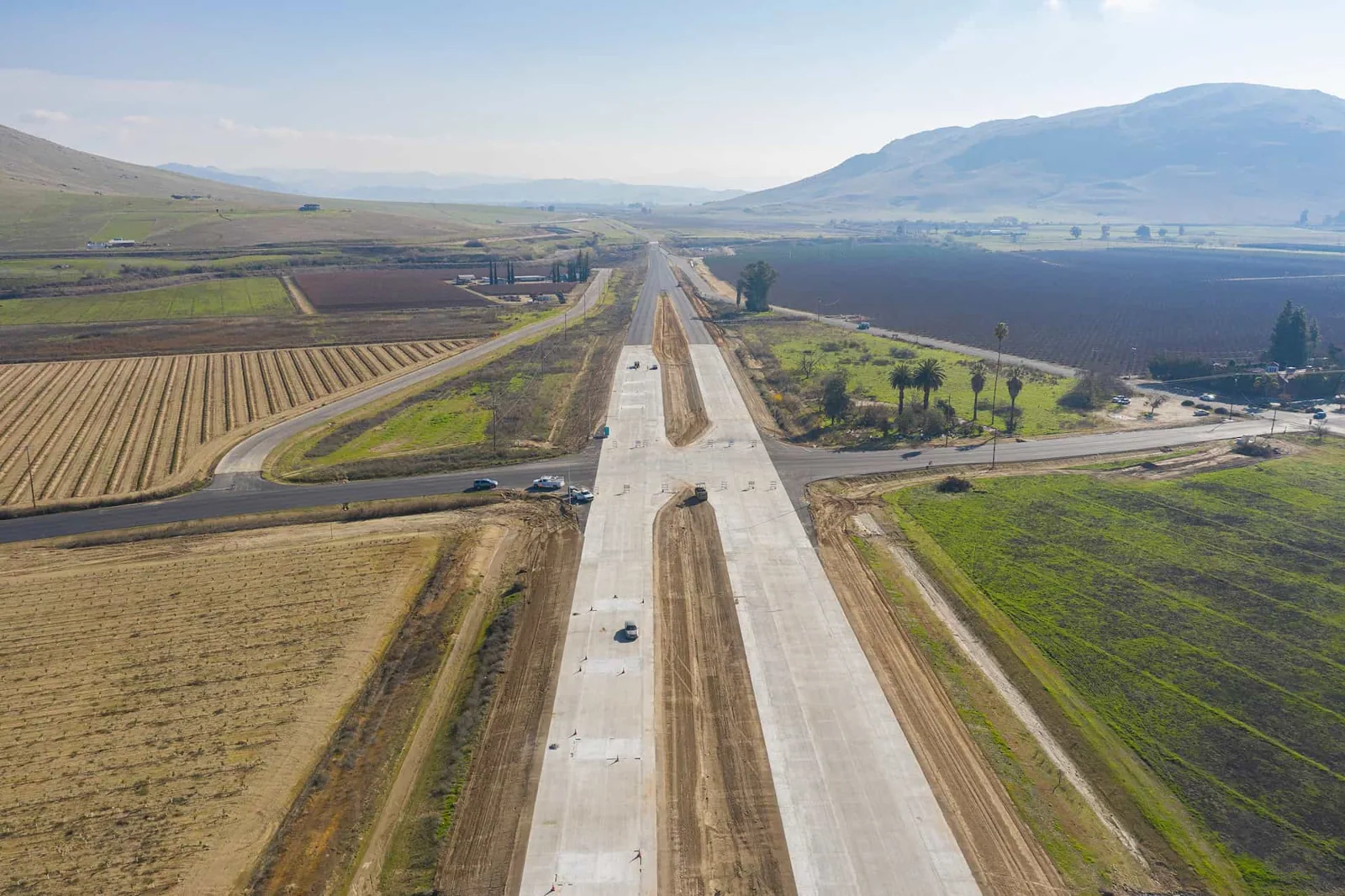
Shaw Avenue Corridor
Scope, sequence and repair notes
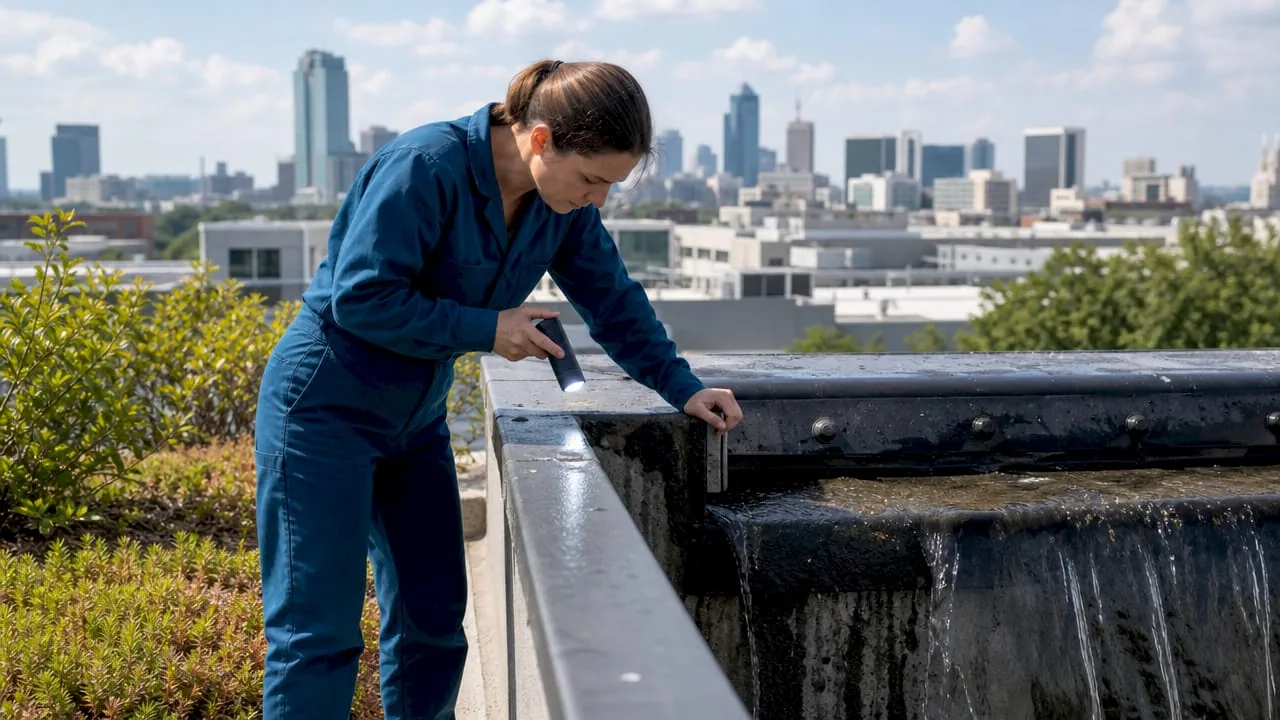
Roof Drains and Scuppers
Read the full page
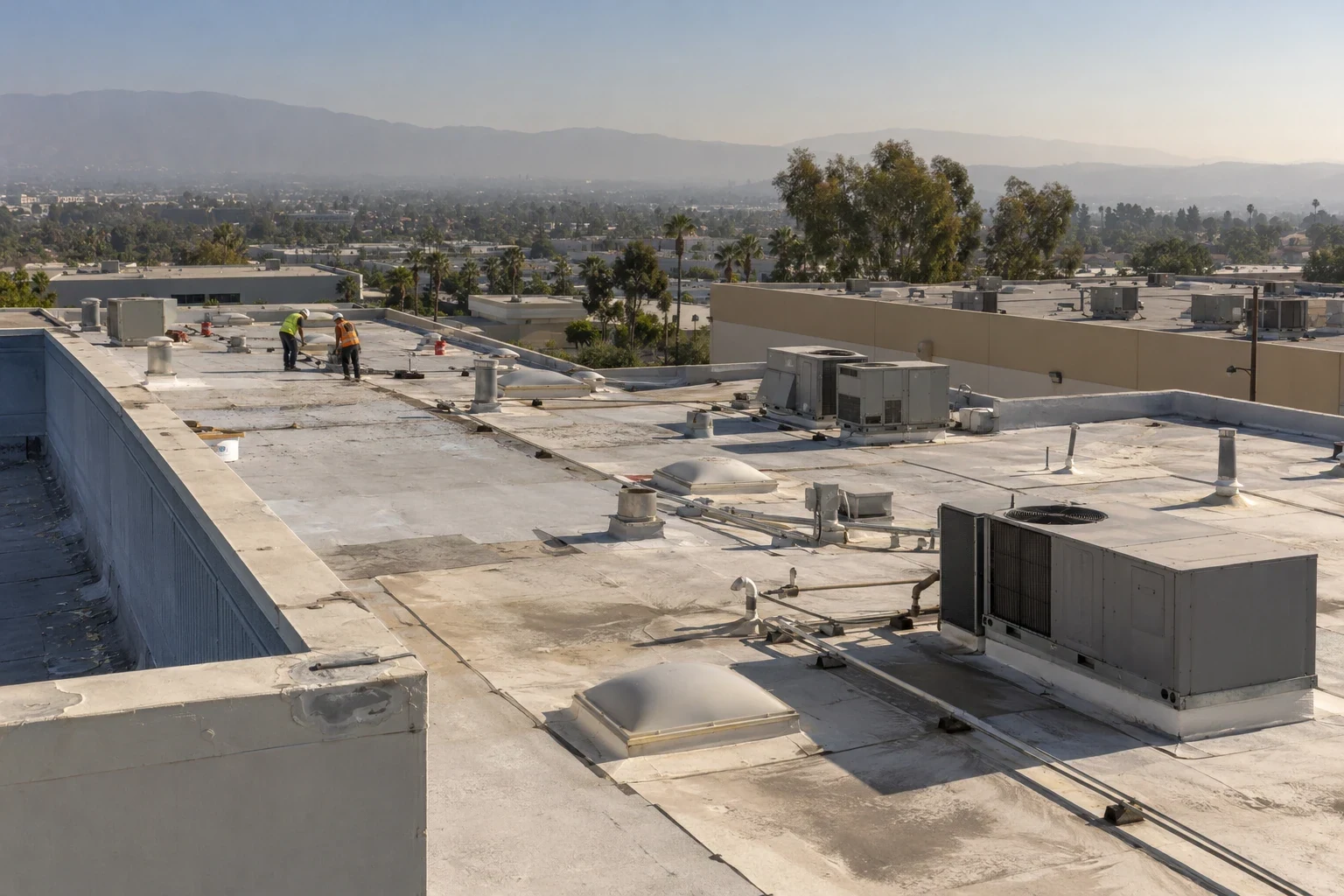
Coordinated Roof Work Across Clovis Commercial Properties
See how we handle it
Hospitality Group Roofing
Scope, sequence and repair notes