Johns Manville Commercial Roofing in Clovis, CA
Roofing Manufacturers
A damp ceiling tile beside a recently repaired area could leave a Clovis, CA owner wondering why the Johns Manville roof still takes water. The new mark may involve a second opening, a failed transition or moisture remaining below the covering. Johns Manville identifies TPO, PVC, EPDM and APP or SBS modified bitumen families. Those choices include different construction methods, so our investigation starts with identifying the installed assembly rather than selecting a patch by manufacturer name.
We ask where the indoor damage appeared and what the earlier repair changed, then assess roof access and active exposure. Emergency response remains available during nights, holidays and weekends. A suitable temporary repair may reduce entry while the permanent scope is developed, but it cannot establish the condition of concealed layers. The owner needs a distinction between the water arriving now and the roof material already affected below it.
The layers behind repeat damage
A patch can hide the place where a roof has stopped providing firm support. We examine earlier repairs for lifting, displaced laps and changes in surface level, then investigate whether the adjacent insulation is wet or compressed. A soft spot is a reason for further examination; it is not a complete moisture map. Where appropriate, targeted openings confirm selected findings so the removal boundary has a physical basis.
For insulation and cover board reconstruction, the work includes how replacement layers meet those that remain. That junction influences the membrane detail, drainage and attachment. The owner should know whether the proposal stops at the visible patch or reaches the damaged material underneath. Carlisle system alternatives may be relevant to a replacement comparison, but neither brand selection nor a new surface layer corrects insulation damage left in place.
Temporary closure and inspection access
Water spreading below an old repair requires attention to the roof opening and the room beneath it. We coordinate containment with the building staff and inspect the accessible area under safe conditions. An owner can describe the affected room, nearby outlets and recent work without searching the roof during rain. The temporary treatment must match what can be identified and prepared; a patch chosen before identifying the covering can create another problem at the same location.
When a puncture through the covering is found, we inspect its edges and the supporting layers. A narrow cut may have admitted water well beyond the visible opening. We record what the temporary closure addresses and keep access available for the planned investigation. If conditions prevent a durable application, we explain the immediate limits and the next step rather than presenting an interim treatment as the completed roof repair.
The complete assembly decision
A proposed replacement can introduce a different membrane without changing the need for an appropriate assembly. Deck condition, existing layers, insulation, fastening or adhesion and perimeter details all affect the design. A manufacturer family appearing in a technical catalog does not establish that any assembly from that family is suitable for this building. We identify the actual project requirements and the applicable assembly information before presenting a construction approach.
An owner considering Holcim Elevate membrane families beside Johns Manville options needs a comparison of the work each option requires. The same roof can present different removal, preparation and transition needs depending on its present condition. We explain what must be rebuilt, which areas can remain and where further investigation is necessary. That account helps separate the immediate leak correction from a broader capital decision without treating a catalog choice as evidence that the old roof can be recovered.
Regional heat and winter moisture
A July 2024 monthly mean of 90 degrees was recorded in Fresno, providing regional context for the examination of exposed coverings. In the regional roofing context, prolonged heat makes existing movement details and exposed materials worth examining, but it does not diagnose the Johns Manville assembly above a particular room. We look for actual splits, distressed transitions and damaged surfaces. A wrinkle may reflect installation or movement without being an entry point, while a small opening can matter greatly when water reaches it.
Winter tule fog develops in the Central Valley after sunset, with the period before dawn capable of bringing its thickest conditions. The permanent repair needs a check of actual roof dampness, temperature and preparation conditions. For commercial buildings in Clovis, we plan removal in manageable areas that can be protected if application has to pause. A morning arrival does not establish a dry receiving surface. Keeping the roof closed between stages becomes especially important when the owner cannot interrupt the room below.
The building-side work limits
A Johns Manville repair at a healthcare property should be based on the specific building’s assembly, room use and authorized access plan. The Herndon medical district serves Clovis with several types of facilities, and each has its own operational requirements. Identify any sensitive equipment or ventilation near the work area, then confirm the project documents before removing material. Keep the roofing closure distinct from interior restoration or clinical decisions.
A roof capital plan tied to measured condition can place recurring repair costs beside the extent of remaining serviceable material. We distinguish confirmed damage, uncertain concealed condition and optional larger work. Photographs and mapped findings help the owner evaluate a partial reconstruction without assuming that every stained ceiling tile demands replacement of the entire roof. The follow-up visit then checks the repaired detail and any remaining exposure identified during the initial response.
A Johns Manville specification should be read alongside the roof’s existing layers, substrate and detail conditions. Confirm the intended system components and installation requirements in the current project documents, especially where a repair ties into older membrane or insulation. If the field assembly differs from the approved design, document the discrepancy and obtain direction before covering it. The owner should receive a record of installed materials, repaired locations and any unresolved transition. Product selection, application and warranty eligibility should follow the manufacturer’s current written requirements, not a generic assumption based on brand alone.
Commercial Roofing Questions
Does an assembly listing approve a recover on our roof?
Existing construction controls that decision. A listing needs to match the actual materials, attachment and project requirements. We investigate the old roof and the proposed assembly together before treating a recover as an available option, particularly where moisture or additional layers remain uncertain.
Why investigate beside a patch that appears intact?
Concealed condition can extend past the visible repair. An intact surface may cover wet insulation or meet a damaged adjoining layer. We examine those boundaries and explain whether targeted openings are needed to distinguish a new entry point from damage remaining beneath earlier work.
Can insulation replacement stop at the puncture?
Moisture extent sets the removal limit. A small hole can admit water beyond its edges, so the opening size alone is not a reliable repair boundary. We confirm the affected area as conditions permit and describe where firm, serviceable material must be reached.
Should we choose a replacement membrane before the survey?
The survey provides the constraints for that choice. Deck condition, drainage, retained layers and building use can change which assemblies merit consideration. We can discuss material families early, but the construction proposal needs findings from the roof rather than a preferred brand alone.
What changes if removal exposes another damaged layer?
The newly exposed condition changes the reconstruction work. We document it, explain the expanded boundary and keep the opening protected while the owner reviews the needed correction. The repair account separates that discovery from work already included in the original proposal.
Describe the earlier repair and the new damage
Call with the affected room, the timing of the leak and any record of previous Johns Manville roof work. We assess urgent protection and access, then explain the investigation needed to establish a lasting repair boundary.
Related Pages
Roof Insulation and Cover Board
Read the full page
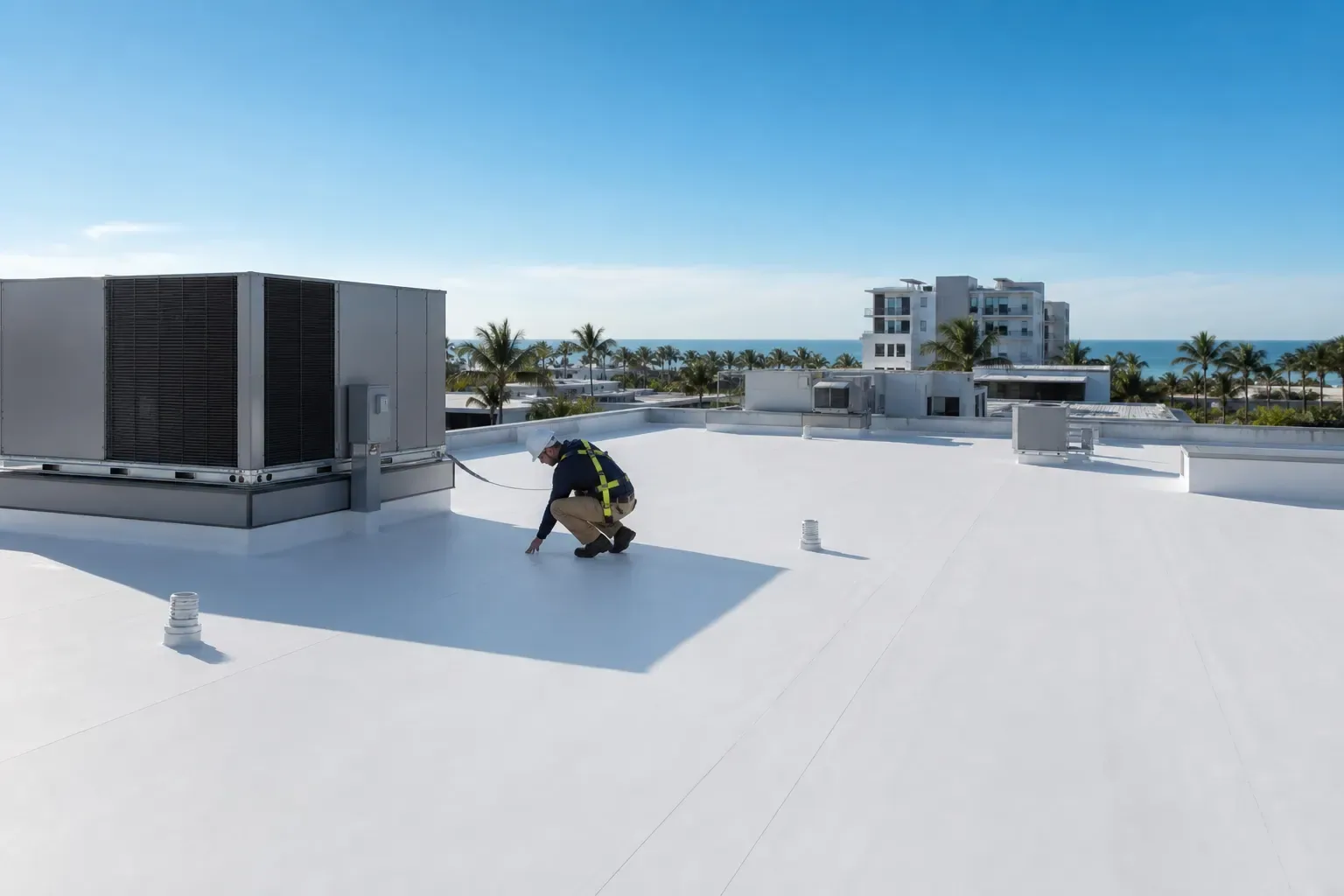
Carlisle SynTec Commercial Roofing
See how we handle it
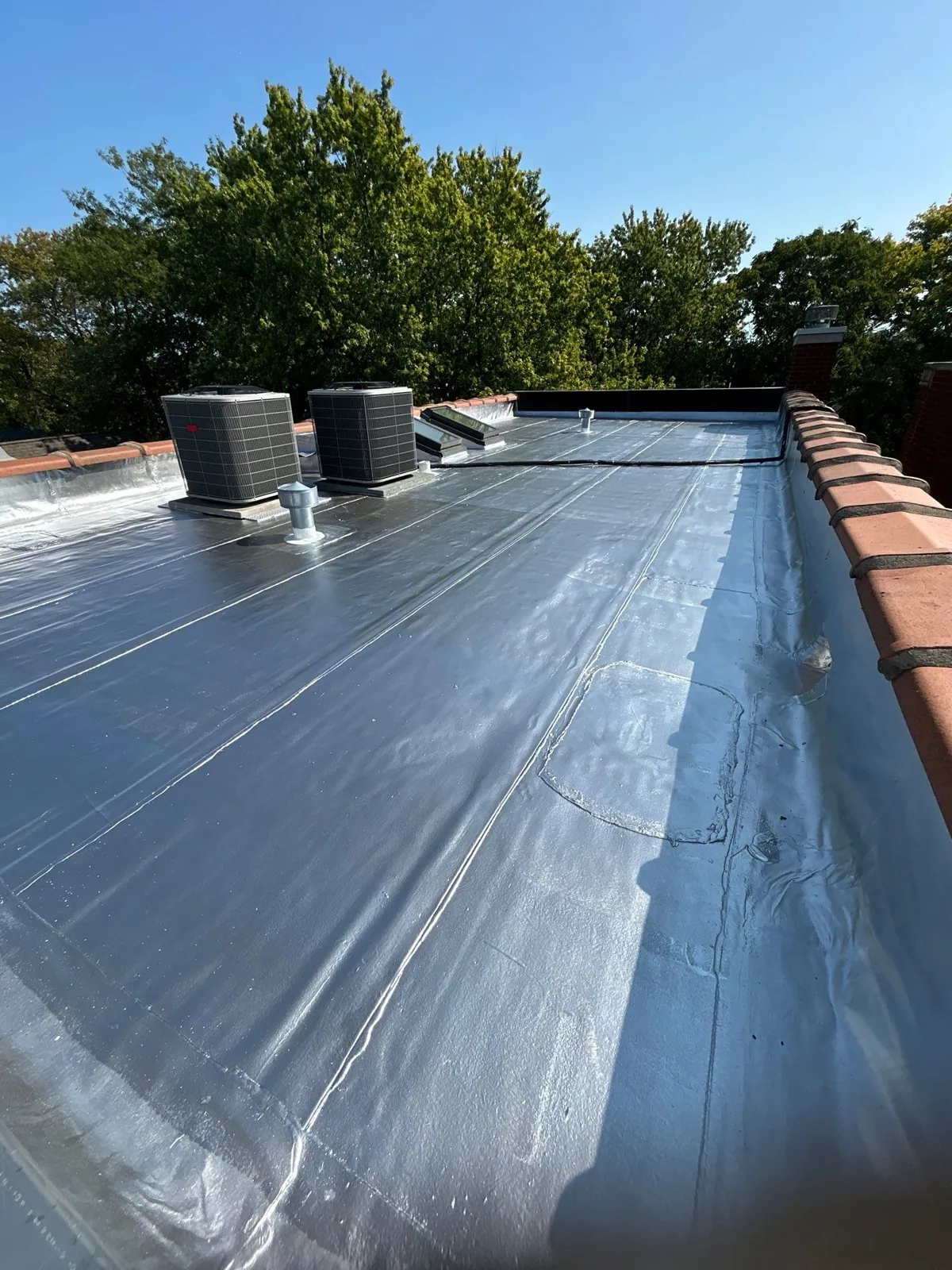
Membrane Puncture Investigation in Clovis Before Patching
Scope, sequence and repair notes
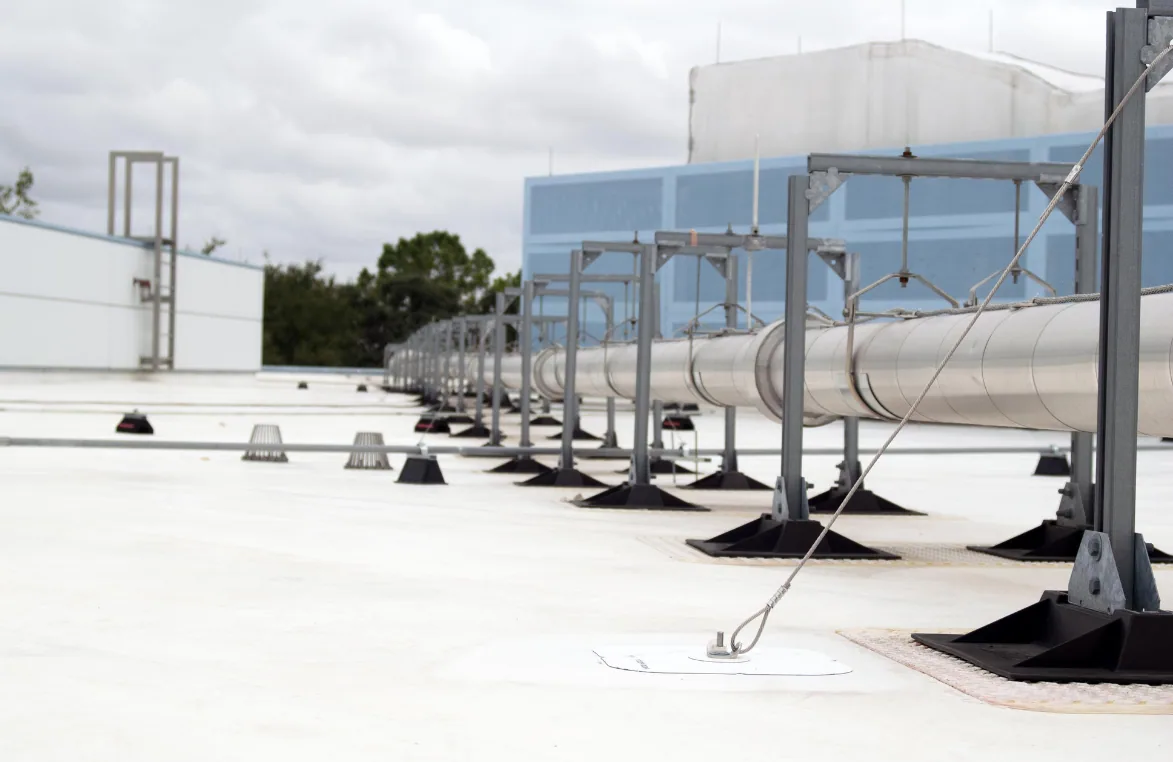
Holcim Elevate Commercial Roofing
Read the full page
Clovis
See how we handle it
Roof Renewal Decisions and Work Planning
Scope, sequence and repair notes