
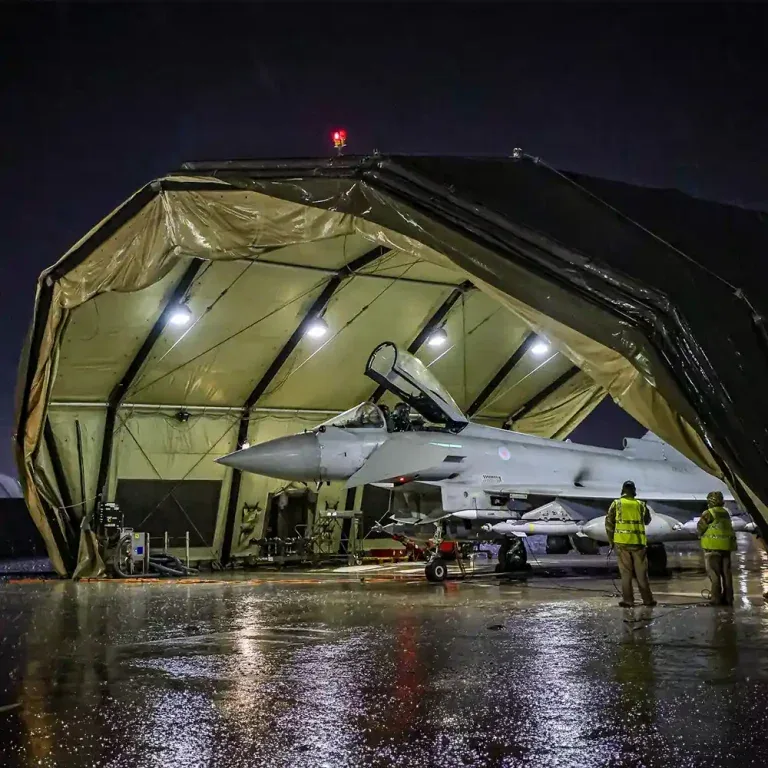
Military Hangar and Maintenance Roofing in Clovis, CA
Property Types We Roof
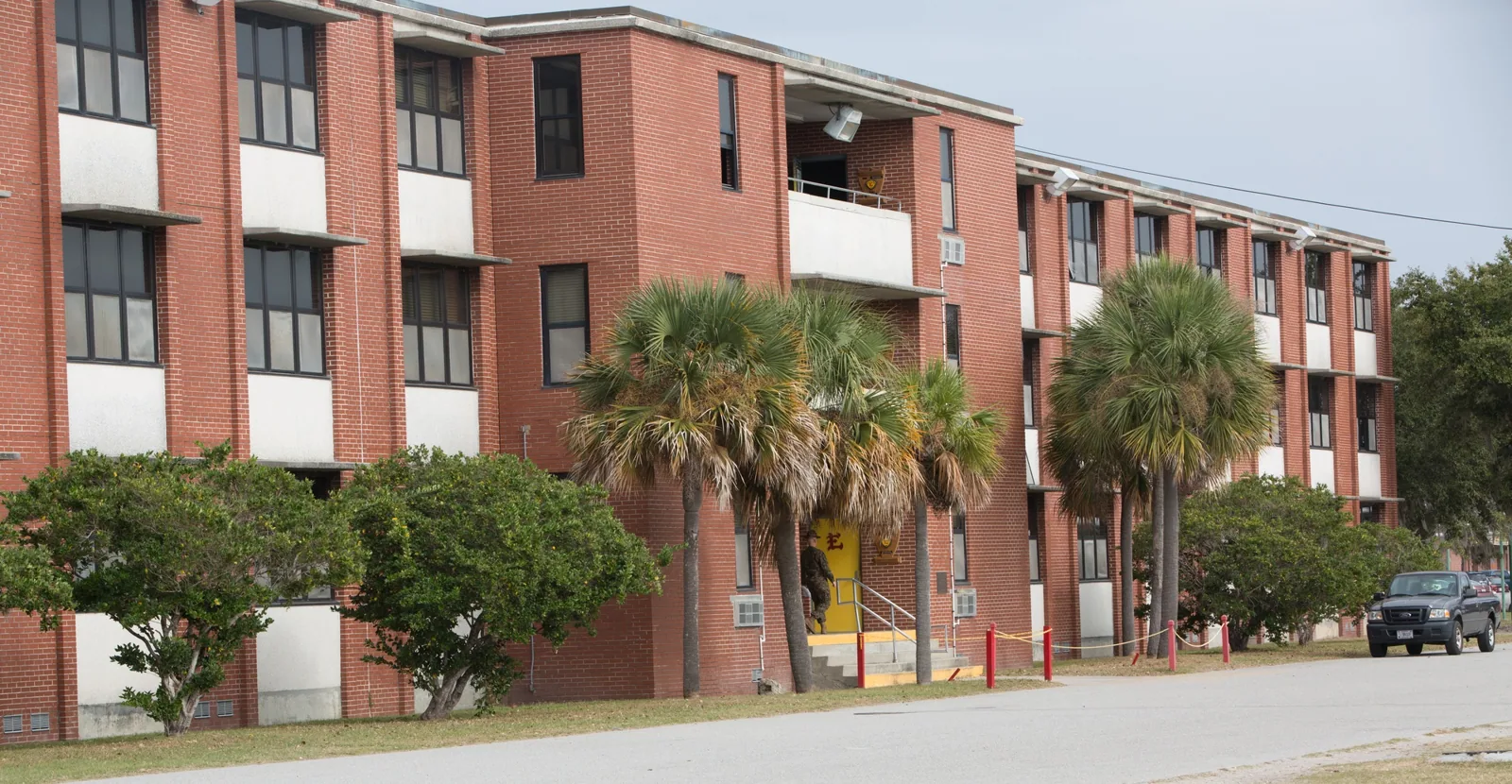
Water falling beside a hangar door track can put the apparent roof problem beside moving equipment, where a hurried patch may leave the actual junction untouched. For an assigned military hangar or maintenance facility near Clovis, CA, we examine the roof transition above the opening along with the indoor water path. A 144th Fighter Wing maintenance hangar was identified at Fresno Air National Guard Base in June 2013. A new aircraft hangar module at Naval Air Station Lemoore was completed in July 2024. Those dated building identities provide regional context; they do not determine the roof assembly or today's condition at an assigned building.
The opening above the door
A broad door opening can place several construction transitions close together: roof covering, edge detail, wall panel and supporting steel. Water beside the track may enter through any of those connections. We compare the roof and wall condition with the complaint timing, then coordinate access to inspect the junction without interfering with the door mechanism. Aircraft hangar leak investigation treats the opening as a distinct part of the enclosure. A roofing patch should not restrict intended movement or conceal a damaged supporting connection.
We examine the available details and identify whether an opening or another trade's assistance is needed to reach the suspected path. If the visible defect is above a door component, that component's operation and isolation remain the operator's responsibility. Our roofing work is sequenced within the approved boundary. Interior marks and exterior gaps are photographed together where practical, because a successful repair depends on identifying the relation between them rather than coating everything near the drip.
The roof joint across the bay
A joint spanning a roof can separate the movement of adjoining construction. Its cover and waterproof transitions must accommodate that movement without letting water reach the opening below. We examine the joint width, retained material and attachment on both sides, comparing the arrangement with the accepted design detail where available. A hardened filler across the gap may restrict movement instead of restore the intended connection. Repair of failed joint flashing requires the joint's function to remain intact.
The inspection also checks whether a split has extended into the roof field. Removal may need to include loose or wet material beyond the joint cover before a sound repair edge is available. We explain that boundary and any concealed support question before proceeding. On a metal assembly, the direction and freedom of panel movement matter; on a membrane assembly, the repair must join compatible sound covering. The building's military use does not make those material distinctions less important.

The maintenance floor below
Water above a maintenance bench calls for interior protection that accounts for the work occurring beneath it. The facility representative directs equipment movement, electrical restrictions and the available inspection area; we identify the roof task and expected opening for that coordination. Roof work above active technical workspaces needs a defined separation between the roofing activity and the operation below. A cloth over equipment may be insufficient where debris or water can fall through an opened assembly.
Our emergency number accepts calls across overnight, weekend and holiday periods. The initial conversation establishes the leak location, affected activity and contact responsible for entry arrangements. Temporary repair depends on a safely reachable defect and a suitable connection surface. If the joint or opening cannot be accessed during ongoing operations, we identify the immediate containment options with the facility contact and arrange the investigation within the approved work interval. A temporary measure is described by its limits and return requirement.
The heat and connection review
For the month of July 2024, Fresno had a mean temperature of 90.0 F. That regional heat history makes thermal movement relevant when examining a hangar junction, while the actual joint behavior and surface condition still require inspection. We look for metal distortion, displaced covers and restricted fasteners rather than assign a cause solely from the weather. Movement can reopen a rigid patch even after the interior stayed dry during one rain. The final detail needs to preserve the intended movement and waterproof connection together.
Where a standing seam metal assembly is identified, we review panel attachments and available repair details before fastening through the surface. New holes can change both water resistance and movement. Roof equipment or an added support may also affect the junction, requiring coordination before correction. Roof support and curb work should establish a suitable waterproof detail without treating the supporting structure as a roofing assumption.
The assigned project boundary
A material delivery near an operational area needs the installation representative to establish vehicle routes, staging limits and any escort arrangement. We provide the intended roofing work and equipment for that review, then phase removal and closure within the approved area. The permanent design follows the criteria identified for the assignment, including federal roofing requirements where applicable. Any change affecting a joint, support or accepted assembly needs the project's review process before installation.
For Clovis Industrial Park, the work plan must reflect the actual operator's restrictions rather than assumed permission based on proximity. We review the temporary protection on the return visit, establish the condition of exposed layers and record the completed joint connection. Hangar roof findings and repair limits explain which water path was addressed and which door, wall or structural issue remains with another task. That handoff lets the facility compare any later drip with specific completed work, rather than rely on the general statement that the roof was patched.
A hangar roof can include large doors, overhead maintenance zones, cranes, exhaust points and clear spans that complicate access. Before inspection or repair, the facility contact should confirm aircraft or equipment movement, door operation and any restricted height or lift route. Work above a maintenance bay may require a secured exclusion area below, while the roofing scope should identify how weather protection is maintained if a large section is opened. Record clearances and attachment details that affect the repair, and leave aircraft release, mission schedules and equipment readiness decisions to the authorized installation staff.
A large hangar’s roof plan should also account for weather exposure at the door opening and the safe return of suspended or mobile equipment below the work. Confirm the authorized exclusion area with maintenance staff before using a lift or removing a panel.
Commercial Roofing Questions
Can a door-track leak be repaired entirely from the roof?
The junction that admits water decides the access needed. Roof flashing may be reachable from above, while a wall or door-head connection can require another route or trade. We establish the entry path before treating the visible roof edge as the entire repair.
Why not seal a movement joint with a rigid filler?
The joint's movement function governs the repair. Restricting the gap can transfer stress to adjoining covering or attachment. We examine the existing detail and follow the accepted correction so waterproofing does not come at the expense of the movement the assembly needs.
Does a new metal fastener improve a loose panel repair?
Its location and effect on panel movement matter. Additional attachment can create a leak or restrain a connection designed to slide. We review the panel arrangement and available repair method, referring support questions for appropriate evaluation before adding fasteners through the surface.
What extends the work beyond the leaking bay?
Deterioration outside the immediate joint or wet layers continuing into the roof field can enlarge the repair boundary. We record those findings and coordinate the expanded scope. A leak over one bay does not establish that the remaining assembly is either damaged or sound.
The opening and the affected operation
Describe the drip position relative to the door or maintenance area and identify the installation access contact. We review containment that day, then coordinate the inspection route and permanent joint correction.
Related Pages
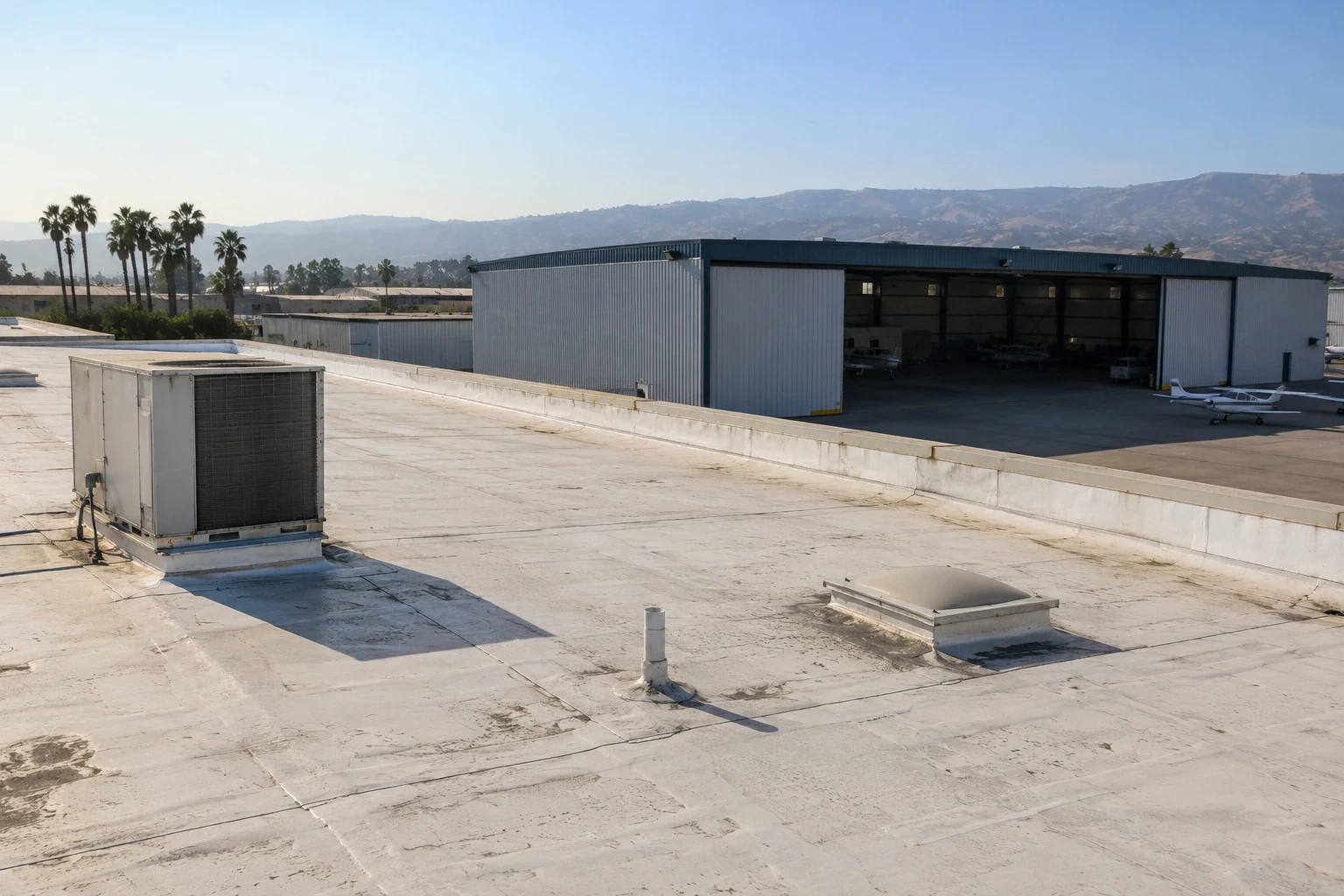
Aircraft Hangar Roofing
Read the full page
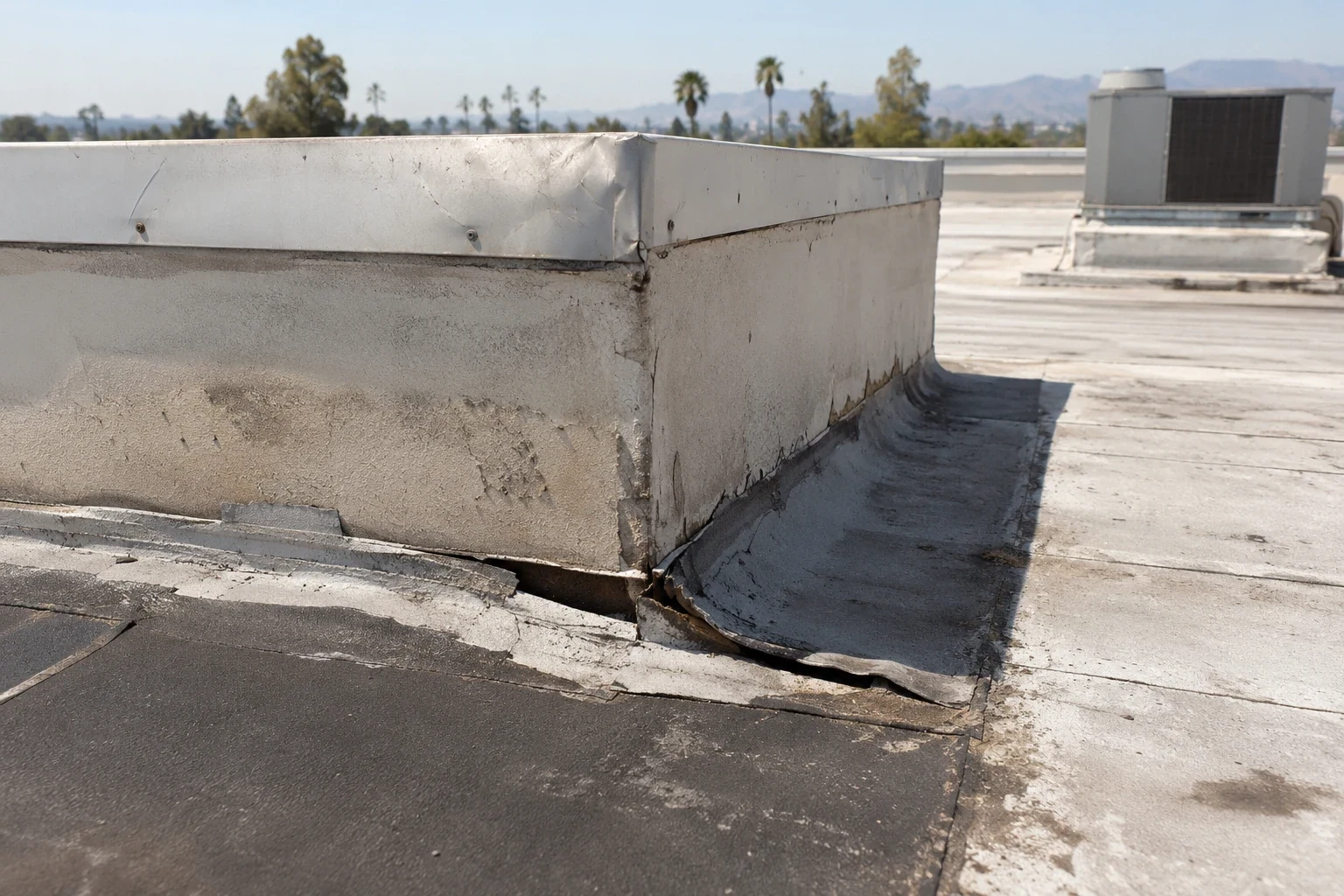
Flashing Failure Investigation in Clovis at Roof Transitions
See how we handle it
Manufacturing Roof Repairs With a Defined Work Release
Scope, sequence and repair notes
Standing-Seam Metal Roof Corrections
Read the full page
Rooftop Equipment Curbs and Supports
See how we handle it
Clovis Industrial Park
Scope, sequence and repair notes